
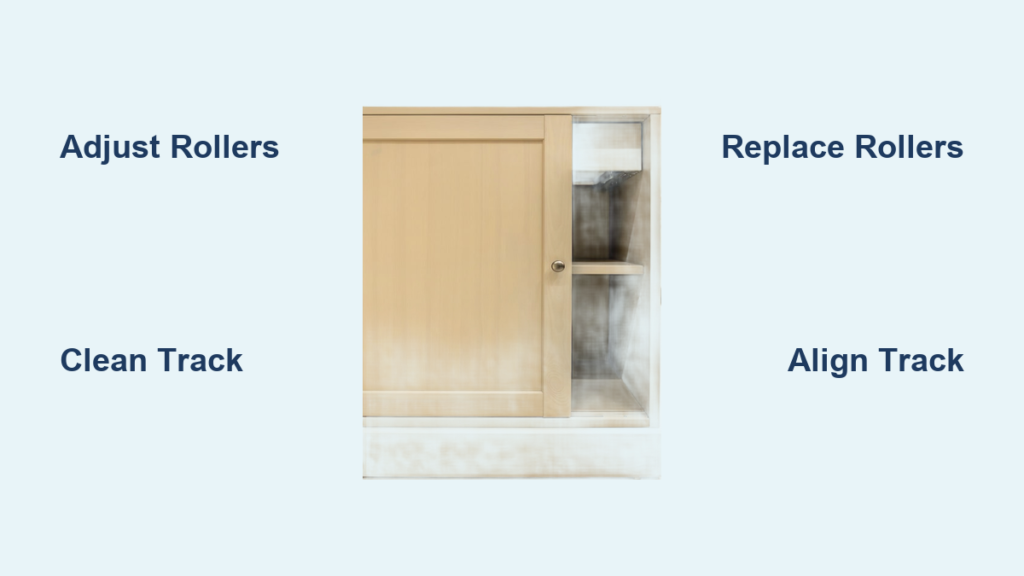
A sliding cabinet door that sticks, wobbles, or refuses to move can turn a simple kitchen task into a daily battle. Whether it’s a pantry door that jumps off its track or a bathroom vanity that scrapes along the frame, the culprit is almost always the roller and track system. The good news is that most sliding cabinet door problems have straightforward fixes you can handle yourself with basic tools.
This guide walks you through every common sliding cabinet door issue and how to fix it, from adjusting rollers and cleaning dirty tracks to replacing worn hardware entirely. You’ll learn step-by-step methods for diagnosing the problem, quick solutions that take minutes, and long-term maintenance tips to prevent future breakdowns. By the end, you’ll know exactly how to fix a sliding cabinet door that jams, sags, or derails.
Adjust the Door Rollers
Sliding cabinet doors rely on top and bottom rollers to glide along a track. When these rollers shift out of alignment, the door starts to drag, tilt, or catch on the frame. Adjusting them is often the fastest fix for a stubborn door.
Loosen Mounting Screws First
Before you can adjust anything, you need to free the roller assembly. Look for mounting screws on the top or bottom edge of the door, usually near the corners. Use a screwdriver or hex key to loosen these screws just enough to allow movement. Do not remove them completely, as you’ll need them to hold the door in place during adjustment.
Raise or Lower the Rollers
Once the screws are loose, locate the adjustment screw on each roller mechanism. Turning this screw clockwise typically raises the door, while turning it counterclockwise lowers it. Work on both top and bottom rollers to keep the door level. After each small turn, test the door by sliding it back and forth to see if the movement improves.
Check for Level Alignment
Use a small level placed across the top of the door to verify it sits straight. If one side sits higher than the other, fine-tune the roller on that side until the bubble sits centered. A properly leveled door should glide without resistance and sit flush against the cabinet frame when closed.
Clean the Track and Rollers

Dirt, grease, and crumbs are silent killers of sliding cabinet doors. A clogged track creates friction that makes the door hard to move and accelerates roller wear. Regular cleaning can solve problems that seem mechanical but are actually just buildup.
Remove the Door for Access
To clean the track properly, you need to take the door off. Slide the door to the halfway position, then lift it upward to disengage the top rollers from the track. Tilt the bottom edge out and pull the door free. Place it on a soft surface like a towel to avoid scratches.
Vacuum and Wipe the Track
Use a vacuum with a narrow nozzle attachment to suck out dust, food particles, and debris from the entire track length. Follow up with a cloth dampened in warm, soapy water to remove sticky residue. For stubborn grime, an old toothbrush works well for scrubbing corners and crevices. Dry the track completely before moving on.
Lubricate for Smooth Gliding
Apply a silicone-based lubricant to the clean, dry track. Avoid oil-based products like WD-40, which attract dust and create a sticky film over time. Spray or drip a small amount along the track channel, then wipe away any excess with a clean cloth. Reinstall the door and test the sliding action.
Replace Damaged Rollers
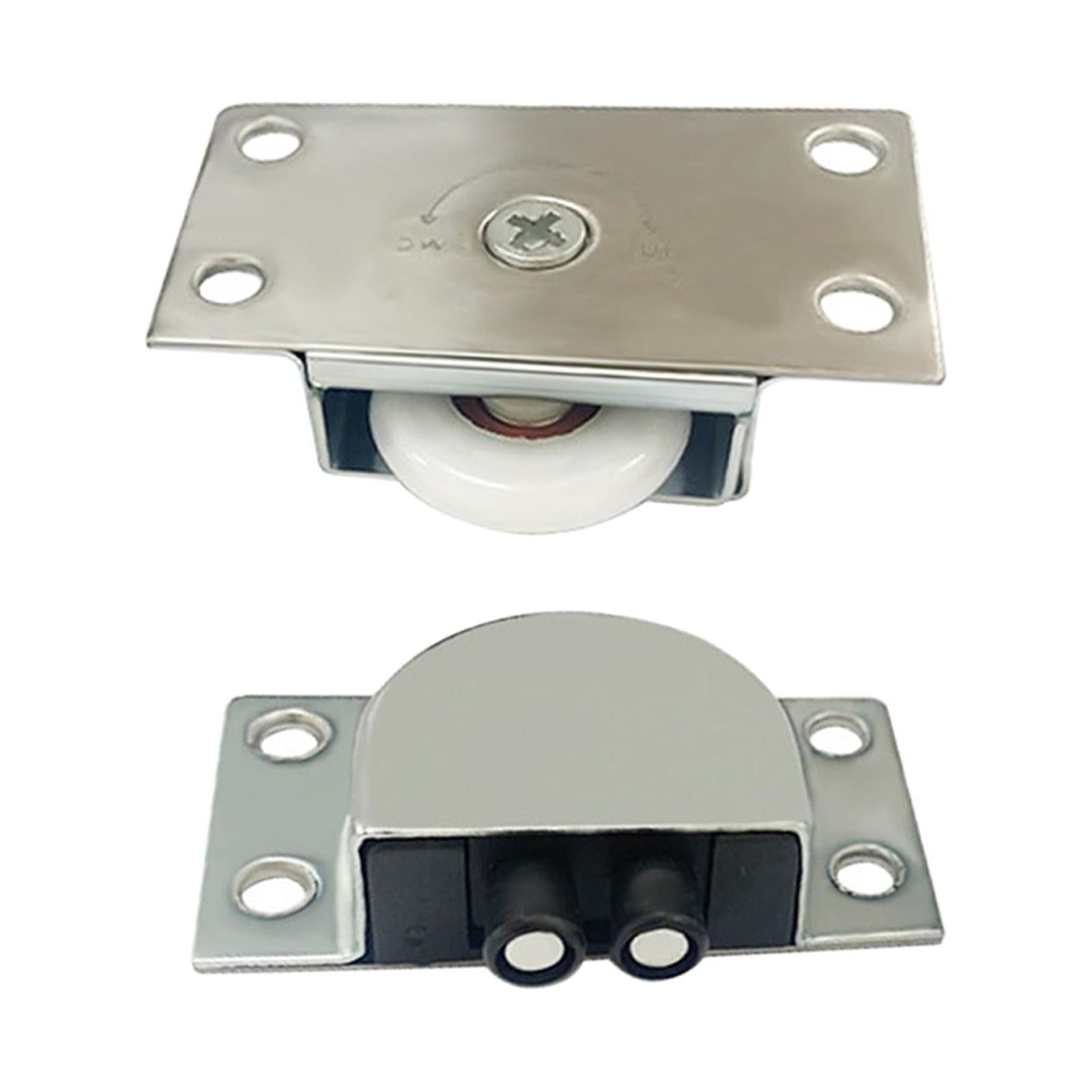
If cleaning and adjusting fail to restore smooth operation, the rollers themselves may be worn out or broken. Rollers are small components that take a lot of abuse, and they eventually wear flat or crack.
Identify Roller Type
Examine the roller mechanism on the removed door. Some rollers twist off with a simple turn, while others are held in place by screws. Take note of the brand or model number if visible, as this helps when sourcing replacements. Photograph the assembly or bring the old roller to a hardware store to ensure you get the right match.
Install New Rollers
Attach the replacement rollers according to the manufacturer’s instructions. This usually involves aligning the mounting plate with the pre-drilled holes and securing it with screws. Before reinstalling the door, spin each new roller by hand to confirm it rotates freely without sticking.
Test Door Movement
Rehang the door by aligning the top rollers with the track channel, then tilting the bottom inward and lowering it into place. Slide the door open and closed several times. It should move smoothly with no grinding, wobbling, or catching. If it still struggles, recheck the roller alignment and track condition.
Align the Track System
Sometimes the problem isn’t the door at all, but the track it rides on. A track that has shifted, bent, or loosened will cause the door to misalign and catch.
Inspect Track for Damage
With the door removed, run your finger along the inside of the track to feel for snags, dents, or rough spots. Visually inspect the full length for bends or warping. Any imperfection here will translate directly to poor door movement.
Tighten Track Mounting Screws
Check every screw that secures the track to the cabinet frame. Loose screws allow the track to sag, which throws the door out of alignment. Tighten them all with a screwdriver. If you find stripped screw holes, insert a toothpick coated in wood glue, break it off flush, and let it dry before reinstalling the screw.
Realign Using a Level
Place a level along the track to check for horizontal alignment. If the track has bent, gently bend it back into shape using pliers or a small hammer. Work slowly and recheck with the level frequently. Once the track sits straight, retighten all mounting screws to lock it in place.
Fix Binding or Rubbing Doors
A door that scrapes against the frame or track often points to clearance issues or subtle warping. This problem can develop slowly as the door swells or the cabinet shifts.
Check for Wood Swelling
In humid environments, wood doors absorb moisture and swell, causing them to bind against the frame. Wipe the door edges with a dry cloth and allow the cabinet to air out. If the swelling persists, lightly sand the contact points with fine-grit sandpaper until the door fits freely.
Adjust Door Position Side-to-Side
Many roller systems include a lateral adjustment screw on the roller bracket. Loosening this screw lets you shift the door slightly left or right to create clearance. Make small adjustments and test frequently to find the sweet spot where the door no longer rubs.
Trim Excess Material if Needed
In severe cases, the door may need minor trimming. Mark the exact area that’s rubbing, remove the door, and use a hand plane or sander to remove a thin layer. Test-fit the door after each pass to avoid removing too much material.
Secure Loose Hardware
Wobbly screws and shaky brackets undermine the entire sliding mechanism. Even a slightly loose component can cause the door to hang unevenly and wear prematurely.
Tighten All Screws
Inspect every screw on the rollers, track, and door brackets. Use the correct screwdriver size to avoid stripping the heads. If a screw spins without tightening, it may be stripped and needs replacement with a new one of the same size.
Reinforce Stripped Holes
For wood cabinets, fill stripped holes with wood glue and a toothpick or wooden matchstick. Break the stick off flush with the surface, let the glue dry, then reinsert the screw. For metal frames, apply a thread-locking compound or switch to a slightly larger screw for a secure bite.
Check Door Bracket Stability
Ensure the bracket that connects the door to the roller sits flush and secure. A loose bracket causes wobbling and uneven wear on the rollers. If the bracket is cracked or bent, replace it rather than attempting a repair.
Upgrade to Soft-Close Sliders
If your sliding cabinet door keeps giving you trouble, upgrading to a soft-close system offers a permanent solution with added convenience.
Benefits of Soft-Close Mechanisms
Soft-close sliders use hydraulic or magnetic dampers to slow the door as it approaches the closed position, preventing slamming and reducing wear on the entire system. This upgrade extends the life of your cabinet and adds a premium feel to everyday use.
Choose Compatible Replacement Kits
Measure your cabinet opening and door thickness before shopping for a replacement kit. Most kits include new tracks, rollers, and mounting hardware. Verify that the system supports your door’s weight and dimensions to ensure proper function.
Install According to Instructions
Follow the manufacturer’s guide to install the new system. The process typically involves removing the old track, mounting the new one, and attaching the updated rollers to the door. Test the soft-close function after installation to confirm it engages properly.
Prevent Future Sliding Issues
Regular maintenance is the best way to avoid recurring sliding cabinet door problems. A few minutes of care each month prevents costly repairs down the road.
Clean Tracks Monthly
Wipe down the tracks with a dry or slightly damp cloth every month to remove dust and debris. Vacuum deep into the corners where buildup accumulates. This simple habit keeps the track clear and the rollers spinning freely.
Lubricate Every 6 Months
Apply silicone lubricant to the track twice a year to reduce friction and prevent corrosion. Use a small amount and wipe away any excess to avoid attracting dirt. This routine keeps the door gliding smoothly with minimal effort.
Inspect Rollers Annually
Once a year, remove the door and check the rollers for wear. Spin each roller by hand and listen for grinding or stiffness. Look for cracks, flat spots, or debris wrapped around the wheels. Replace any questionable rollers before they fail completely.
Frequently Asked Questions About Fixing Sliding Cabinet Doors
Why does my sliding cabinet door keep jumping off the track?
The door likely has misaligned rollers or a bent track. Remove the door, inspect the track for damage, and adjust the rollers to sit properly in the channel. Tighten any loose mounting screws and realign the track with a level.
Can I use WD-40 to lubricate sliding cabinet door tracks?
No. WD-40 is a solvent, not a lubricant, and it attracts dust and dirt that create a sticky buildup. Use a silicone-based lubricant instead, which stays clean and provides lasting glide.
How do I know if my cabinet door rollers need replacing?
Signs include grinding noises, visible flat spots on the wheels, cracks in the roller housing, or a door that won’t move smoothly even after cleaning and adjustment. If the rollers feel stiff when spun by hand, replacement is the best option.
What tools do I need to fix a sliding cabinet door?
Most repairs require a screwdriver, Allen wrench set, level, vacuum with nozzle attachment, silicone lubricant, and a clean cloth. For more involved fixes, you may need fine-grit sandpaper, pliers, or a hand plane.
Why is my wooden cabinet door sticking in humid weather?
Wood absorbs moisture and swells, causing the door to bind against the frame. Wipe the edges dry and allow the cabinet to air out. If sticking persists, sand the contact points lightly with fine-grit sandpaper to restore clearance.
How often should I clean my sliding cabinet door tracks?
Clean the tracks at least once a month to prevent debris buildup. Lubricate every six months with a silicone-based product. Inspect the rollers annually and replace any that show signs of wear.
Key Takeaways for Fixing Your Sliding Cabinet Door
Fixing a sliding cabinet door comes down to three main actions: adjusting what’s misaligned, cleaning what’s dirty, and replacing what’s broken. Start with the simplest solution, like cleaning the track and adjusting the rollers, before moving to more involved repairs like replacing hardware or realigning the track system.
Regular maintenance prevents most sliding door problems from ever developing. Clean tracks monthly, lubricate every six months, and inspect rollers annually to catch wear early. These small habits keep your doors gliding smoothly and extend the life of the entire system.
If your door continues to misbehave after trying these fixes, consider upgrading to a soft-close slider system. It eliminates slamming, reduces wear, and adds convenience to your daily routine. With the right approach and a little patience, you can fix your sliding cabinet door and keep it working perfectly for years.


