
That corner cabinet. It’s the spot where mixing bowls go to disappear, where the slow cooker hides for months, and where you’re terrified to reach too far back for fear of what you’ll find. If you’re tired of playing cabinet roulette every time you need a pot lid, you’re in the right place. This guide walks you through how to organize a corner cabinet so every awkward inch works for you, not against you.
We’ll cover the three main cabinet styles, the best organizers for each, and simple DIY fixes that won’t break the bank. You’ll learn how to measure, declutter, and maintain your new system so the chaos doesn’t return. By the time you finish reading, you’ll have a clear plan to tackle that frustrating space once and for all.
Identify Your Corner Cabinet Style First
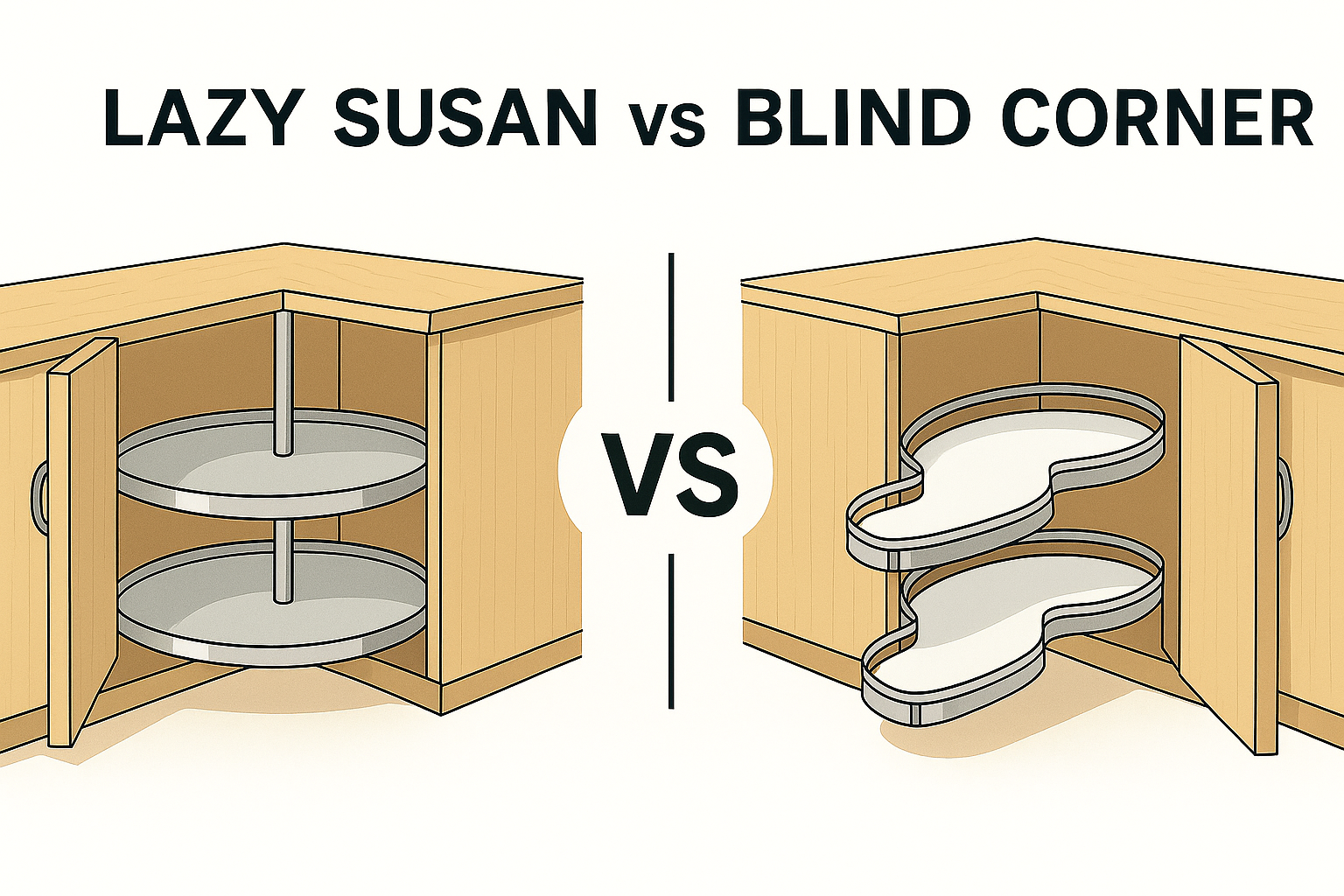
Before you buy a single organizer, you need to know what you’re working with. Corner cabinets come in different configurations, and each one needs a specific approach.
The Three Most Common Cabinet Types
Most kitchens have one of these three setups:
- 90-degree corner cabinet: A standard L-shaped layout with a diagonal or angled front door. This is the most common type in modern kitchens.
- Blind corner cabinet: A deep cabinet where the door only opens partway. A large section of the interior is hidden behind the opening, making it hard to reach.
- Full-access corner cabinet: Uses special hinges or pull-out mechanisms to expose the entire interior. These are newer and easier to organize.
Knowing your style matters. A lazy Susan that works in a 90-degree cabinet won’t help you reach the back of a blind corner. Take a photo of your cabinet and note which type you have before shopping.
Measure Before You Buy Anything
Grab a tape measure and record these numbers:
- Door opening width (commonly 24 or 27 inches)
- Interior depth (usually 24 to 30 inches)
- Shelf height and spacing
Most organizers are size-specific. Rotating trays and pull-out shelves come in different diameters and depths. If you skip this step, you’ll end up with a turntable that doesn’t rotate or a pull-out that won’t fit. Measure twice, buy once.
Empty the Cabinet and Start Fresh
You can’t organize what you can’t see. Pull everything out and sort it on your counter.
Declutter With a Three-Pile System
Create three piles as you remove items:
- Keep: Things you use at least once a month
- Donate: Duplicates or items in good condition you don’t need
- Discard: Broken, expired, or unusable items
Be honest with yourself. That waffle iron you’ve used twice in five years? Donate it. The stack of mismatched Tupperware lids? Recycle them. A corner cabinet is prime real estate, so don’t waste it on things you never touch.
Clean Every Surface Thoroughly
With the cabinet empty, wipe down all interior surfaces. Use a damp cloth and mild cleaner to remove crumbs, dust, and sticky residue. Pay extra attention to the back corners where spills often hide. Let everything dry completely before you start placing items back.
Pro tip: Line the shelves with adhesive shelf liner. It protects the cabinet and gives items better grip, so they don’t slide around when you open the door.
Pick Organizers That Match Your Cabinet
Now comes the fun part. The right tools make all the difference, but only if they fit your specific cabinet type.
Lazy Susan Turntables for Easy Access
A rotating turntable is the classic solution for 90-degree and full-access cabinets. It brings items to you instead of forcing you to reach.
Why it works:
– Full visibility of everything on the tray
– No more forgotten items in the back
– Perfect for spices, jars, oils, and small appliances
Installation tips:
– Center the base on the shelf so it spins freely
– Check clearance on all sides to prevent rubbing
– Choose a double-tier model for twice the storage
Look for turntables with non-slip surfaces. They keep bottles from sliding during rotation and prevent frustrating crashes.
Pull-Out Shelves for Blind Corners
Blind corner cabinets are the hardest to organize, but pull-out systems solve the reach problem completely.
Your options include:
– Slide-out shelves: Fixed trays that glide forward on metal tracks
– T-shaped pull-outs: Extend deep into the corner and swing out for full access
– Swing-out units: Pivot forward when you open the door
These require more precise installation, but they turn a dead zone into usable storage. Look for models with soft-close glides to prevent slamming.
Stackable Bins and Risers for Flexibility
If you’re renting or want a temporary solution, skip the hardware and use stackable organizers.
- Clear bins: See what’s inside without opening lids
- Adjustable risers: Create vertical layers for plates or bowls
- Drawer dividers: Keep utensils, wraps, and foils separated
These are budget-friendly and removable. You can rearrange them anytime your storage needs change.
Arrange Items by Category and Frequency
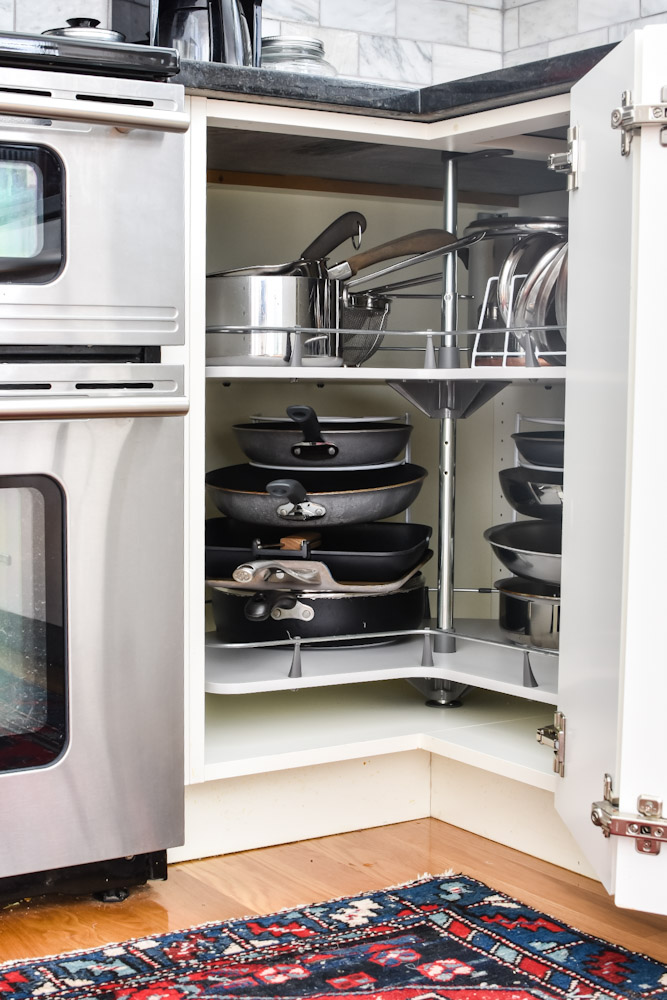
How you organize the space matters as much as what you put in it. Group similar items together and place frequently used things within easy reach.
Pots, Pans, and Lids
Heavy cookware belongs on lower shelves for safety and easy lifting.
- Use vertical racks to store pans upright
- Mount a lid organizer on the door
- Place non-slip matting under cookware to prevent scratches
Don’t stack heavy pots on upper shelves. Reaching overhead for a cast iron skillet is a recipe for disaster.
Cleaning Supplies Under the Sink
If your corner cabinet is under a sink, it’s prime real estate for cleaning products.
- Group sprays and bottles in caddies or buckets
- Store hazardous chemicals out of children’s reach
- Add a small tray for sponges and scrub brushes
Keep a trash liner in the bottom to catch drips from wet tools. This protects the cabinet floor and makes cleanup easier.
Pantry Items and Dry Goods
For food storage, visibility is everything.
- Use turntables for oils, vinegars, and sauces
- Group snacks or baking supplies in labeled bins
- Place frequently used items at the front
Rotate stock using the first in, first out rule. This prevents expired foods from lurking in the back.
Make the Hard-to-Reach Areas Work

Blind corners waste the most space, but you can reclaim it with the right tricks.
Corner Shelf Inserts for Deep Spaces
Specialty corner shelves fit diagonally into the rear of blind cabinets.
- Fixed triangular shelves: Permanent but highly effective
- Rotating corner units: Combine turntable convenience with shelf storage
These make the back corner accessible for tall bottles, small appliances, or rarely used items you still want to keep.
Door-Mounted Storage Solutions
The inside of your cabinet door is valuable real estate.
- Over-the-door baskets: Great for spices, wraps, or small jars
- Magnetic strips: Hold knives or metal tools if safe for your setup
- Pocket organizers: Fabric or mesh with multiple compartments
Before installing, check that added weight won’t strain the hinges. Heavy doors can sag over time.
Budget-Friendly DIY Hacks
You don’t need expensive hardware to make a huge difference. Try these low-cost tricks first.
Repurpose Items You Already Own
Look around your house for storage solutions hiding in plain sight:
- Use baking sheets as sliders to push items forward
- Stack shoe boxes as custom bins, covered with contact paper
- Pick up a small lazy Susan from a thrift store
Get creative. The best organizers aren’t always the most expensive ones.
Build a Simple Slide Tray
This DIY project takes minutes and costs almost nothing.
Materials:
– Wood or thick cardboard cut to shelf size
– Adhesive felt pads
– Non-slip rug underlay
Attach felt pads to the corners and place the tray on the shelf. You can now slide items in and out without reaching into the dark. This works especially well for deep cabinets and blind corners.
Keep Your System Organized Long Term
A well-organized cabinet only stays that way with good habits.
Label Everything Clearly
Labels help everyone in your household know where things belong.
Categories to label:
– Spices
– Baking supplies
– Cleaning tools
– Wraps and foils
Use a label maker or chalk tags for easy updates. When everyone knows the system, they’re more likely to follow it.
Do a Monthly Maintenance Check
Set a recurring reminder to keep things tidy.
- Wipe down shelves
- Re-sort misplaced items
- Remove expired or unused products
Ten minutes a month prevents the clutter from creeping back.
Follow the One In, One Out Rule
Every time you add something new, remove something old. This keeps your corner cabinet from overflowing and forces you to stay intentional about what you store.
Add Modern Upgrades for Extra Convenience
Once the basics are in place, consider a few upgrades that make daily use easier.
Under-Shelf Lighting
Battery-powered LED strips illuminate dark corners instantly.
- Motion-activated lights turn on when you open the door
- Adhesive strips install in seconds
- Warm white light improves visibility
No wiring needed, just peel and stick. This is a game changer for deep cabinets.
Soft-Close Hinges
If your cabinet door slams shut, upgrade the hinges.
- Prevents damage to contents
- Quieter operation
- Extends cabinet lifespan
These are available at most hardware stores and install with a simple screwdriver.
Frequently Asked Questions About Corner Cabinet Organization
What is the best way to organize a corner cabinet?
The best method depends on your cabinet type. Lazy Susan turntables work well for 90-degree cabinets. Pull-out shelves are ideal for blind corners. Stackable bins and risers offer flexible, budget-friendly options for any style.
How do I organize a blind corner cabinet?
Install pull-out shelves or a swing-out unit to access the hidden section. Add corner shelf inserts for the deepest areas. Use door-mounted storage to maximize every inch.
Can I use a lazy Susan in a corner cabinet?
Yes, but only if the cabinet has enough clearance for rotation. Measure the interior depth and door opening first. Choose a turntable that fits your shelf size and leave space around the edges.
What should I store in a corner cabinet?
Store items you use regularly but don’t need daily. Pots, pans, small appliances, spices, and cleaning supplies all work well. Avoid storing heavy items on upper shelves for safety.
How do I maximize storage in a small corner cabinet?
Use vertical stackable bins and risers to create layers. Attach door-mounted organizers for additional space. Keep only items you actually use to avoid overcrowding.
Are corner cabinet organizers worth it?
Yes, they turn wasted space into functional storage. Even simple solutions like turntables or stackable bins make a noticeable difference in accessibility and organization.
Key Takeaways for Organizing Your Corner Cabinet
Organizing a corner cabinet doesn’t require a full kitchen remodel. Start by identifying your cabinet type and measuring the interior. Empty everything out, declutter ruthlessly, and clean the space before you begin.
Choose organizers that match your cabinet style. Lazy Susans work for standard corners, pull-outs solve blind corner problems, and stackable bins offer flexible, budget-friendly solutions. Use door-mounted storage and corner inserts to reclaim hard-to-reach areas.
Maintain your system with labels, monthly checkups, and the one in, one out rule. Small habits prevent the chaos from returning. Now that you know how to organize a corner cabinet, you can finally use that dead space and enjoy a kitchen that works for you.


