

Opening your kitchen cabinet to a chaotic pile of clanging cookware creates instant stress. You waste precious minutes digging for the right pan while risking damage to your non-stick surfaces.
This guide reveals exactly how to organize pots and pans in cabinet spaces using proven sorting methods and smart storage tools. You will learn to build a system that protects your gear and lets you grab what you need instantly.
Assess and Sort Your Cookware Collection
Effective organization begins by removing every single item from your cabinet to evaluate your actual inventory. This critical first step prevents you from building a system around clutter you do not need.
Categorize by Frequency and Function
Group your items into four distinct piles based on how often you use them.
* Everyday use: Your go-to frying pans and saucepans used daily.
* Occasional use: Larger stockpots or griddles used for weekend meals.
* Specialty items: Woks, Dutch ovens, or crepe pans for specific recipes.
* Rarely used: Deep fryers or chafing dishes reserved for holidays.
Keep only the items you actively use and donate duplicates or damaged pieces. Reducing your total count makes the organization process significantly easier and more effective.
Sort by Size and Type
Organize your kept items by type, such as saucepans, frying pans, and stockpots. Further separate these groups by size, distinguishing between small, medium, and large dimensions.
This dual-sorting method ensures you can locate the exact pan you need without moving other items. Prioritize multi-use pieces if your kitchen space is limited to maximize efficiency.
Reassess Your Inventory Regularly
Your cooking habits change over time, so your storage system should adapt too. Review your setup every three to six months to ensure it still fits your lifestyle.
If a specific pan has not been touched in half a year, consider moving it to deep storage or donating it. This regular maintenance prevents clutter from creeping back into your primary cabinet space.
Choose the Right Cabinet Storage System
Selecting the correct hardware depends on your cabinet structure and the weight of your cookware. The right choice transforms how you access your daily cooking tools.
Install Deep Drawers for Heavy Items
Deep drawers are the gold standard for storing heavy pots and daily use items. These systems feature sturdy construction with dovetail joints and full-extension glides to support significant weight without bowing.
Why they work best:
* They offer one-motion access by simply pulling the drawer open.
* They provide high visibility from front to back without kneeling.
* They protect non-stick coatings by reducing the need for stacking.
Use deep drawers for your heaviest cast iron pans and your most frequently used cookware sets.
Use Roll-Out Trays for Tall Pots
Roll-out trays nest inside traditional base cabinets and bring contents forward for easy viewing. They are an excellent compromise if you prefer the look of cabinet doors but want better access.
Key benefits include:
* Adjustable height shelves accommodate extra-tall stockpots.
* They eliminate blind reaching into dark cabinet corners.
* They keep cabinet doors functional while improving interior access.
Note that roll-out trays generally have a lower weight capacity than dedicated deep drawers. Avoid overloading them with extremely heavy cast iron to prevent mechanism failure.
Implement Vertical Storage with Dividers
Storing pans upright like books on a shelf prevents scratches and improves visibility. This method is superior for maintaining the condition of non-stick surfaces.
How to set up vertical storage:
* Install adjustable drawer dividers to create separate lanes in deep drawers.
* Use vertical tray dividers in narrow base cabinets for baking sheets.
* Repurpose tension rods to create custom slots for flat items.
This approach works perfectly for muffin tins, cutting boards, and delicate non-stick skillets that scratch easily.
Compare Drawers Versus Roll-Out Trays
| Feature | Deep Drawers | Roll-Out Trays |
|---|---|---|
| Access Steps | One (Pull) | Two (Open door, then pull) |
| Visibility | High | Maximum |
| Weight Support | High | Moderate |
| Best For | Heavy daily cookware | Tall or specialty items |
| Scratch Prevention | High | Moderate |
Select the option that best matches your cookware weight and existing cabinet layout.
Organize Pot Lids Efficiently
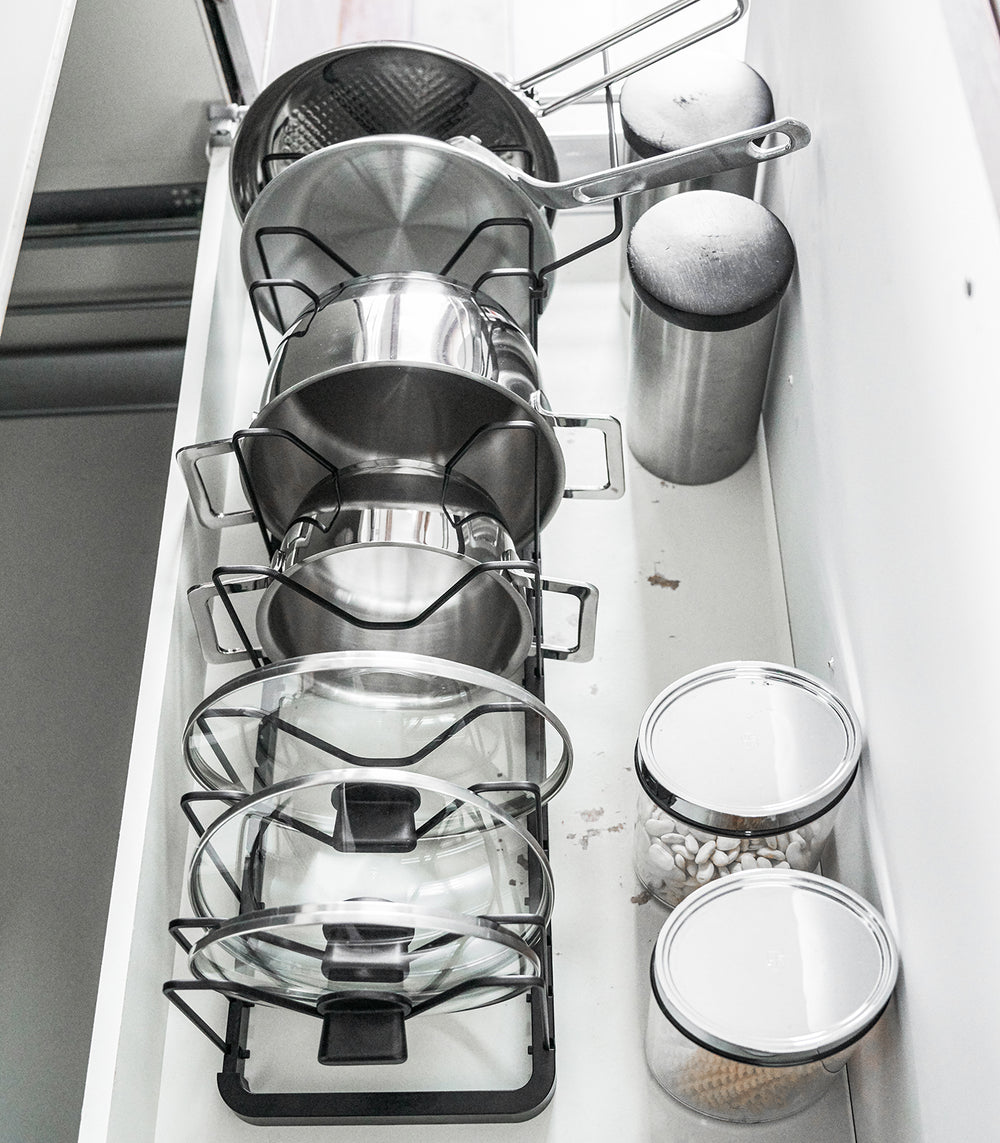
Lids often create the most mess in a cookware cabinet, but specific strategies can keep them tidy. Proper lid storage prevents noise, scratches, and the frustration of missing matches.
Store Lids Vertically
Never toss lids into a loose pile where they can scratch each other. Vertical storage allows you to see every size at a glance and grab what you need instantly.
Best vertical solutions include:
* Angled roll-out trays: These allow lids to lean securely against a slanted divider.
* Drawer partitions: Create a dedicated lane within deep drawers just for lids.
* Door-mounted racks: Attach these to cabinet interiors for large lids and baking sheets.
Avoid Nesting Without Protection
If you must stack or nest lids due to space constraints, use protection between them. Place a soft liner made of felt, silicone, or even a paper towel between each lid.
This simple step prevents glass lids from cracking under pressure. It also stops metal lids from scratching each other during retrieval.
Match Lids to Pots Strategically
Store lids near their matching pots to streamline your cooking process. For example, keep the 3-quart saucepan lid in the same drawer section as the pot.
You can also store a Dutch oven lid on the shelf directly above its corresponding pot. This proximity saves valuable time during meal preparation and reduces clutter.
Utilize Alternative Storage Spaces

Maximize every inch of your kitchen by looking beyond standard lower cabinets. Creative use of walls and doors can free up significant interior space.
Hang Pans on Walls or Ceilings
Free up cabinet space by mounting racks on walls or ceilings. This works well for lightweight skillets, decorative copper pots, or bulky woks.
Pro tip: Hang your most frequently used pans within easy reach near your stove. Ensure ceiling mounts are securely installed to handle the weight safely.
Install Door-Mounted Organizers
The inside of cabinet doors offers prime real estate for additional storage. You can attach over-the-door baskets for small lids or magnetic strips for metal items.
Slim racks mounted on doors are perfect for baking sheets or cutting boards. This solution is ideal for renters or kitchens with very limited cabinet space.
Try Budget-Friendly DIY Solutions
You do not need expensive renovations to improve your storage. Simple household items can serve as effective organizers.
- Tension rods: Install horizontally to create vertical slots for pans.
- Spice racks: Repurpose these to hold small pans or lids upright.
- Mason jars: Store lids with knobs screwed into the lids for an easy grip.
Shop secondhand for racks and bins to save money while achieving a custom look.
Prevent Damage During Storage

Organization is not just about neatness; it is about preserving your investment. Proper storage techniques extend the life of your cookware significantly.
Stop Scratching Non-Stick Surfaces
Stacking pans directly on top of one another damages coatings quickly. Never stack without protection if you want your pans to last.
Effective solutions include:
* Using silicone or felt pan protectors between layers.
* Storing pans vertically with dividers to eliminate contact.
* Avoiding sliding pans across each other when retrieving items.
Protect Glass Lids from Breakage
Glass lids crack easily under the pressure of heavy items. Always store them upright or flat with adequate padding.
Never stack heavy cast iron cookware on top of glass lids. Use lid-specific slots or racks to keep them secure and separate from heavy pots.
Support Heavy Cast Iron Properly
Cast iron is extremely heavy and can warp shelves or damage cabinets if stored incorrectly. Store these items in deep drawers with solid bottoms.
Keep heavy items on lower shelves to reduce the risk of injury if they fall. Use dedicated slots to avoid contact with more fragile items in your collection.
Maintain Your Organized System
An organized cabinet stays functional only with regular upkeep and attention to detail. Consistent maintenance ensures your system continues to work for you.
Document Your Setup with Photos
Take before and after photos of your cabinet organization. These images serve as a helpful reference if you need to reorganize after a move.
They also help when replacing lost dividers or trays. Visual documentation keeps you motivated to maintain the tidy system you created.
Rotate and Reorganize Regularly
Every few months, remove everything and reassess your usage patterns. Donate unused items and adjust dividers as your cooking needs change.
This regular rotation prevents the slow return of clutter. It ensures your storage solution evolves with your lifestyle.
Handle Overflow Smartly
If your cabinet overflows despite your best efforts, move rarely used items elsewhere. Consider using a pantry, storage closet, or a kitchen cart with drawers.
Label bins and drawers clearly for instant recognition. Clear labeling helps everyone in the household maintain the system effectively.
Frequently Asked Questions About Organizing Pots and Pans
How do you organize pots and pans in a small cabinet?
Maximize vertical space by storing pans upright using dividers or tension rods. Remove items you rarely use and consider hanging frequently used pieces on a wall rack.
What is the best way to store pot lids?
Store lids vertically in a dedicated divider lane or on an angled roll-out tray. This prevents scratching and makes every size visible without digging through a pile.
Should I stack my pots and pans?
Avoid stacking without protection as it damages non-stick coatings and causes scratches. If you must stack, place silicone or felt protectors between each item.
How can I organize lids without a dedicated rack?
Use tension rods installed horizontally to create slots for lids. You can also attach adhesive hooks inside cabinet doors to hang lids individually.
What is the best storage for heavy cast iron cookware?
Store heavy cast iron in deep drawers with sturdy bottoms to support the weight. Keep them on lower shelves to prevent injury and avoid stacking them on glass items.
Key Takeaways for How to Organize Pots and Pans in Cabinet
Successfully organizing your cookware requires sorting by frequency, choosing the right hardware, and protecting surfaces from damage. Deep drawers and vertical dividers offer the best protection for your pots while improving access.
Start by emptying your cabinet and categorizing your items today. Implement one change, such as adding dividers or removing unused pieces, to immediately improve your kitchen workflow.


