
Your corner cabinet likely feels like a black hole where spices vanish and canning lids disappear forever. Without a clear system, these rotating shelves become clutter traps that cause decision fatigue every time you cook.
You can fix this chaos by building a strategy that works with the rotation rather than against it. This guide explains how to organize a lazy Susan cabinet using proven categorization and balance techniques to double your usable space.
Diagnose Why Your Lazy Susan Fails
Most rotating cabinets fail because they lack a specific plan for item placement. Random stacking leads to the “black hole” effect where items in the back remain invisible and unreachable.
Identify the Black Hole Effect
Items often get buried behind taller jars or lost in deep corners. This forces you to dig through layers just to find simple ingredients like salt or vanilla extract.
Recognize Decision Fatigue Causes
When you cannot see contents instantly, you waste mental energy searching for tools. This frustration builds up over time and makes you avoid using the cabinet entirely.
Spot Overcrowding Warning Signs
Shelves frequently become so packed that bins collapse or jam against the cabinet walls. If your turntable sticks or wobbles, you have likely exceeded its capacity or balance limits.
Choose the Right Organization Path
You must decide on a strategic approach before placing a single item back into the cabinet. Your choice depends on the condition of your current hardware and your specific storage needs.
Retain and Optimize Strategy
Keep your existing turntable if the mechanism spins smoothly. Apply strict categorization and containment rules to transform it into a functional zone without renovation costs.
Remove and Replace Option
Swap the unit for pull-out shelves if the rotation is broken or inefficient. Fixed shelving sometimes works better for very deep cabinets where rotation offers little advantage.
Repurpose for Non-Kitchen Use
Convert the space for cleaning supplies or craft materials if kitchen storage is not your priority. This path works well if the cabinet location is awkward for cooking tasks.
Apply Radial Placement Strategies

The circular shape of your cabinet demands a specific logic for where items sit. Using frequency zones ensures you do not spin unnecessarily for daily essentials.
Position High-Frequency Items on the Edge
Place daily-use items like olive oil, salt, and soy sauce on the outermost ring. This ensures they are within immediate reach without needing to spin the unit extensively.
Reserve Center for Low-Frequency Goods
Store seasonal tools, backup supplies, or holiday ingredients in the center or inner ring. These items require a full spin to access but do not need to be grabbed instantly.
Create Visual Cues for Access
If you cannot read a label without spinning the cabinet, that item is in the wrong spot. Adjust placement until high-use goods are always at your fingertips.
Balance Weight and Maximize Space
A wobbly or stuck lazy Susan usually indicates poor weight distribution around the circle. Fixing this mechanical issue makes rotation effortless and protects the bearing mechanism.
Distribute Heavy Items Evenly
Place full flour jars or liquid condiments on opposite sides of the turntable to maintain balance. Never stack all heavy containers on one side as this causes tilting and strain.
Utilize Tiered Shelving Systems
Upgrade to a two-tier lazy Susan or use stackable bins to double your vertical capacity. This prevents taller containers from blocking shorter ones behind them.
Maintain Critical Clearance Margins
Leave a small gap between the outer edge of containers and the cabinet wall. Overfilling causes friction, slows rotation, and increases the risk of spills during use.
Categorize Contents by Use Case
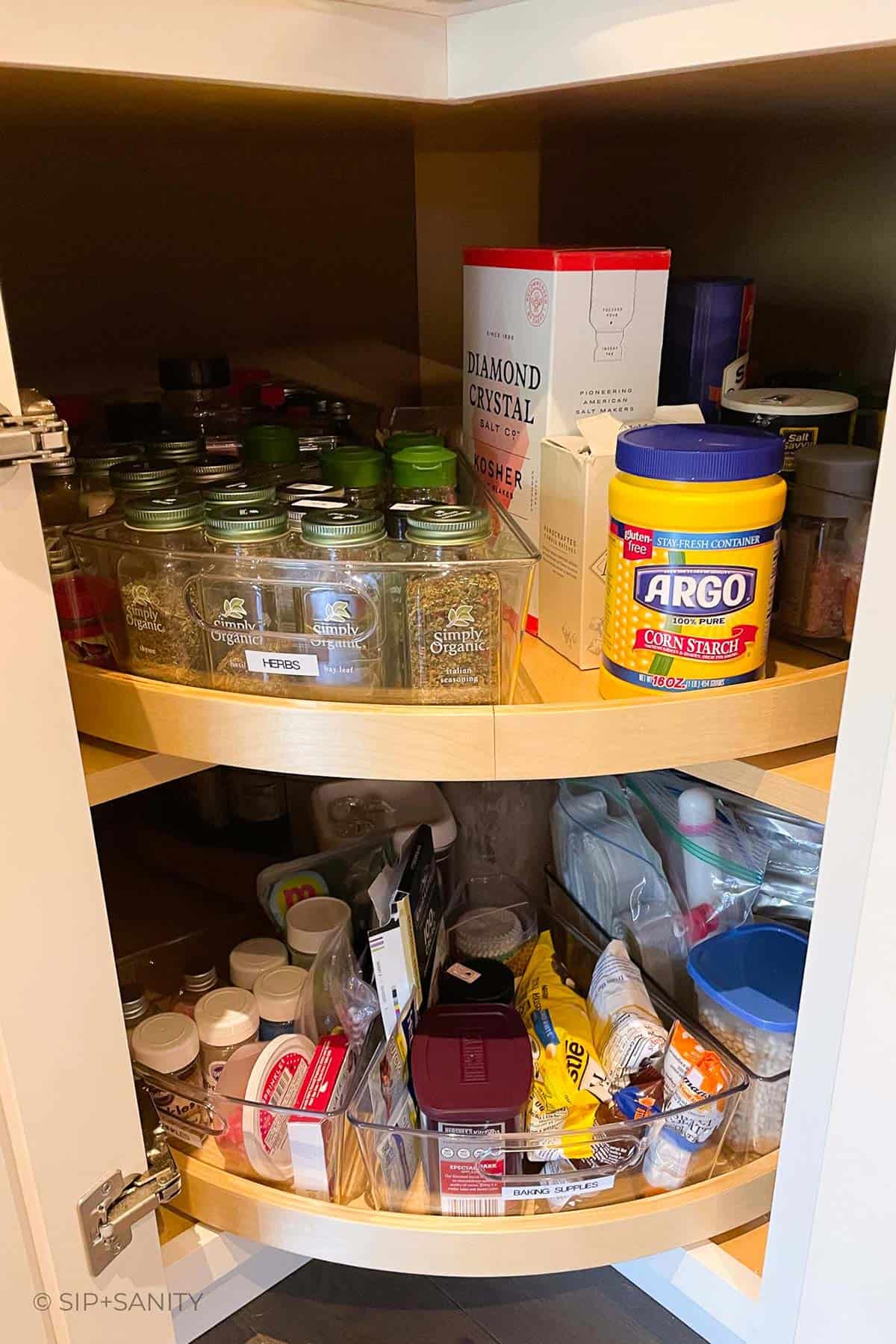
Random placement leads to clutter, so group items into functional categories. Every spin should have a purpose and reveal a specific type of product.
Store Spices and Condiments Efficiently
Dedicate one section to spices and daily sauces using clear, uniform containers. Keep squeeze bottles upright in labeled bins and place oils on the outer ring for fast access.
Organize Canning and Jar Supplies
Use the cabinet for Mason jar lids and metal rings to prevent tangling or scratching. Store repurposed glass jars here ready for leftovers or dry goods storage.
Keep Baking Essentials Within Reach
Move core dry goods like flour, sugar, and baking powder from deep pantry shelves to this zone. Decant them into clear, airtight containers and label them with expiration dates.
Group Snacks and Lunch Prep Items
Create a snack zone for juice boxes, yogurt cups, and lunchbox-friendly treats. Store these at kid-accessible heights using low bins so children can grab items safely.
Select and Label Clear Containers
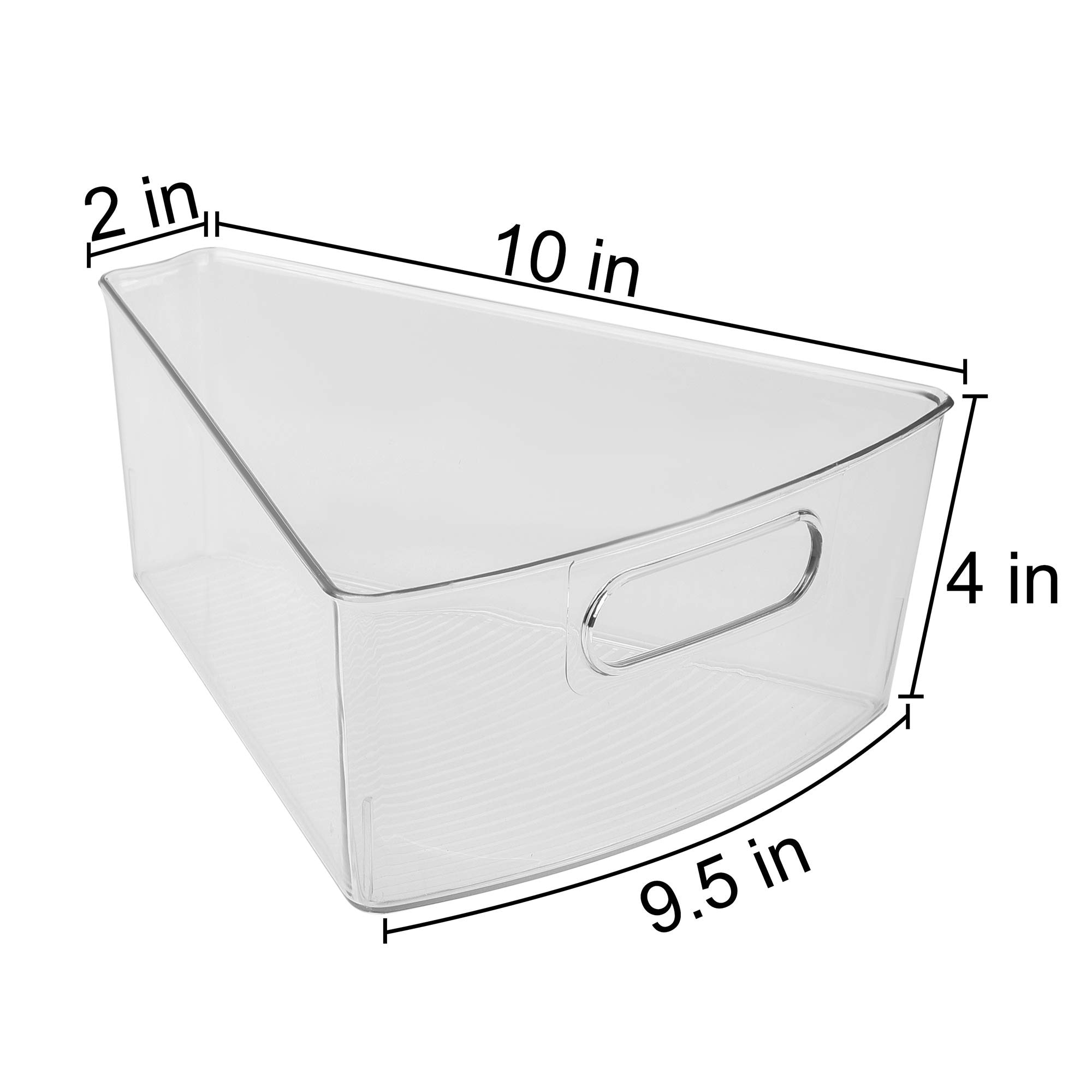
Containers make or break the system, so choose wisely to ensure stability and visibility. The wrong choice leads to hidden contents and unstable stacks.
Use Only Clear Stackable Bins
Choose BPA-free plastic or tempered glass containers to maximize visibility. Rectangular bins fit tightly together while round bins designed for turntables maximize circular space.
Prioritize Stability with Raised Edges
Pick containers with raised rims to prevent bottles and jars from sliding off during rotation. Add non-slip shelf liners under bins for extra security against movement.
Label Everything Clearly
Apply labels to front-facing sides of containers and lids of stacked bins. Include item names and expiration dates to maintain an accurate visual inventory.
Install and Load Strategically
Follow a step-by-step process to ensure your new system lasts long-term without failing. Proper installation prevents future frustration and mechanical issues.
Empty and Clean Completely
Remove all items, discard expired food, and wipe down the turntable base. Check the bearing mechanism and clean any sticky residue with warm soapy water.
Plan Zones Before Loading
Divide the lazy Susan into four to six zones based on your usage categories. Sketch this mentally or use tape to mark zones temporarily before placing heavy items.
Load in Order of Priority
Place heaviest items first to establish balance, then add high-frequency goods to the outer edge. Fill inner zones with backups and insert stackable bins for vertical layers.
Maintain the System Long-Term
Even the best system fails without regular maintenance habits. Build simple routines to keep your cabinet working efficiently year after year.
Perform Weekly Spin Checks
Give the turntable a gentle spin once a week to check for shifting items. Rebalance any leaning containers or signs of sticking immediately.
Follow FIFO Restocking Rules
Place new items in the back or center when refilling containers. Move older items to the front or edge to ensure older stock gets used first.
Schedule Quarterly Resets
Empty the cabinet completely every three months to reassess categories. Clean the mechanism again and replace worn bins or faded labels to prevent clutter creep.
Upgrade with Pro Tips
Take your lazy Susan from functional to exceptional with advanced tweaks. These optimizations can further enhance efficiency and sustainability in your kitchen.
Build a Mason Jar Ecosystem
Standardize storage using Mason jars for leftovers, dry pasta, and homemade dressings. Store corresponding lids and rings in dedicated bins on the same turntable.
Integrate Small Appliances
Use the cabinet to store weekly-use appliances like food scales or immersion blenders. Their weight can be balanced across the circle to free up counter space.
Rotate Seasonal Items
Swap inner-zone contents by season to keep the cabinet relevant year-round. Store corn trays in summer and baking spices in fall for optimal utility.
Frequently Asked Questions About Organizing a Lazy Susan Cabinet
What is the best way to organize spices on a lazy Susan?
Place daily-use spices on the outer edge in clear, uniform containers for instant visibility. Group less frequently used seasonal spices in the center or inner ring to save prime space.
How do I stop my lazy Susan from wobbling?
Distribute heavy items evenly on opposite sides of the turntable to maintain balance. Avoid stacking all heavy glass jars on one side, as this strains the bearing mechanism.
Can I store heavy appliances on a lazy Susan?
Yes, you can store items like food scales if you balance their weight with other heavy objects across the circle. Ensure the bearing mechanism is robust enough to handle the load.
What containers work best for lazy Susan cabinets?
Clear, stackable bins with raised edges are ideal for preventing items from sliding off. Avoid opaque bins because they hide contents and defeat the purpose of the rotating design.
How often should I clean my lazy Susan cabinet?
Perform a quick spin check weekly and a full empty-and-clean reset every three months. This prevents sticky residue buildup and keeps your categorization system effective.
Key Takeaways for How to Organize a Lazy Susan Cabinet
Organizing a lazy Susan cabinet requires balancing weight, categorizing by frequency, and using clear containers. These steps transform a chaotic corner into a streamlined storage zone that saves you time daily.
Start by emptying your cabinet completely and planning your zones before reloading. With consistent maintenance and the right containers, you will eliminate the black hole effect forever.