

If you’re remodeling your kitchen or designing a new one, one of the most practical questions you’ll face is how deep are upper kitchen cabinets? This measurement directly impacts storage capacity, accessibility, and overall kitchen comfort. Most upper cabinets range from 12 to 14 inches in depth, with 12 inches being the standard across the industry. Choosing the right depth ensures you can store everyday dishware, reach items easily, and maintain a balanced kitchen layout. In this guide, you’ll learn the standard depths, why they matter, and how to pick the best option for your space.
Standard Upper Cabinet Depth

12 Inches Is the Norm
The most common depth for upper kitchen cabinets is 12 inches. This standard has evolved to match typical countertop depths (usually 25.5 inches) while maintaining safe reach and visual proportion. A 12-inch depth keeps items within easy reach and prevents users from bumping their heads on open cabinets. It’s also the default choice for prefab cabinets, making it cost-effective and widely available.
Why 12 Inches Works
This depth strikes a balance between storage and usability. It’s deep enough to hold plates, glasses, and small kitchen essentials without requiring you to stretch deep into the cabinet. It also aligns well with standard wall spacing and overhead lighting placement. Most users find 12 inches comfortable, especially in kitchens with 9-foot ceilings where cabinets are already at an elevated height.
Matching Countertop Overhang
A 12-inch upper cabinet pairs neatly with a standard 25.5-inch countertop. The lower cabinets are typically 24 inches deep, leaving a 1.5-inch overhang. This creates a natural visual gap, reducing the feeling of heaviness and making the kitchen feel more open. The 12-inch upper depth ensures the cabinets don’t extend too far forward, minimizing head-bumping risks.
Deeper Options: 13 to 14 Inches

14-Inch Cabinets for Extra Storage
Some homeowners opt for 14-inch deep upper cabinets, especially in larger kitchens or custom builds. This extra depth provides more room for taller items like serving platters, cake stands, or large bowls. However, it can make accessing back corners more difficult, particularly for shorter users or in kitchens with higher ceilings.
When Deeper Works Best
A 14-inch depth is most effective in kitchens with tall ceilings (10 feet or more), where the cabinets are mounted higher and the reach is naturally reduced. It’s also a good choice if you use your upper cabinets for display or infrequently accessed items. Just be mindful of head clearance—deeper cabinets extend further into the room, increasing the risk of accidental contact.
Trade-Offs of Increased Depth
While 14 inches offers more storage, it can create a “black hole” effect where items at the back get forgotten. It may also interfere with open shelving or under-cabinet lighting placement. Consider pull-out shelves or LED strips to improve visibility and access if you go deeper than 12 inches.
Slight Variations: 12.5 Inches
The 12.5-Inch Middle Ground
Some users choose 12.5-inch deep cabinets as a compromise between standard and deep storage. This extra half-inch adds usable space without drastically affecting reach or headroom. It’s often used in semi-custom builds where homeowners want a slight upgrade without going full custom.
Benefits of Half-Inch Gain
That extra 0.5 inch can make a difference when storing deeper items like mugs, large glasses, or spice jars. It doesn’t change the cabinet’s footprint significantly, so it still fits within standard design guidelines. This depth works well in kitchens with average ceiling heights (8–9 feet) and standard countertop setups.
Design and Installation Fit
A 12.5-inch cabinet still aligns with most under-cabinet accessories and lighting systems. It’s also compatible with standard stud spacing and drywall layouts, making installation straightforward. Since it’s not a mass-produced size, it may require ordering from a semi-custom supplier, which can increase cost slightly.
Factors That Influence Cabinet Depth Choice
Kitchen Ceiling Height
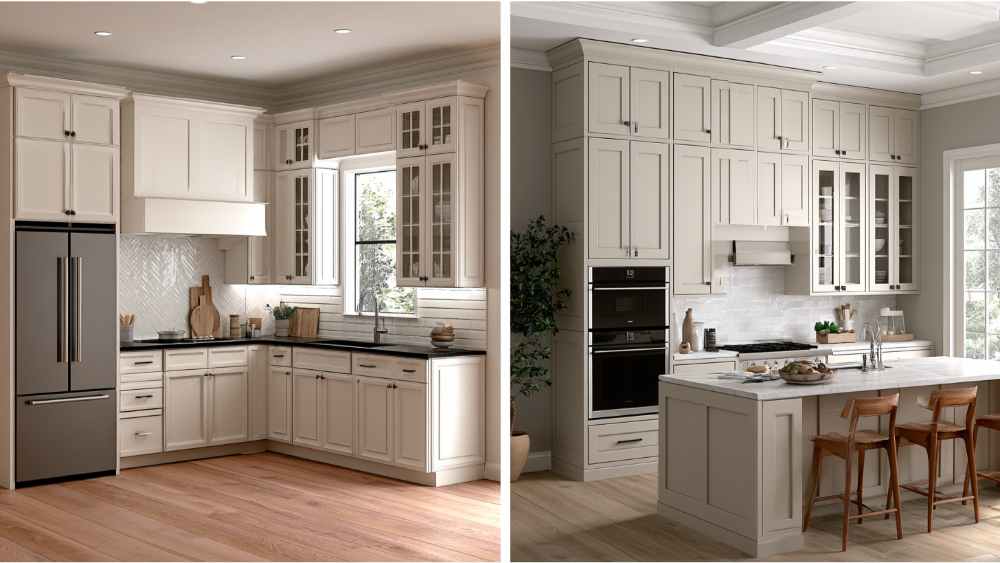
Ceiling height plays a big role in how deep your upper cabinets should be. In kitchens with 8- or 9-foot ceilings, 12 inches is ideal—it keeps the cabinets accessible and reduces head-bumping. In 10-foot or higher ceilings, deeper cabinets (13–14 inches) can be used more comfortably since they’re mounted higher and the reach is less of an issue.
User Height and Accessibility
Consider who uses the kitchen most. Taller users may not mind deeper cabinets, but shorter individuals or children may struggle to reach the back. If accessibility is a priority—especially in aging-in-place or universal design kitchens—stick to 12 inches or less. Pull-out trays or lazy Susans can help, but they reduce usable depth.
Countertop and Lower Cabinet Layout
The depth of your lower cabinets and countertop influences upper cabinet choice. Since lower cabinets are typically 24 inches deep, an upper cabinet that’s too deep (like 14 inches) can feel visually unbalanced. A 12- to 12.5-inch upper maintains proportion and keeps the kitchen feeling open and well-coordinated.
Custom vs. Stock Cabinet Depths
Stock Cabinets: Limited to Standard Sizes
Most stock cabinets come in 12-inch depth as a default. This makes them affordable, easy to install, and widely available. If you’re on a budget or doing a quick remodel, stock cabinets are a reliable choice. However, they offer little flexibility—you’re locked into standard dimensions.
Custom Cabinets: Tailor the Depth
Custom cabinets allow you to choose any depth, from 10 inches to 16 inches. This is ideal if you have specific storage needs or an unusual kitchen layout. For example, you might go shallower (10–11 inches) above a sink or cooktop to reduce headroom issues, or deeper (13–14 inches) in a pantry wall for bulk storage.
Cost and Lead Time Considerations
Custom depths usually come with higher costs and longer lead times. You’ll need precise measurements and professional installation. But if you prioritize function and ergonomics, the investment can be worth it—especially in a high-use kitchen.
Common Mistakes to Avoid
Choosing Depth Without Testing Reach
One of the biggest mistakes is selecting cabinet depth without simulating the reach. Stand in your kitchen and extend your arm to where the cabinet will be. If you can’t comfortably reach 14 inches back, that depth may be too much. A simple tape measure test can prevent frustration later.
Ignoring Lighting and Ventilation
Deeper cabinets can block under-cabinet lighting or interfere with range hood clearance. Make sure your chosen depth allows space for lighting strips, outlets, and ventilation systems. A 14-inch cabinet might cover part of a window or light fixture if not planned carefully.
Overlooking Door Swing and Clearance
Cabinet doors need space to open fully. If your upper cabinets are too deep, the doors may hit your head or obstruct nearby appliances. Hinges and door placement should be factored in—especially with full-overlay doors that extend further forward.
Tips for Maximizing Cabinet Storage
Use Organizers and Inserts
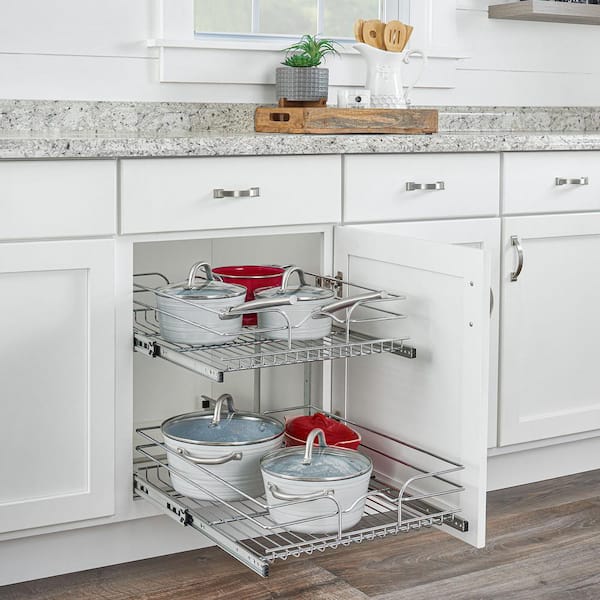
Even with a standard 12-inch depth, you can maximize space. Use shelf risers, plate racks, or pull-out spice trays to make the most of vertical space. These accessories prevent items from getting lost in the back and improve access.
Install LED Lighting
Under-cabinet LED strips help illuminate the interior, making it easier to see what’s stored. This is especially helpful in deeper cabinets where shadows can hide items. Choose low-profile, battery-free options that run on existing power.
Opt for Glass-Front or Open Shelving
If depth is a concern, consider glass-front cabinets or open shelving for part of your upper storage. This reduces the feeling of depth and makes items easier to grab. It also adds visual lightness to the kitchen.
Frequently Asked Questions About Upper Cabinet Depth
What is the standard depth for upper kitchen cabinets?
The standard depth is 12 inches. This size works well with typical countertop depths and keeps items within comfortable reach for most users.
Can upper cabinets be deeper than 12 inches?
Yes, 13 to 14 inches is common in custom builds. Deeper cabinets offer more storage but can make reaching the back more difficult, especially for shorter users.
Is 14 inches too deep for upper cabinets?
Not necessarily, but it depends on your ceiling height and who uses the kitchen. In kitchens with 10-foot ceilings, 14 inches works well. In standard 8-foot ceilings, it may feel cramped and harder to access.
What depth is best for small kitchens?
Stick with 12 inches in small kitchens. It maximizes storage without overwhelming the space or making the room feel crowded. You can add organizers to make the most of the depth.
Do upper cabinet depths vary by manufacturer?
Yes, but most stock cabinets default to 12 inches. Custom and semi-custom manufacturers offer more options, including 12.5, 13, and 14-inch depths.
How does cabinet depth affect reachability?
Deeper cabinets require more reach to access items at the back. For most adults, 12 inches is comfortable. Depths beyond 14 inches can create accessibility challenges without pull-out accessories.
Key Takeaways for Choosing Upper Cabinet Depth
The depth of your upper kitchen cabinets shapes both storage capacity and daily comfort. Here are the most important points to remember:
- 12 inches is the industry standard and works for most kitchens
- 12.5 to 14 inches suits custom builds with taller ceilings or specific storage needs
- Ceiling height and user reach should guide your final decision
- Stock cabinets offer limited depth options; custom cabinets provide flexibility
- Organizers and lighting can improve access regardless of depth
Before you commit to a depth, measure your space and test your reach. A thoughtful choice now will pay off every time you grab a plate or reach for a mug. If you’re still unsure, consult a kitchen designer who can help you balance storage, proportion, and accessibility for your specific layout.


