
You just finished remodeling your kitchen, yet something still feels unfinished. That empty gap between your cabinets and ceiling stares back at you every time you walk in. You’re not alone. How to decorate top of cabinets is one of the most common design dilemmas homeowners face, and the solution isn’t always obvious. Whether you want a bold statement or a clean, minimal look, the choices you make here can transform your entire kitchen.
Decorating above cabinets isn’t just about filling empty space. It’s about balance, personality, and making your kitchen feel intentional. Some kitchens look stunning with a bare, streamlined top, especially with high ceilings or open floor plans. Others come alive with curated collections, seasonal touches, or warm ambient lighting. The key is matching your approach to your kitchen’s style while keeping the space functional and easy to maintain.
This guide walks you through every step of the process. You’ll learn how to decide between decorating or leaving the space bare, what items work best, how to arrange them for visual impact, and how to keep everything clean and safe. You’ll also discover common mistakes to avoid, from overcrowding to pest problems. Whether your kitchen leans farmhouse, modern, traditional, or eclectic, you’ll find practical solutions that fit your space.
Decide: Decorate or Leave the Space Bare
The first decision you need to make is whether to fill the space above your cabinets or leave it empty. This choice shapes the entire look and feel of your kitchen.
When Leaving It Bare Works Best
A clean, unadorned space above cabinets can look polished and intentional. This approach shines in kitchens with high ceilings, typically 9 feet or taller, where the vertical gap feels more like a design feature than an oversight. Open-concept homes also benefit from a bare top because it keeps the kitchen feeling airy and uncluttered. If your kitchen already has strong visual elements elsewhere, like a bold backsplash, open shelving, or statement pendant lights, leaving the top empty prevents visual overload. A blank wall above cabinets can mimic the look of a high-end magazine spread, signaling curated simplicity.
When Decorating Adds Value
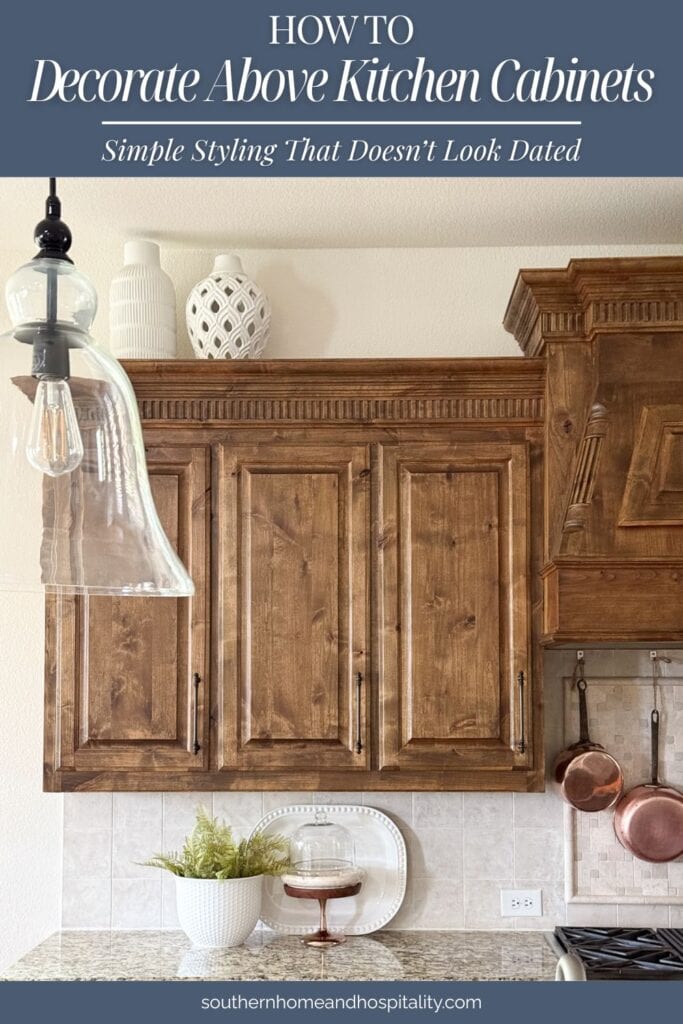
If your kitchen feels flat, sterile, or incomplete, adding decor above the cabinets can bring warmth and character. Kitchens with lower ceilings, under 8 feet, often look cozier and more finished when the space is filled. Decorating also gives you a chance to showcase collections, add seasonal flair, or personalize your kitchen with meaningful items. Traditional and farmhouse kitchens typically benefit most from a filled space, as the extra visual weight helps balance tall cabinetry. If that empty gap feels like an invitation to add something, go ahead, just do it thoughtfully.
Match Your Choice to Your Kitchen Style
Your kitchen’s overall design should guide your decision. Modern, Scandinavian, and industrial kitchens usually look best with minimal or no decor above cabinets. Farmhouse, traditional, and eclectic kitchens welcome more personality in that space. Ask yourself whether your kitchen feels like a gallery or a home. The answer will point you in the right direction.
Choose a Styling Theme

Once you decide to decorate, your next step is picking a cohesive theme that complements your kitchen’s existing design.
Pick a Consistent Color Palette
A unified color scheme prevents visual chaos. If your kitchen is neutral, with white, gray, or wood tones, consider adding a pop of color through a bold tray, vase, or piece of art. For kitchens with more color, echo the existing tones by matching your decor to cabinet hardware or backsplash tiles. Monochromatic arrangements, like all white ceramics or earth-toned baskets, create a calm and elegant look. Stick to two or three main colors to keep things harmonious.
Match Decor to Your Kitchen’s Aesthetic
- Modern or Contemporary: Use sculptural vases, geometric shapes, or a single metallic piece. Keep the display minimal and clean.
- Farmhouse or Rustic: Opt for vintage canisters, wooden cutting boards, or enamelware. Add greenery in mason jars or galvanized buckets.
- Traditional: Display fine china, silver trays, or framed prints with classic frames. Symmetry is key here.
- Eclectic or Bohemian: Mix textures, patterns, and global pieces. Woven baskets, colorful ceramics, and layered books work beautifully.
- Industrial: Use metal signs, concrete planters, or Edison bulb string lights for a raw, urban feel.
Rotate Decor for Seasonal Interest
Keep the space feeling fresh by changing your decor with the seasons. In fall, add pumpkins and burlap. In winter, switch to pinecones and candles. Spring calls for fresh flowers, while summer invites citrus-filled jars or light, airy pieces. Seasonal updates make your kitchen feel alive and give you a reason to clean and reassess the space regularly.
Select the Right Decorative Items

The items you choose can make or break the display. Focus on quality over quantity, and mix function with beauty.
Use Decorative Trays and Baskets
Trays act as anchors, grouping smaller items together neatly. Choose materials that match your style, like wood for warmth, metal for a modern edge, or ceramic for elegance. Baskets add texture and can hide less attractive items like cords or storage containers. Woven seagrass or wicker baskets work especially well in farmhouse or coastal kitchens.
Display Cookbooks and Glassware
Stacked cookbooks add height and personality to the display. Alternate upright and horizontal stacks for visual interest. Glassware, like vintage pitchers, decanters, or colored bottles, catches light and adds sophistication. Use them as vases for fresh flowers or display them empty for a clean, polished look.
Add Plants and Greenery
Real or faux plants bring life to the space. Small potted herbs like thyme or rosemary are both functional and fragrant. Succulents and trailing ivy add softness and organic shape. If you choose real plants, use pots with drip trays to protect your cabinets from water damage. Faux plants require no maintenance and look realistic with a quick dusting now and then.
Incorporate Art and Mirrors
A large framed print, recipe card, or family photo adds a personal touch to the space. Lean it against the wall for an effortless, gallery-like look. Mirrors reflect light and make small kitchens feel larger and brighter. Choose vintage frames for character or sleek, modern designs for a contemporary space.
Include One Statement Piece
A single bold item can anchor the entire display. Think of a large ceramic vase, a vintage clock, or a colorful painted board. In neutral kitchens, a bright red tray or black-and-white artwork becomes an instant focal point. Avoid using multiple statement pieces, as they compete for attention and make the space feel cluttered.
Arrange With Balance and Depth
How you arrange your items matters just as much as what you choose. A well-styled display feels intentional, not random.
Vary Heights and Layers
Mix tall and short items to create rhythm and visual interest. Place a tall vase next to a stack of books, then add a shorter candle in front. Layer items by putting a small frame behind a plant or tucking a basket slightly behind a tray. This adds depth and keeps the eye moving across the display.
Create Visual Balance
Distribute visual weight evenly across the space. If you place a large item on one end, balance it with a grouping of smaller pieces on the other. Symmetry works well in traditional kitchens, while asymmetry feels more relaxed and modern. Step back and view the arrangement from different angles to check that it looks balanced from every spot in the room.
Leave Negative Space
Don’t feel pressured to fill every inch. Empty space lets the eye rest and highlights your best pieces. If you’re unsure where to start, begin with three items and add more only if needed. The less-is-more approach applies especially here, as overcrowding makes the space feel messy and chaotic.
Add Ambient Lighting
Lighting transforms the top of cabinets from a static display into a dynamic feature that adds warmth and function to your kitchen.
Install LED Strip Lights
LED strips are affordable and easy to install. Place them along the back edge of the cabinet top or behind a valance for a soft, floating glow. Choose warm white for coziness or go with dimmable options for flexibility. These lights highlight your decor and brighten the countertop below.
Use Pendant or String Lights
A row of mini pendant lights adds both style and task lighting to your kitchen. Make sure they hang high enough to avoid hitting cabinet doors when they open. String lights, whether fairy lights or Edison bulbs, offer a whimsical, café-like feel. Drape them in a zigzag or straight line, but avoid tangling.
Try Mini Sconces or Puck Lights
Mini sconces mounted on the wall above cabinets add architectural interest and ambient light. Hardwired versions look sleek, while plug-in options are easier to install. Puck lights, available in battery or hardwired versions, can be placed discreetly for subtle accent lighting.
Avoid Common Lighting Mistakes
Never let cords dangle visibly. Tuck them behind cabinets or use cord covers for a clean look. Verify that lights don’t overheat or interfere with cabinet function. Test your placement before committing to a permanent installation.
Prevent Common Decorating Mistakes
Even the best ideas can go wrong without attention to detail. Avoid these pitfalls to keep your display looking polished and professional.
Don’t Overcrowd the Space
Too many items make the kitchen feel cluttered and chaotic. Stick to a few well-chosen pieces that complement each other. If the display looks busy from across the room, simplify by removing items until it feels balanced.
Avoid Food and Pest Risks
Even sealed jars of pasta, candy, or spices can attract ants or pantry moths. Skip real food displays entirely. Instead, use faux produce or fill jars with decorative grains, beans, or coffee beans that won’t spoil or attract pests.
Keep the Space Dust-Free
The top of cabinets collects dust, grease, and cooking residue faster than almost any other surface. Dust at least once a month with a microfiber cloth or vacuum brush attachment. Wipe glass, metal, and wood items as needed. Faux plants are easier to maintain than real ones in greasy kitchen environments.
Secure Heavy Items
Books, ceramics, and large vases can fall, especially in homes with kids or pets. Use museum putty, adhesive strips, or small brackets to anchor them securely. Never place heavy items near the front edge where they could easily tip over.
Match Scale to the Space
Tiny items get lost in a large gap, while oversized pieces overwhelm a small one. If the space between cabinets and ceiling is small, around 6 to 12 inches, use low-profile decor like a single row of books or a flat tray. For taller spaces of 18 inches or more, go bold with large vases or stacked baskets.
Maintain and Refresh Your Display
A great display doesn’t stay great without regular care. Keep it looking fresh with simple habits and routine attention.
Dust Monthly
Set a reminder to dust the top of your cabinets every four weeks. Use an extendable duster for high areas that are hard to reach. Pay special attention to corners and the space behind items where dust builds up quickly.
Rotate Seasonal Decor
Change your decor with holidays and seasons to keep the kitchen feeling current. Store off-season items in labeled bins for easy swapping. This practice keeps the space fresh and gives you a chance to clean and reevaluate the arrangement.
Reassess Every Few Months
Ask yourself whether the display still looks good. Are any items damaged or outdated? Rearranging occasionally prevents visual fatigue. Swap a plant for a sculpture, or move a tray to a different spot for a new look without buying anything new.
Clean Materials Properly
- Glass: Clean with vinegar spray or glass cleaner and a lint-free cloth.
- Wood: Wipe with a damp cloth, but avoid soaking the surface.
- Metal: Polish tarnished pieces with a soft cloth and metal polish.
- Basket or Wicker: Vacuum with a brush attachment, then spot-clean with a damp cloth.
- Fabric: Vacuum regularly or remove and hand-wash if the item allows.
Final Tips for a Polished Look
A few smart finishing touches can make all the difference in how your above-cabinet display looks.
Use Floating Shelves for Flexibility
If you’re unsure about decorating directly on cabinet tops, install floating shelves above them instead. Shelves create a dedicated display zone, keep items secure, and add architectural interest to the wall. Style them with cookbooks, small plants, or curated collections that reflect your personality.
Anchor With a Focal Point
Every display needs a center of attention. Choose a large mirror, a vibrant painting, or a unique vase to serve as the anchor. Build the rest of the arrangement around this focal point for a cohesive, intentional look.
Keep It Personal
Your kitchen should reflect who you are. Display heirloom pieces, travel souvenirs, or handmade items that mean something to you. A vintage bowl from your grandmother or a mug from a favorite trip adds warmth and meaning that no store-bought decor can match.
Know When to Stop
If the space feels done, leave it alone. Over-styling kills the effect and makes the space feel cluttered. A few well-placed items often speak louder than a crowded shelf full of stuff.
Frequently Asked Questions About Decorating Top of Cabinets
Should I decorate the top of my kitchen cabinets?
It depends on your ceiling height, kitchen style, and personal preference. High ceilings and open floor plans often look better with a bare top, while lower ceilings and traditional kitchens benefit from decorated space. If the empty area feels unfinished or awkward, adding a few well-chosen items can complete the look.
What should I put on top of kitchen cabinets?
Popular options include decorative trays, baskets, cookbooks, glassware, plants, framed art, and mirrors. Choose items that complement your kitchen’s style and color palette. Use a mix of heights and textures for visual interest, and include one statement piece as a focal point.
How do I keep the top of my cabinets clean?
Dust the area at least once a month using a microfiber cloth, extendable duster, or vacuum with a brush attachment. The space collects grease and dust quickly, so regular cleaning is essential. Clean glass with glass cleaner, wood with a damp cloth, and metal with polish as needed.
Will lighting above cabinets interfere with opening doors?
It can if you don’t position it carefully. Pendant lights need to hang high enough to clear cabinet doors when they open. LED strips and puck lights placed along the back edge typically don’t cause issues. Always test placement before committing to a permanent installation.
Can I display real food in jars above my cabinets?
It’s best to avoid real food, even in sealed jars. Food items can attract ants, pantry moths, and other pests. Use faux produce or fill jars with decorative grains, beans, or coffee beans instead. These look similar but won’t spoil or invite unwanted visitors.
How often should I change my above-cabinet decor?
Consider rotating decor seasonally or for holidays to keep the space fresh. At minimum, reassess the arrangement every few months. This prevents visual fatigue and gives you a chance to clean the area and adjust the display as your style evolves.
Key Takeaways for Styling Above Your Cabinets
Decorating the top of your cabinets is a small change with a big impact on your kitchen’s overall look. The first step is deciding whether to decorate or leave the space bare based on your ceiling height and kitchen style. If you choose to decorate, pick a cohesive theme, select items with varying heights and textures, and arrange them with balance and negative space in mind.
Lighting can elevate your display from simple to stunning, so consider adding LED strips, pendant lights, or sconces. Regular maintenance, including monthly dusting and seasonal rotation, keeps the space looking fresh and prevents pest and moisture issues. Avoid common mistakes like overcrowding, using real food, and neglecting to secure heavy items.
Start with a few well-chosen pieces that reflect your personality and complement your kitchen’s design. Build your display gradually, step back to assess the balance, and adjust as needed. With the right approach, the space above your cabinets will look polished, intentional, and uniquely yours.


