

Spilled hair dye on your cabinet and now you’re staring at a stubborn stain that seems impossible to remove? You’re not alone. Hair dye is designed to cling to surfaces, especially porous ones like wood, which makes cleaning it up a challenge. Whether it’s a splash on the cabinet door or a smear across the edge, removing hair dye from cabinets requires the right technique and prompt action. The good news? Most stains can be lifted without damaging your furniture if you act quickly and use the correct cleaning method. In this guide, you’ll learn safe, effective ways to remove hair dye from wood, laminate, and painted cabinets using common household products.
We’ll walk you through step-by-step solutions based on your cabinet material, highlight what not to do, and show how to prevent permanent discoloration. From quick wipe-ups to deep stain removal, these proven methods will restore your cabinet’s appearance without the need for refinishing or replacement.
Immediate Cleanup Steps
The key to successful stain removal is acting fast. Fresh hair dye is much easier to remove than dried, set-in color.
Blot, Don’t Rub
Use a clean, dry cloth to gently blot the stain. Rubbing spreads the dye and pushes it deeper into the surface. If the dye is still wet, this simple step can remove up to 80% of the spill before it sets.
Wipe With Damp Cloth
After blotting, dampen a soft cloth with cool water and gently wipe the area. Avoid hot water since it can set the stain. For laminate or sealed wood, this may be enough if done immediately.
Check Cabinet Finish Type
Before using any cleaner, identify your cabinet’s surface:
– Laminate: Non-porous, easier to clean
– Painted: Sensitive to harsh chemicals
– Natural wood: Porous, prone to staining
Using the wrong product can cause damage. Always test cleaners on a hidden area first.
Use Rubbing Alcohol Safely

Rubbing alcohol (isopropyl alcohol) is one of the most effective solutions for breaking down hair dye.
Apply Alcohol With Cotton Pad
Soak a cotton pad in 70% isopropyl alcohol and press it onto the stain for 10 to 15 seconds. Gently wipe in one direction. The dye should begin transferring to the pad.
Warning: Alcohol can dull or damage varnish on wood. Never scrub. Use light pressure only.
Repeat and Rinse
Repeat the process until no more color transfers. After removal, wipe the area with a damp cloth to remove residue, then dry immediately.
Protect Surrounding Areas
Cover nearby hardware or finishes with tape or a cloth to prevent accidental exposure to alcohol.
Try Dish Soap and Warm Water
For light stains or post-alcohol cleanup, a gentle solution works best.
Mix Mild Dish Soap
Combine a few drops of grease-cutting dish soap (like Dawn) with warm water. Use a microfiber cloth to gently clean the area.
This step removes any leftover dye or alcohol residue without stripping the finish.
Dry Thoroughly
After washing, dry immediately with a clean towel. Moisture left on wood can cause swelling or warping.
Use Baking Soda Paste for Set-In Stains

When hair dye has dried, a mild abrasive can help lift the stain.
Make a Thick Paste
Mix baking soda and water until it forms a spreadable paste. Apply directly to the stained area.
Gently Rub With Soft Cloth
Using circular motions, rub the paste over the stain for 20 to 30 seconds. Do not press hard. Baking soda is abrasive and can scratch finishes.
Wipe and Inspect
Wipe away the paste with a damp cloth. If the stain remains, repeat once. Avoid over-scrubbing.
Note: Not recommended for unsealed wood or high-gloss finishes.
Test Hydrogen Peroxide on Wood Surfaces
Hydrogen peroxide can lighten hair dye stains, especially on natural wood.
Apply With Caution
Dab 3% hydrogen peroxide on a cotton ball and test on an inconspicuous spot first. Wait 5 minutes to check for discoloration or finish damage.
Leave for Short Duration
If safe, apply to the stain and let sit for no more than 3 minutes. Wipe clean with water and dry.
Pro tip: Peroxide may lighten the wood slightly. Best for small spots or unfinished edges.
Avoid These Common Mistakes
Using the wrong method can make the problem worse.
Don’t Use Bleach on Wood
Household bleach can damage wood fibers and create a blotchy appearance. It’s too harsh for cabinet surfaces.
Skip Abrasive Cleaners
Products like Comet or steel wool can scratch finishes and make stains more visible by removing protective coatings.
Never Ignore Manufacturer Guidelines
Check your cabinet care guide. Some finishes, especially lacquered or UV-coated, require specific cleaners only.
Special Care for Painted Cabinets
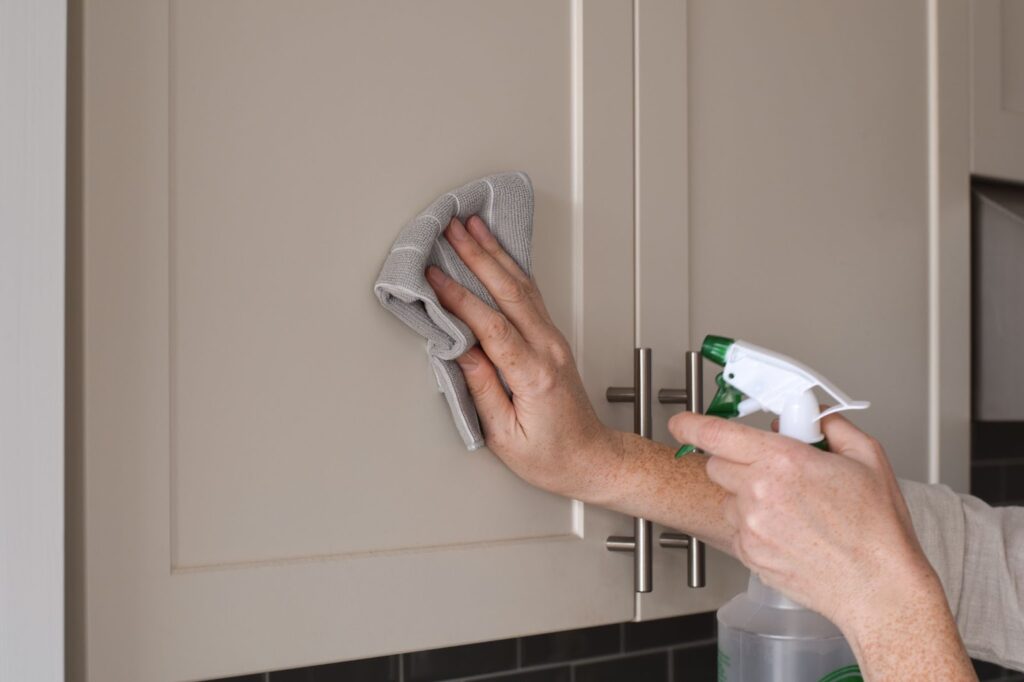
Painted cabinets are more fragile than they appear.
Use Non-Abrasive Cleaners Only
Stick to mild soap and water or a 50/50 vinegar-water mix. Avoid alcohol and peroxide unless tested first.
Blot Immediately After Spill
Painted surfaces can absorb dye through microscopic cracks. Fast action prevents deep staining.
Touch Up With Matching Paint
If the stain leaves a mark, use a touch-up pen in your cabinet’s color. Available at hardware stores.
Prevent Future Stains
Avoid repeat accidents with simple precautions.
Use a Protective Cover
Lay down a plastic-backed drape or old towel when coloring hair near cabinets.
Keep a Cleanup Kit Ready
Store a small kit with:
– Rubbing alcohol wipes
– Cotton pads
– Microfiber cloths
– Gloves
This lets you respond in seconds, not minutes.
Clean Tools Away From Cabinets
Do not rinse dye brushes or bottles near cabinetry. Residue can splash and stain.
When to Call a Professional
Some stains may be too deep for DIY removal.
Refinishing for Deep Penetration
If the dye has soaked into bare wood, light sanding and refinishing may be needed. Best left to pros to avoid uneven results.
Matching Finish After Cleaning
If cleaning causes a dull spot, a furniture restoration expert can blend and refinish the area seamlessly.
For Antique or Valuable Cabinets
Preserve value by consulting a specialist before using any chemical.
Frequently Asked Questions About Removing Hair Dye from Cabinets
Will hair dye stain my cabinets permanently?
Not necessarily. If you act quickly and use the right method for your cabinet material, most fresh stains can be removed completely. Dried or set-in stains may require multiple attempts or professional help.
Can I use nail polish remover on cabinet stains?
Nail polish remover contains acetone, which can strip cabinet finishes and cause more damage. Stick to rubbing alcohol or dish soap instead.
Does toothpaste remove hair dye from wood?
Toothpaste can act as a mild abrasive for some surface stains, but it’s not as effective as baking soda paste and may leave residue. Test on a hidden area first.
How long should I wait before treating a hair dye stain?
Treat the stain as soon as possible. Waiting more than a few hours allows the dye to penetrate deeper, making removal significantly harder.
Is rubbing alcohol safe for all cabinet types?
No. Rubbing alcohol can damage varnished or lacquered wood finishes. Always test on an inconspicuous area first and avoid scrubbing.
Can I sand out a hair dye stain myself?
Light sanding can work for bare wood, but matching the finish afterward is tricky. For visible areas, professional refinishing is usually the safer choice.
Key Takeaways for Removing Hair Dye from Your Cabinet
Removing hair dye from cabinets comes down to three things: speed, the right products, and knowing your surface. Fresh stains respond well to blotting and dish soap, while dried stains may need rubbing alcohol or baking soda paste. Always test any cleaner on a hidden area first, and never use bleach or harsh abrasives on wood.
If the stain persists after trying these methods, a professional can sand and refinish the area to restore its original look. For future spills, keep a small cleanup kit nearby and cover cabinets before coloring your hair.
Your cabinets don’t have to live with that dye stain. Start with the gentlest method, work your way up as needed, and you’ll likely save the surface without costly repairs.


