

You’re remodeling your kitchen or building custom cabinets and asking: how thick are cabinet doors, really? The answer isn’t one-size-fits-all. Cabinet door thickness varies based on material, cabinet location, and design goals. From the standard 1/4″ MDF panel to premium 7/8″ solid wood doors, thickness impacts look, durability, and installation. This guide breaks down every option using industry standards and expert insights. Whether you’re replacing a door or designing from scratch, you’ll learn exactly what thickness works best and why.
Standard Cabinet Door Panel Thickness
1/4 Inch Is the Industry Norm
The most common cabinet door panel thickness is 1/4 inch (6.35mm). This applies to both MDF and plywood panels used in frame-and-panel construction. Despite being relatively thin, 1/4 inch panels are structurally sound when properly fitted into a frame groove. They’re lightweight, cost-effective, and widely available, making them the go-to choice for most stock and semi-custom cabinets.
These panels are designed to float in the frame, meaning they’re not glued in place. This allows for natural expansion and contraction with humidity changes. A well-cut 1/4 inch MDF panel fits snugly in a standard 1/4 inch router groove with minimal rattle, delivering a clean, professional finish.
Why 1/4 Inch Works for Most Doors
- Fits standard router bits: Most cope-and-stick sets create a 1/4 inch groove that matches panel thickness
- No rattle when installed correctly: MDF is often a true 1/4 inch, ensuring a tight fit
- Lightweight: Easier on hinges, especially for tall or wide doors
- Cost-efficient: Less material means lower shipping weight and expense
Many woodworkers confirm that even when planning for 3/8 inch, 1/4 inch MDF panels perform just as well. One builder noted that using 1/4 inch instead of 3/8 inch due to availability turned out fine, with no structural weakness observed.
Alternative Thickness Options
3/8 Inch MDF for Added Heft
While 1/4 inch dominates the market, 3/8 inch (9.5mm) MDF serves as an alternative for those wanting a heavier, more substantial feel. It’s often chosen for drawer fronts or lower cabinets where durability matters. However, thickness doesn’t equal strength. Since the panel floats, it contributes little to the door’s structural integrity.
The real benefit of 3/8 inch comes in drawer front applications. When the back of the panel is relieved (routed out), it eliminates the gap between the drawer front and box, simplifying fastening. Without this relief, a 3/8 inch panel may not fit standard hardware or could create alignment issues.
Keep in mind that 3/8 inch MDF isn’t always in stock at local suppliers. If availability is a concern, 1/4 inch remains the more practical choice for most projects.
7/8 Inch Thick Doors for Premium Look
For high-end cabinetry, 7/8 inch thick doors offer a stately, custom appearance. These aren’t just thicker panels. They’re full-profile frame doors, often with mitered joints. The extra thickness allows for deeper moldings and more intricate frame detailing, especially in styles like:
- Connecticut 7/8 inch (Model 595)
- Vermont 7/8 inch (Model 596)
- Talbot 7/8 inch (Model 113)
- Easton 7/8 inch (Model 114)
These doors are heavier and pricier but deliver a luxury aesthetic. They’re ideal for statement pieces like pantry doors or furniture-style cabinetry where visual presence matters most.
Material-Specific Thickness Choices
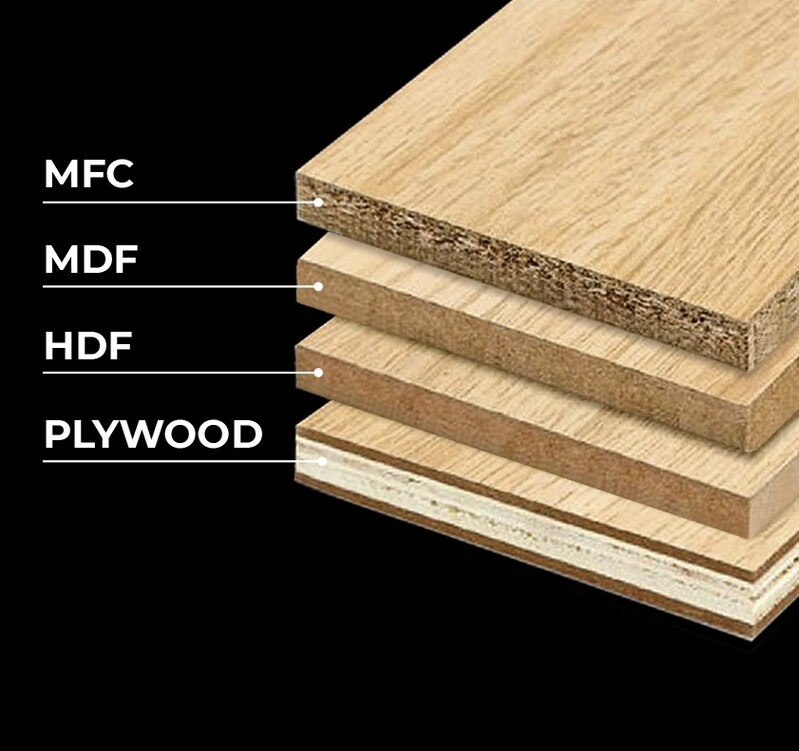
MDF: Best for Painted Doors
When it comes to paint-grade cabinets, MDF (Medium-Density Fiberboard) is the top recommendation. Nothing paints better than MDF. It’s smooth, consistent, and free of grain patterns that can telegraph through paint.
- 1/4 inch MDF is standard for painted flat-panel doors
- Provides good heft without excessive weight
- Ideal for upper cabinets and drawer fronts
- Requires wider rails and stiles for stronger glue joints due to heavier weight
Despite being more brittle than plywood, MDF performs well when protected from direct impact. This makes it less ideal for lower cabinets in high-traffic kitchens where accidental bumps are common.
Plywood: Flexible and Impact-Resistant
Plywood panels (typically 1/4 inch) are a solid alternative, especially for lower cabinets. Unlike MDF, plywood has give when bumped, making it more resistant to dents and damage from pots, pans, or knees.
- Better for areas prone to impact
- Slightly more flexible than MDF
- Can be painted or stained, depending on veneer
- Often preferred for utility or garage cabinetry
While not as smooth as MDF for paint, high-quality birch or maple-faced plywood can deliver excellent results with proper preparation and priming.
Solid Wood: Custom and Durable
Solid wood doors use stiles, rails, and panels, not a flat slab. The overall door thickness depends on the wood species and construction method:
- Pine: Affordable but soft, dents easily
- Poplar: Stable, great for painting, budget-friendly
- Birch: Smooth grain, excellent for staining
- Oak or Maple: Premium hardwoods, durable but harder to cut and shape
Solid wood doors are typically frame-and-panel, with the center panel floating in a groove. The frame thickness often ranges from 3/4 inch to 7/8 inch, depending on the style and manufacturer.
Application-Based Thickness Recommendations
Upper Cabinet Door Thickness
For upper cabinets, 1/4 inch MDF is perfectly adequate. These doors are smaller, lighter, and less prone to impact. The smooth surface ensures a flawless painted finish, and the lightweight design reduces stress on wall-mounted hinges.
- Smaller door sizes benefit from 1/4 inch thickness
- No need for heavier materials unless aesthetics demand it
- Floating panel design prevents warping over time
Lower Cabinet Door Thickness
Lower cabinets face more wear and tear. While 1/4 inch MDF can be used, caution is advised. Frequent contact from legs, pets, or dropped items can damage MDF more easily than plywood.
Recommended options include:
- Plywood panels for better impact resistance
- 3/8 inch MDF (with proper support) for added durability
- Wider stiles and rails to reinforce joints
If you love the paint finish of MDF, ensure lower doors are protected with bumpers or careful placement in low-traffic zones.
Drawer Front Thickness
Drawer fronts are often 1/4 inch MDF, and they work well. Users report no issues with fit or durability in standard applications.
For 3/8 inch drawer fronts, consider relieving the back:
- Route out the back to match the drawer box depth
- Eliminates gaps when fastening
- Ensures flush alignment with the drawer box
Without relief, a 3/8 inch front may protrude or require shims, adding unnecessary complexity to installation.
Groove and Panel Fit Guidelines
Standard Groove Size: 1/4 Inch
Most cabinet doors use a 1/4 inch groove cut with a cope-and-stick router bit. This groove holds the panel (whether MDF or plywood) in place while allowing it to float freely.
- 1/4 inch MDF fits perfectly, often measuring a true 0.25 inches
- Panels should slide freely but not rattle
- Never glue the panel into the groove
This floating design prevents cracking or warping due to humidity changes, especially important in kitchens with fluctuating temperatures.
Panel Sizing for Floating Installation
To ensure proper fit:
- Cut panels slightly smaller than the groove opening to allow for expansion
- Allow for natural movement in all directions
- Use a digital caliper to verify panel thickness before assembly
Accurate measurement ensures replacement panels fit perfectly, especially when mixing materials or working with existing cabinets.
Door Construction Methods by Thickness
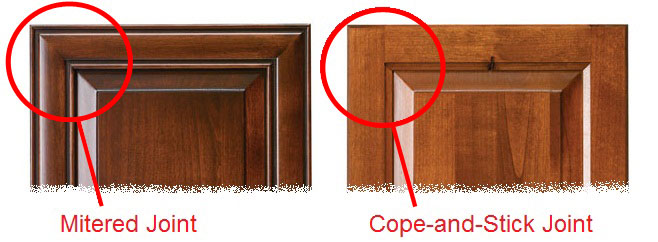
Cope and Stick with 1/4 Inch Panels
Cope and stick is the most common method for flat-panel doors. It uses a router bit set to create:
- A cope on the end of rails and stiles
- A matching stick profile on the inside edge
- A 1/4 inch groove to capture the panel
This method works flawlessly with 1/4 inch MDF or plywood, creating strong, clean joints. It’s ideal for both DIYers and production shops.
Miter Frame Doors at 7/8 Inch
Mitered frame doors use 45-degree joints for a seamless look. These are typically built with 7/8 inch thick stock, allowing for:
- Deeper profiles
- More decorative molding options
- A furniture-like appearance
The extra thickness enhances durability and visual weight, making these doors perfect for custom kitchens and statement cabinetry.
Measurement and Planning Tips
How to Measure Existing Doors
Use a digital caliper or precise tape measure to check:
- Door panel thickness
- Frame stile and rail width
- Groove depth and width
Accurate measurements ensure replacement panels fit perfectly, especially when mixing materials or working with existing cabinets.
Planning for Material Availability
- 1/4 inch MDF is widely available and commonly stocked
- 3/8 inch MDF may require special order from suppliers
- Plan material selection early to avoid project delays
If 3/8 inch isn’t available, 1/4 inch is a proven substitute with no performance loss in most applications.
Tools and Installation Essentials
Must-Have Tools for Cabinet Work
- Tape measure and pencil
- Combination square
- Table saw or circular saw
- Drill and driver
- Clamps
- Orbital sander (120 to 220 grit)
- Level for door alignment
Sanding and Finishing Tips
- Start with 120-grit sandpaper to remove imperfections
- Finish with 220-grit for smooth paint adhesion
- Fill gaps or dents with wood filler before finishing
- Finish options include paint (best on MDF), stain (on wood or plywood), or polyurethane for protection
Cost, Weight, and Performance Comparison
| Thickness | Best For | Material | Weight | Cost | Performance Notes |
|---|---|---|---|---|---|
| 1/4 inch | Upper cabinets, painted doors | MDF or Plywood | Light | $ | Industry standard, excellent fit |
| 3/8 inch | Drawer fronts, lower cabinets | MDF (relieved) | Medium | $$ | Heavier, may need routing |
| 7/8 inch | Premium, mitered doors | Solid wood | Heavy | $$$ | Luxurious look, detailed profiles |
Expert Consensus: What Really Matters
1/4 Inch Is Sufficient: Thicker Isn’t Stronger
Despite common assumptions, thicker panels don’t add strength. The frame, not the panel, provides structural integrity. Panels float and aren’t glued, so their role is aesthetic rather than load-bearing.
Experts agree that 1/4 inch will work just fine for most applications. No data or reason exists to prove 3/8 inch or thicker is better. MDF is definitely the way to go for paint-grade doors.
Extra thickness only adds weight, which can strain hinges over time, especially on tall or wide doors. This added weight provides no structural benefit.
When to Upgrade Thickness
Consider thicker options only when:
- Aesthetics demand it, such as 7/8 inch for furniture-style kitchens
- Drawer attachment requires it, like 3/8 inch with a relieved back
- Impact resistance is critical, where plywood outperforms MDF
Final Recommendations by Use Case
For Paint-Grade Cabinets
- Use 1/4 inch MDF panels for the smoothest finish
- Ideal for both upper and lower cabinets with proper care
- Ensure wider stiles for stronger joints
- Sand smooth and prime before painting
For High-Impact Areas
- Choose plywood for lower cabinets prone to bumps
- Or use 3/8 inch MDF with careful installation
- Add door bumpers to prevent damage over time
For Custom or Statement Doors
- Opt for 7/8 inch mitered doors for maximum presence
- Use solid wood like birch, maple, or oak
- Allows for detailed profiles and premium finishes
For Drawer Fronts
- 1/4 inch MDF works perfectly in standard applications
- For 3/8 inch, relieve the back for clean attachment
- Match thickness to drawer box depth for best results
Frequently Asked Questions About Cabinet Door Thickness
What is the standard thickness for cabinet doors?
The industry standard for cabinet door panels is 1/4 inch (6.35mm). This applies to both MDF and plywood panels used in frame-and-panel construction. Some specialized applications use thinner panels at approximately 5.2mm, but 1/4 inch remains the most common choice.
Is a thicker cabinet door panel better?
No. Thicker panels don’t add structural strength because panels float in the frame and aren’t glued. They only add weight, which can strain hinges over time. The frame joints provide the primary structural integrity, not the panel thickness.
What thickness MDF should I use for cabinet doors?
1/4 inch MDF is sufficient for most cabinet doors, including upper cabinets and drawer fronts. It provides good heft for smaller doors and paints beautifully. For lower cabinets prone to impact, consider plywood or 3/8 inch MDF instead.
Can I use 3/8 inch panels instead of 1/4 inch?
Yes, but there’s no proven advantage. 3/8 inch panels work well for drawer fronts when the back is relieved (routed out) to eliminate gaps. However, 3/8 inch MDF may not always be available at local suppliers, and 1/4 inch performs just as well in most applications.
What is the best material for painted cabinet doors?
MDF (Medium-Density Fiberboard) is the best choice for paint-grade cabinet doors. Nothing paints better than MDF because it’s smooth, consistent, and free of grain patterns that can show through paint. Use 1/4 inch MDF for standard applications.
How thick are premium cabinet doors?
Premium cabinet doors are typically 7/8 inch thick. This thickness allows for more detailed frame designs and provides a stately, significant presence. Examples include Connecticut 7/8 inch (Model 595), Vermont 7/8 inch (Model 596), Talbot 7/8 inch (Model 113), and Easton 7/8 inch (Model 114).
Key Takeaways for Choosing Cabinet Door Thickness
Cabinet door thickness ranges from 1/4 inch to 7/8 inch, but 1/4 inch is the standard for most applications. MDF dominates paint-grade work, while plywood suits high-impact zones. Thicker isn’t stronger because panels float and don’t support the door structure.
Choose thickness based on location, material, and design goals, not assumptions. For upper cabinets and drawer fronts, 1/4 inch MDF delivers excellent results. For lower cabinets, consider plywood for impact resistance. For premium statement pieces, 7/8 inch solid wood doors offer unmatched visual presence.
With proper fit and installation, even 1/4 inch doors deliver lasting performance and professional results. Measure carefully, select the right material for your specific needs, and your cabinet doors will serve you well for years to come.


