

If you’re designing a kitchen or upgrading your storage, one of the most practical questions you’ll face is: how deep are pantry cabinets? The answer isn’t one-size-fits-all, as depth varies based on cabinet type, kitchen layout, and storage needs. Most standard pantry cabinets are 24 inches deep, aligning with typical base cabinets, but options range from shallow 18-inch units to deep 30-inch models for bulk storage. Choosing the right depth impacts accessibility, traffic flow, and how efficiently you can organize food and supplies. In this guide, you’ll learn standard dimensions, ideal shelf depths, walk-in pantry design tips, and key factors to consider when selecting the perfect pantry cabinet depth for your space.
Standard Pantry Cabinet Depths

24-Inch Depth: The Kitchen Standard
The 24-inch (61 cm) depth is the most common for base and pantry cabinets, matching standard kitchen layouts. This depth ensures seamless integration with countertops and adjacent cabinetry, providing ample room for canned goods, boxed items, and small appliances. It’s ideal for general storage and works well in both reach-in and walk-in pantries. However, without pull-out shelves, items can get lost in the back, making organization accessories essential for usability.
Shallow vs. Deep Cabinet Options
For tight spaces, 18 to 20 inch (46 to 51 cm) cabinets offer a practical alternative. These shallower units improve clearance near walkways, kitchen islands, or bar seating, enhancing traffic flow. On the other end, 30-inch (76 cm) and deeper cabinets are reserved for large appliances like stand mixers or slow cookers. While deeper isn’t always better, it’s useful when maximizing storage in dedicated butler’s pantries or large utility rooms.
Matching Countertop and Cabinet Depth
Countertops typically extend to 25 or 26 inches (64 to 66 cm), slightly beyond the 24-inch cabinet depth. This overhang provides extra workspace and prevents items from rolling off. When planning your pantry, ensure cabinet depth complements nearby countertops, especially if you’re adding a countertop inside a walk-in pantry for prep or appliance use.
Ideal Shelf Depths for Pantry Storage
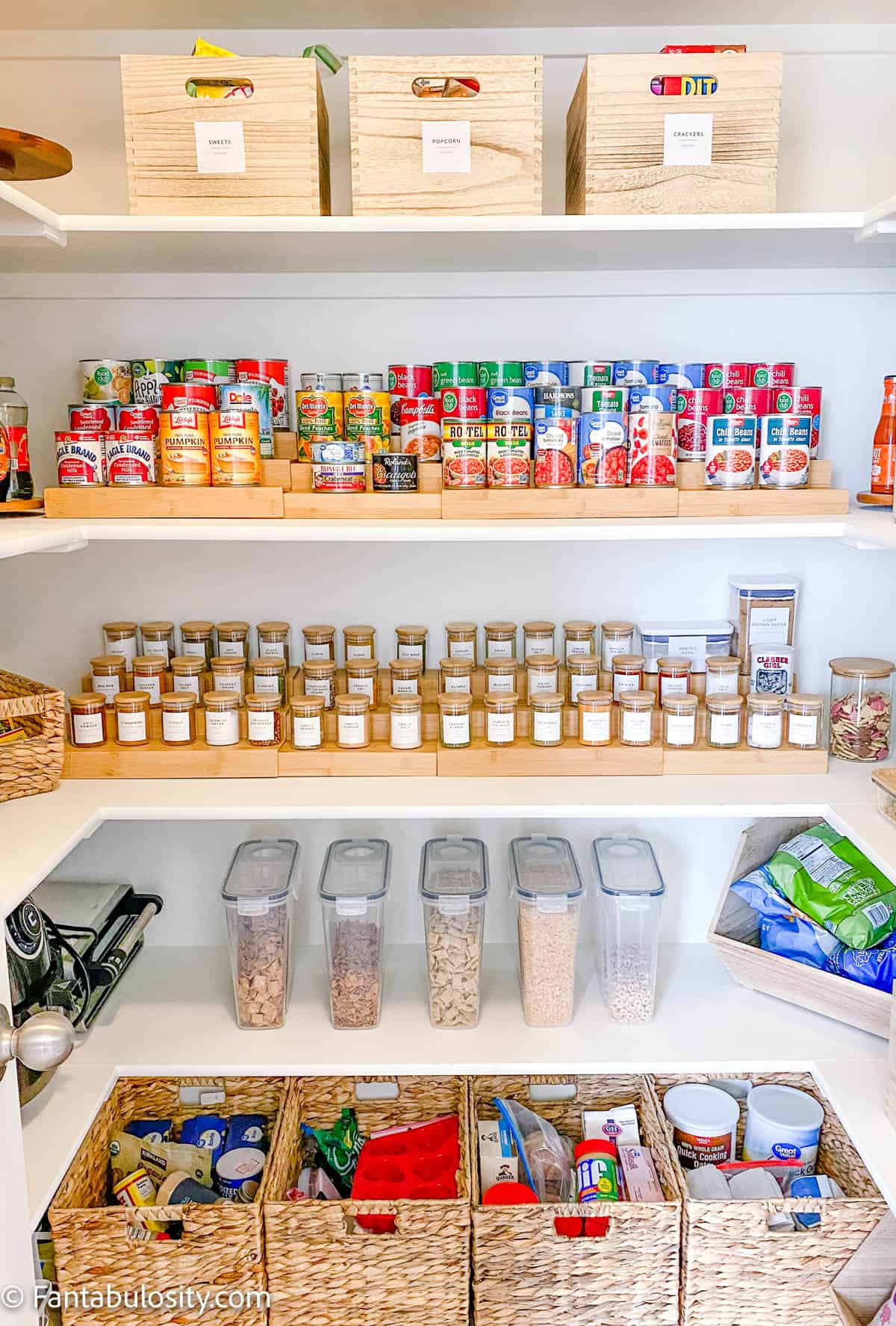
Standard Pantry Shelf Depth: 14 to 16 Inches
Most pantry shelves are 14 to 16 inches (36 to 41 cm) deep, enough to hold standard food containers while keeping items visible and reachable. This depth strikes a balance between storage capacity and accessibility, minimizing the risk of forgotten products buried at the back. For deeper cabinets, use pull-out shelves to bring rear items forward and maintain efficiency.
Shallow Shelves for High and Spice Storage
Upper shelves should be 10 to 12 inches (25 to 30 cm) deep for safety and ease of access. Since these are harder to reach, shallower depths prevent overreaching and make it easier to spot stored items. Spice shelves are even shallower, around 6 inches (15 cm), perfect for narrow spice jars. Door-mounted shelves can go as shallow as 4 inches (10 cm), ideal for spices, wraps, or small condiments.
Custom Shelf Depth Strategies
Custom pantries often use variable shelf depths: deeper at the bottom for bulk items, shallower at the top for lighter goods. This tiered approach maximizes both capacity and usability. For example, bottom shelves at 16 inches can hold cereal boxes, while upper shelves at 10 inches keep spices and snacks visible. Adjustable shelf brackets allow you to reconfigure depths as storage needs change.
18-Inch vs 24-Inch Pantry Cabinets: Which Is Better?
When to Choose 18-Inch Cabinets
An 18-inch deep pantry shines in compact kitchens or when clearance is critical, like near a kitchen island with bar stools. It improves traffic flow and prevents door collisions in tight layouts. Real-world installations show that 18-inch pantries with bottom drawers and closely spaced shelves can be highly efficient, reducing bending and preventing clutter. Top shelves in these setups are often 13 inches deep, and door shelves 4 inches, optimizing every inch.
Advantages of 24-Inch Pantry Cabinets
The 24-inch deep pantry is more practical for general use. It matches standard cabinet depths, creating a uniform look, and accommodates larger items like pasta pots or bulk pantry goods. It’s the go-to choice for families who buy in bulk or store small appliances inside the pantry. However, without roll-out shelves, items can get pushed to the back and forgotten, making organization systems a smart investment.
Cost and Organization Trade-Offs
Pull-out shelves cost around $100 per shelf, significantly improving usability in deep cabinets. For budget-conscious builds, DIY slide-out solutions or tiered shelf dividers can help. If you choose 18-inch cabinets, you may save on accessories but sacrifice some storage volume. Weigh your budget, storage habits, and kitchen layout when deciding between depths.
Walk-In Pantry Depth Guidelines
Optimal Depth: 24 to 26 Inches
For walk-in pantries, the ideal depth is 24 to 26 inches (61 to 66 cm). This range maximizes storage while allowing easy access to items on both sides of the aisle. A 24-inch depth fits standard shelving and keeps the pantry functional without consuming excessive floor space. If you’re storing large appliances, consider a 30-inch deep section on one side, while keeping the rest at 24 inches for balance.
Corner Cabinet Solutions
Deep corner spaces often go underused. Install carousel shelves or corner turntables to make these areas accessible. These rotating units allow full visibility and eliminate blind spots, turning awkward corners into efficient storage zones. Pair them with 24-inch deep cabinets for best results.
Aisle Width and Clearance
Ensure walk-in pantry aisles are at least 36 inches (91 cm) wide for comfortable movement. For shared use or mobility access, go wider, from 48 to 66 inches (122 to 168 cm), especially if someone uses a walker or wheelchair. Combine proper depth with adequate aisle space to create a pantry that’s both spacious and functional.
Accessibility and Safety Considerations
:strip_icc()/slide-out-kitchen-pantry-0bc832b7-1d407738110c410a8ece003d76c3822d.jpg)
Preventing Overreaching and Strain
The maximum comfortable reach to a shelf is 69 to 76 inches (1.75 to 1.93 m). Keep frequently used items within this range. Place heavier items on bottom shelves at 20 to 24 inches (51 to 61 cm) high to reduce back strain. Use pull-out bins or drawer systems for low storage to avoid bending.
Safe Upper Shelf Design
High shelves should be shallower, at 10 to 12 inches, and reserved for lightweight, infrequently used items. Avoid placing heavy objects overhead, and ensure ladders or step stools are available if top shelves reach 84 inches (2.13 m), the standard maximum height for vertical storage.
Door and Pull-Out Clearance
When opening cabinet doors or pull-out shelves, ensure there’s enough space in front. A full 24-inch deep pull-out requires at least 26 inches of clearance in the aisle. In tight spaces, consider soft-close drawers or bi-fold doors to save room.
Customization Tips for Maximum Efficiency
Use Adjustable and Tiered Shelving
Adjustable shelf brackets let you customize heights and depths based on changing needs. Combine deeper lower shelves at 16 inches with shallow upper shelves at 10 to 12 inches to optimize both capacity and visibility. This tiered approach prevents stacking and makes every item easy to see.
Add Bottom Drawers and Door Storage
Bottom drawers in 18 to 24 inch deep pantries improve access to heavy items like grains or pet food. They reduce bending and help keep the pantry organized. Door-mounted shelves, even at just 4 inches deep, add valuable space for spices, wraps, or cleaning supplies, maximizing every inch.
Mix Depths for Visual Interest and Function
Some kitchens use mixed-depth cabinets for aesthetic contrast, like an 18-inch pantry flanking a 24-inch bar area. This creates visual balance while maintaining functionality. Just ensure the transition feels intentional and doesn’t disrupt workflow.
Key Factors When Choosing Pantry Depth
1. Available Floor Space and Traffic Flow
Measure your kitchen layout before deciding. If the pantry opens into a high-traffic zone, 18 to 20 inch cabinets improve clearance. In larger kitchens, 24-inch depths offer better storage without compromising movement.
2. Storage Needs: Bulk vs. Everyday Items
Do you buy in bulk or store small appliances? If yes, 24-inch or deeper cabinets are worth the space. If you cook with fresh ingredients and store fewer packaged goods, an 18-inch pantry may suffice.
3. Budget for Organizational Accessories
Deep cabinets need pull-outs, drawers, or carousels to stay functional. At $100 per shelf, these add up. If budget is tight, a shallower pantry with fixed shelves may be more cost-effective.
4. Accessibility Requirements
For aging-in-place design or homes with mobility challenges, prioritize shallow shelves, pull-out systems, and wider aisles of 60 inches or more. These features make the pantry usable for everyone.
5. Aesthetic and Design Preferences
While function comes first, aesthetics matter. A 24-inch pantry blends seamlessly with standard cabinetry. An 18-inch unit can create a sleek, minimalist look, especially when paired with full-height drawers.
Frequently Asked Questions About Pantry Cabinet Depth
What is the standard depth of a pantry cabinet?
The standard depth for pantry cabinets is 24 inches (61 cm), matching typical base cabinets. This size accommodates most food containers and integrates well with standard kitchen layouts.
Are 18-inch deep pantries too shallow?
No, 18-inch deep pantries work well in tight spaces. They improve clearance near walkways and islands, and with bottom drawers and extra shelves, they can be highly efficient for everyday storage.
How deep should walk-in pantry shelves be?
Walk-in pantry shelves should be 14 to 16 inches deep for most items. Upper shelves can be shallower at 10 to 12 inches for safety and visibility, while spice shelves are around 6 inches deep.
Do I need pull-out shelves in a 24-inch pantry?
Pull-out shelves are strongly recommended for 24-inch deep pantries. Without them, items can get lost in the back. Pull-outs cost about $100 per shelf and significantly improve accessibility.
What is the maximum reach height for pantry shelves?
The maximum comfortable reach is 69 to 76 inches (1.75 to 1.93 m). Keep frequently used items within this range, and reserve higher shelves for lightweight, rarely used goods.
How wide should a walk-in pantry aisle be?
Aisles should be at least 36 inches (91 cm) wide for comfortable movement. For accessibility with mobility aids, widen aisles to 60 or 66 inches (1.52 to 1.68 m).
Key Takeaways for Choosing Pantry Cabinet Depth
Selecting the right pantry cabinet depth comes down to your space, storage habits, and budget. The 24-inch standard remains the most practical choice for most kitchens, offering balanced storage and accessibility. For tight layouts, 18-inch cabinets improve traffic flow without sacrificing much capacity, especially when designed with drawers and extra shelves.
Remember these essentials when planning your pantry:
- Match shelf depth to what you store: 14 to 16 inches for general goods, 10 to 12 inches for upper shelves, and 6 inches for spices
- Use pull-outs or carousels in deep cabinets to prevent wasted space
- Keep aisle widths at 36 inches minimum for comfortable access
- Prioritize accessibility with shallow upper shelves and bottom drawers
Your next step is to measure your kitchen space and list what you plan to store. Use those numbers to choose a depth that balances capacity with usability. A well-planned pantry depth will keep your kitchen organized and your daily routines smooth for years to come.


