
Cream cabinets bring warmth and timeless charm to any kitchen, creating a soft, inviting foundation that pairs beautifully with a wide range of design styles. But choosing the right backsplash is key to elevating that warmth into a cohesive, stylish space. With so many tile options, colors, and patterns available, it’s easy to feel overwhelmed, especially when you want a look that enhances, not clashes with, your cream cabinetry.
The good news is that cream is incredibly versatile. It acts as a neutral canvas that harmonizes with both warm and cool tones, subtle textures, and even bold accents. This guide cuts through the noise, delivering clear, actionable backsplash ideas tailored specifically for cream cabinets, whether you’re aiming for traditional elegance, modern minimalism, or rustic charm. You’ll learn which materials shine, how to use color and pattern wisely, and what finishes and lighting can elevate your design.
Match Warm Undertones for a Seamless Look
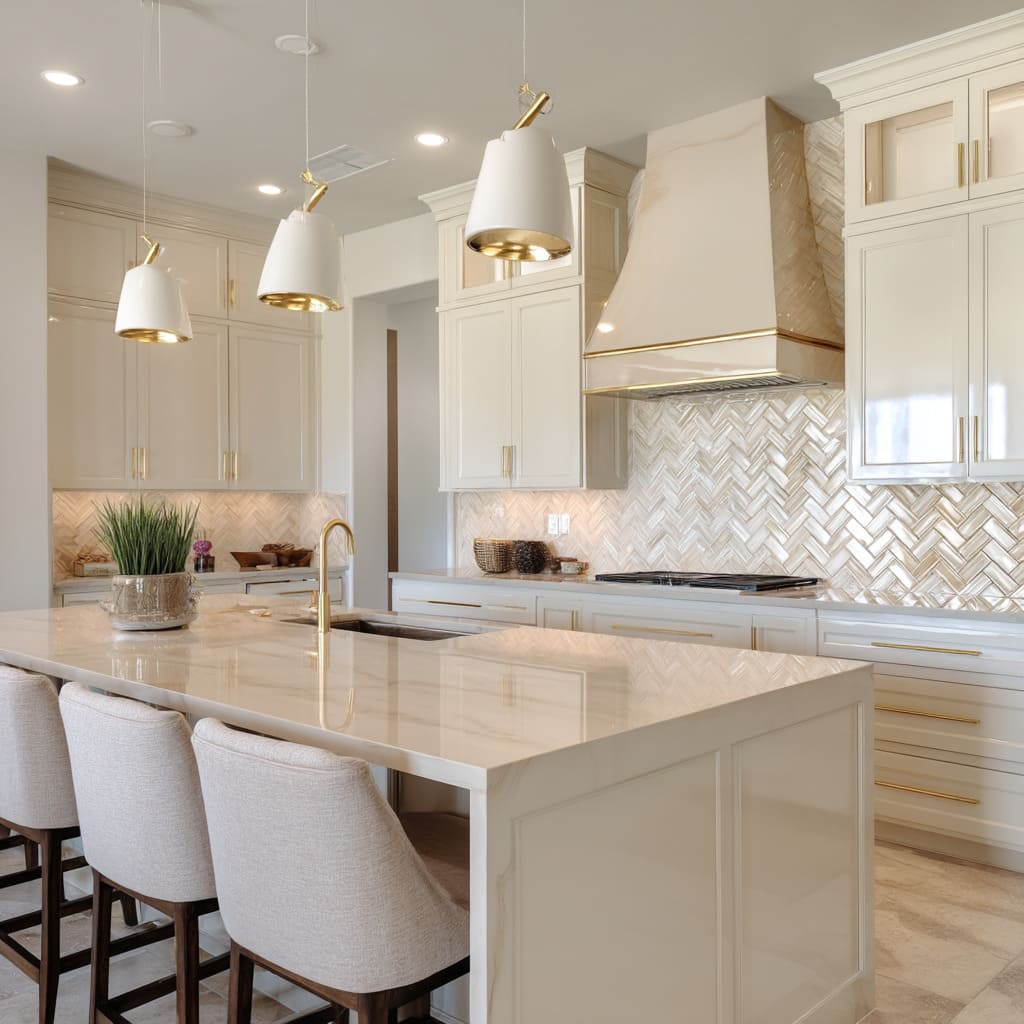
Cream cabinets often have subtle yellow, beige, or pink undertones, making warm-toned backsplashes the most natural pairing. Choosing tiles that mirror or complement these undertones creates a harmonious, cohesive look that feels intentional and polished.
Opt for Light Beige or Ivory Tiles
Light beige or ivory tiles blend effortlessly with cream cabinets, enhancing warmth without introducing contrast. These shades are ideal for achieving a soft, monochromatic kitchen aesthetic. Use large-format porcelain or ceramic tiles in matte finishes for a modern, clean look. Pair with light grout to maintain continuity or slightly darker grout to define tile edges subtly. This approach works especially well in traditional or Scandinavian-style kitchens where simplicity and calm are key.
Use Soft Gray with Warm Undertones
Not all grays clash with cream. Warm grays, those leaning toward taupe or greige, add gentle contrast while preserving the kitchen’s inviting feel. A herringbone-patterned subway tile in warm gray creates visual interest without overpowering the cabinetry. For a refined look, select a honed finish to reduce glare and enhance texture. This combination is perfect for transitional kitchens that blend modern and classic elements.
Pair with Warm White Tiles
Warm white tiles, those with a hint of cream or beige, are nearly indistinguishable from the cabinets but offer enough variation to define the backsplash area. This subtle differentiation is ideal for open-concept spaces where you want cohesion between kitchen and dining areas. Use 3×6 subway tiles laid in a classic horizontal layout for timelessness, or vertically to elongate short walls.
Create Contrast with Accent Colors
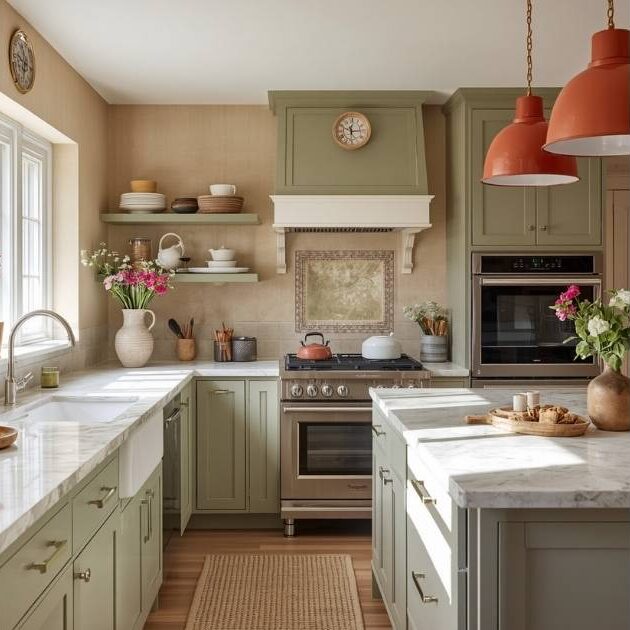
While monochrome schemes are elegant, a touch of contrast can make your kitchen pop. The right accent color adds personality without overwhelming the soft foundation of cream cabinets.
Add Sage Green Accents
Sage green is a top-performing accent color for cream cabinetry. It brings a natural, earthy freshness that feels both modern and timeless. Use sage green grout with white or beige tiles for a soft, integrated look. Alternatively, install a border of sage green mosaic tiles along the top of the backsplash for a defined, decorative touch. This works especially well in farmhouse or cottage-style kitchens.
Introduce Dusty Blue for Cool Contrast
Dusty blue offers a cooler contrast that still feels warm due to its muted tone. It pairs beautifully with cream cabinets, especially when combined with white countertops and brushed brass hardware. Consider a glass mosaic backsplash in dusty blue for a luminous, reflective effect that brightens the space. This color shines in kitchens with ample natural light or under-cabinet LED lighting.
Use Warm Terracotta for Depth
Warm terracotta tiles add rustic charm and Mediterranean flair. Their earthy reds and oranges complement the warmth of cream cabinets while introducing bold texture. Opt for handmade terracotta tiles or porcelain that mimics the look for easier maintenance. Use a basketweave or hexagonal pattern to enhance visual interest. This combination works best in kitchens with natural wood flooring and open shelving.
Choose Tile Patterns Strategically
The pattern you choose can transform the character of your kitchen. From classic to contemporary, the right layout adds movement and style without competing with your cabinets.
Install Herringbone Subway Tiles
The herringbone pattern brings dynamic energy to a simple subway tile. Lay 3×6 ceramic or porcelain tiles at a 45-degree angle for a modern twist on tradition. This pattern works well with light gray, warm white, or ivory tiles, creating subtle rhythm behind cream cabinets. Use narrow, matching grout lines for a clean look or slightly contrasting grout to emphasize the zigzag effect.
Try Basketweave for Texture
Basketweave patterns, typically made of small rectangular and square tiles woven together, add intricate texture and vintage charm. Choose a light-toned ceramic version to keep the look airy. This pattern is ideal for traditional or French country kitchens. Install it as a full backsplash or as a decorative inset within a field of subway tiles.
Go Bold with Geometric Tiles
For modern kitchens, geometric patterns like hexagons or Moroccan zellige tiles make a strong design statement. Use large-format hexagonal tiles in soft white or warm gray for a contemporary yet inviting feel. Moroccan tiles, with their handcrafted irregularity and subtle sheen, add artisanal character. These patterns work best when paired with minimalist hardware and sleek countertops.
Select the Right Material for Your Lifestyle
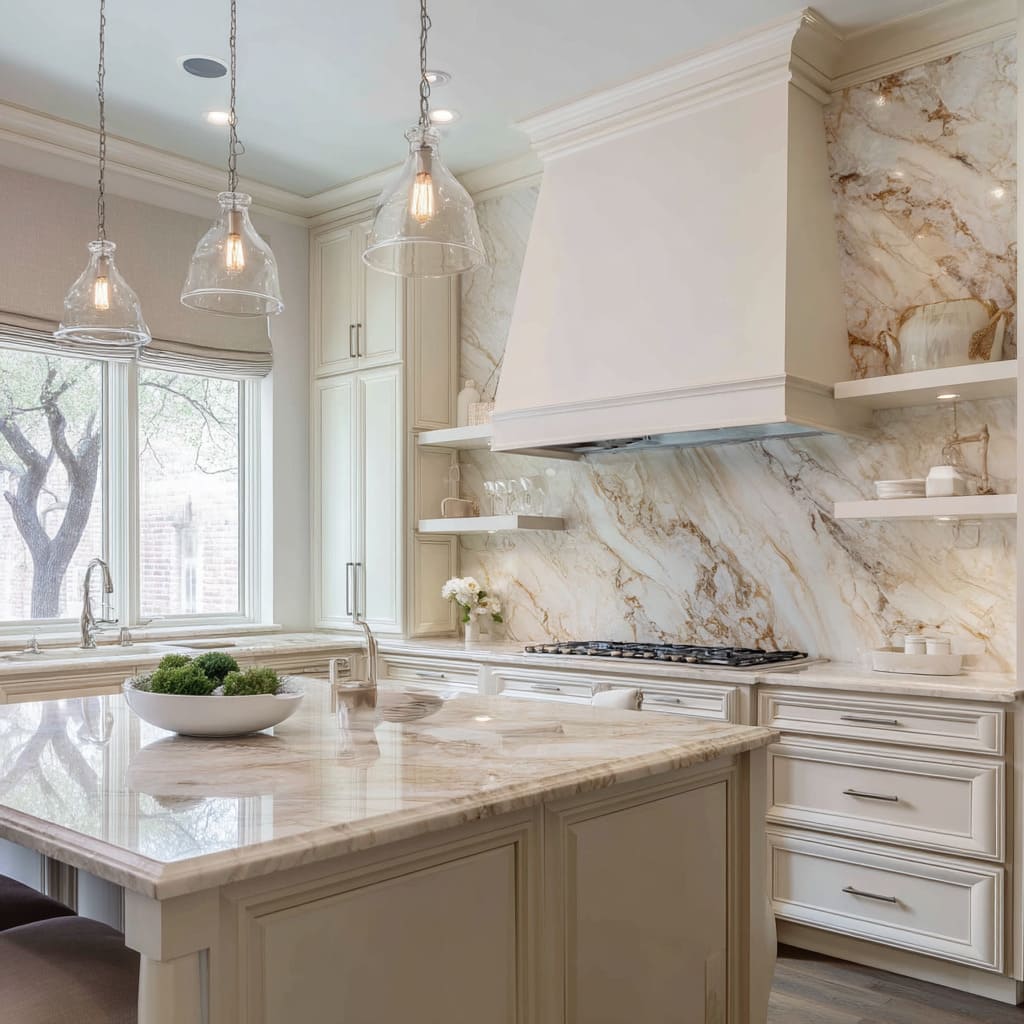
The material you choose impacts not just aesthetics but also durability and maintenance. Match your selection to your lifestyle and design goals.
Use Ceramic or Porcelain for Versatility
Ceramic and porcelain tiles are the most practical choices for most kitchens. They’re durable, easy to clean, and come in endless colors and finishes. Porcelain is denser and more moisture-resistant, making it ideal for wet areas near sinks. Choose matte finishes for a modern, understated look or glossy for added brightness. These tiles are budget-friendly and perfect for DIY installations.
Choose Glass Tiles for Brightness
Glass tiles reflect light, making them ideal for small or dimly lit kitchens. A glass mosaic backsplash in clear, soft white, or pale blue enhances the airy feel of cream cabinets. The non-porous surface resists stains and requires only a quick wipe. Avoid high-contrast grout with glass tiles. Opt for matching or slightly darker grout to keep the reflective quality intact.
Consider Natural Stone for Elegance
Travertine, limestone, and marble offer unmatched elegance. Light travertine tiles with a honed finish complement cream cabinets beautifully, adding organic texture and warmth. However, natural stone is porous and requires sealing every one to two years. Use it in low-splash areas or pair with a protective countertop edge. For a similar look with less maintenance, choose quartz with a marble pattern.
Opt for Quartz Backsplashes
Quartz is a premium, low-maintenance option that mimics natural stone. A quartz backsplash in a soft marble pattern adds luxury without the upkeep. It’s non-porous, stain-resistant, and doesn’t require sealing. Install as full-height panels for a seamless look or as a traditional tile field. This option is ideal for modern or high-traffic kitchens.
Enhance with Grout and Borders
Grout and borders are small details that make a big impact. Use them to refine your design, add definition, or introduce subtle color.
Match Grout to Tile for a Seamless Look
For a clean, uninterrupted appearance, choose grout that matches your tile color. This is especially effective with large-format tiles or glass mosaics. The result is a smooth, continuous surface that highlights the material rather than the joints. Use sanded grout for wider joints and unsanded for narrow ones under 1/8 inch.
Use Contrasting Grout for Definition
Slightly contrasting grout, like warm gray grout with white tiles, adds definition and modern edge. It emphasizes the tile pattern, making herringbone or basketweave layouts more striking. Avoid high-contrast grout such as black with white tile unless you want a bold, graphic look that may overpower cream cabinets.
Add Decorative Borders
A border tile at the top of the backsplash or around the range adds a tailored finish. Choose a sage green, dusty blue, or metallic-finish tile for a refined accent. Install a simple pencil liner or a more intricate mosaic strip. Borders are especially effective in traditional kitchens with wall cabinets, where they create a framed effect.
Coordinate with Countertops and Hardware
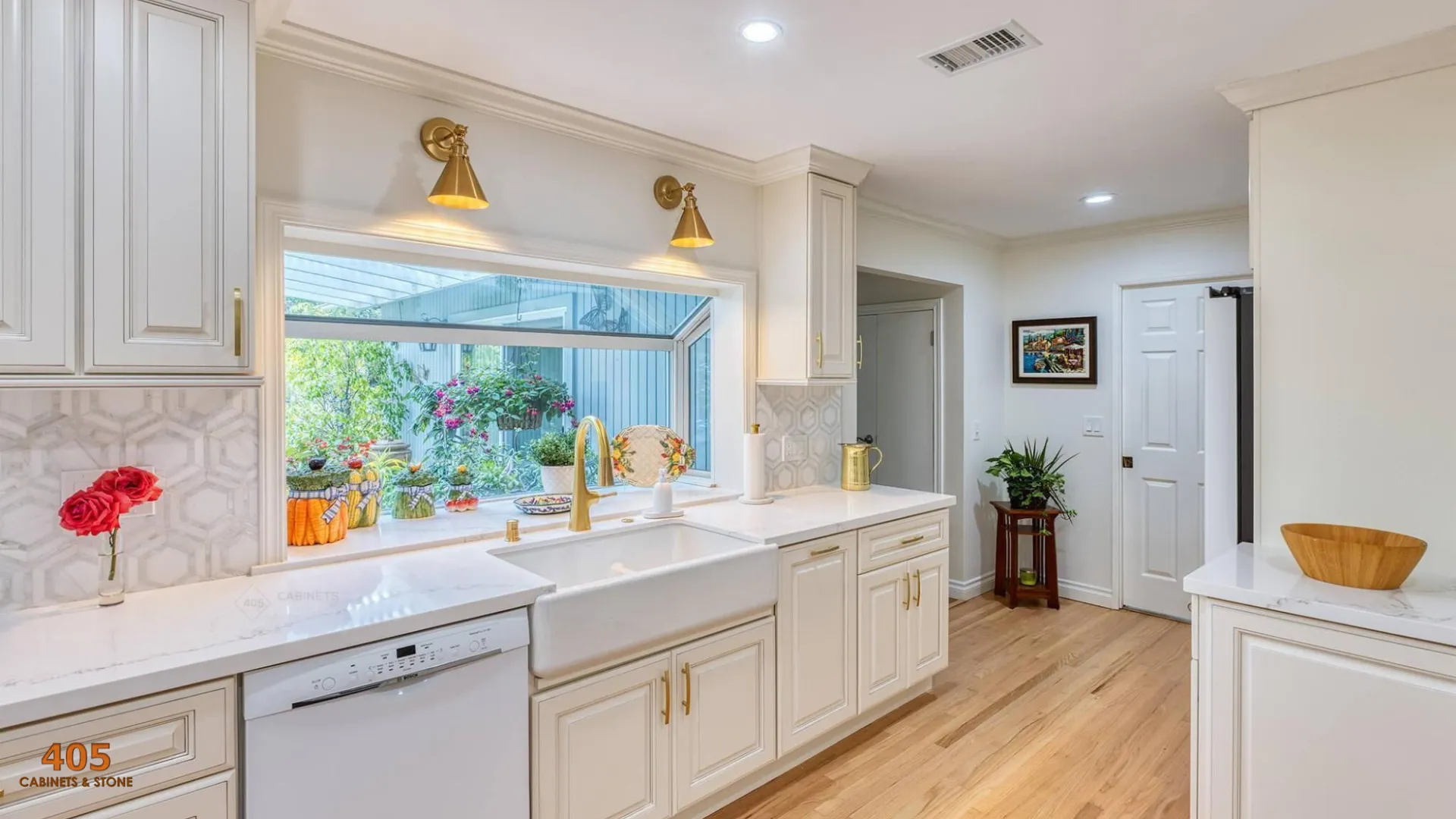
Your backsplash doesn’t exist in isolation. It should harmonize with countertops, hardware, and lighting to create a unified design.
Pair with Light Countertops
Light granite, white quartz, or Calacatta marble countertops keep the kitchen bright and airy. A quartz countertop with subtle veining echoes the elegance of a marble-look backsplash. For a modern touch, consider a waterfall edge on the island, which draws the eye and adds architectural interest.
Choose Complementary Hardware
Brushed brass hardware enhances the warmth of cream cabinets and pairs beautifully with earthy backsplash tones like beige, terracotta, or sage green. Matte black offers a striking contrast, ideal for modern or industrial styles. Brushed nickel is a versatile middle ground that works with both warm and cool tile palettes.
Use Strategic Lighting
Under-cabinet LED strip lighting highlights the backsplash, especially textured or reflective tiles. Recessed ceiling lights provide general illumination, while pendant lights over the island or sink add focal points. Dimmable switches allow you to adjust ambiance for cooking or entertaining.
Design by Kitchen Style
Tailor your backsplash choice to your kitchen’s overall style for a cohesive result.
Go Classic with White Subway Tiles
For traditional kitchens, classic white subway tiles remain the gold standard. Use a 3×6 size in a horizontal layout with matching grout for a clean, timeless look. This combination is effortlessly elegant and pairs perfectly with cream shaker cabinets. Add a decorative border or use a glass tile accent behind the range for subtle flair.
Embrace Modern Minimalism
Modern kitchens thrive on simplicity. Choose large-format porcelain tiles in warm gray or soft white with minimal grout lines. A full-height slab backsplash in quartz or glass creates a sleek, seamless appearance. Pair with handleless cabinets and matte black fixtures for a contemporary edge.
Create Rustic Elegance
For farmhouse or rustic kitchens, prioritize texture and natural materials. Use travertine tiles, handmade ceramic, or zellige for an organic, artisanal feel. Pair with open shelving, a farmhouse sink, and warm wood flooring. A sage green grout or border tile adds a touch of nature-inspired color.
Maximize Small Kitchens
In compact spaces, use light-reflective materials to enhance brightness. A glass mosaic backsplash in white or soft blue makes the kitchen feel larger. Stick to simple patterns and avoid busy designs that can overwhelm. Mount shelves instead of upper cabinets to keep the backsplash visible and the space open.
Ensure Long-Term Performance
A beautiful backsplash should also be durable and easy to maintain. Plan for longevity during selection and installation.
Seal Porous Materials Properly
Natural stone and unglazed ceramic tiles require sealing to prevent staining. Apply a penetrating sealer during installation and reapply every one to two years. Test by dripping water on the surface. If it darkens, it’s time to reseal. Use pH-neutral cleaners to avoid damaging the sealant.
Prevent Grout Discoloration
Grout can yellow or stain over time, especially in high-moisture areas. Use high-quality grout with mildew resistance. Apply a grout sealer after installation and clean regularly with a soft brush and non-abrasive cleaner. Avoid vinegar-based cleaners on stone or grout, as they can erode the surface.
Choose Durable Materials for High-Traffic Kitchens
If you cook frequently or have a busy household, prioritize durability. Porcelain, glass, and quartz are top performers. They resist scratches, stains, and moisture. Avoid soft natural stones like limestone in high-splash zones unless properly protected.
Frequently Asked Questions About Backsplash Ideas for Cream Cabinets
What color backsplash looks best with cream cabinets?
Warm-toned tiles in beige, ivory, or warm white create the most seamless look. For contrast, sage green, dusty blue, and warm terracotta are top choices that complement cream cabinetry beautifully.
Should I use white or cream tiles with cream cabinets?
Warm white tiles with a hint of cream or beige work best. They define the backsplash area while maintaining a cohesive palette. Pure white tiles can appear stark against cream cabinets.
What grout color should I use with cream cabinets?
Match grout to tile color for a seamless look, or use slightly contrasting warm gray grout for definition. Colored grout in sage green offers a subtle accent opportunity.
Are glass tiles a good choice for cream cabinets?
Yes, glass tiles reflect light and brighten the space. Soft white, clear, or pale blue glass mosaics enhance the airy feel of cream cabinets and resist stains easily.
What backsplash works for small kitchens with cream cabinets?
Light-reflective materials like glass mosaic tiles in white or soft blue make small kitchens feel larger. Keep patterns simple and use light grout colors to expand visual space.
Do I need to seal a stone backsplash with cream cabinets?
Yes, natural stone like travertine or limestone requires sealing every one to two years. Quartz offers a similar elegant look without the sealing requirement.
Key Takeaways for Choosing Your Cream Cabinet Backsplash
The best backsplash for cream cabinets enhances their warmth while reflecting your personal style. Whether you choose a seamless warm white subway tile or a bold terracotta mosaic, the key is balance, complementing the cabinetry without overpowering it. Use texture, subtle contrast, and strategic accents to create depth and interest.
Pair your tile choice with coordinated countertops, hardware, and lighting for a polished, professional result. Consider your maintenance preferences honestly. If you want low upkeep, quartz or glass beats natural stone. If you love character and don’t mind sealing, travertine or handmade ceramic rewards you with unmatched texture.
Start by sampling a few tile options against your actual cabinet color in your kitchen’s lighting. This simple step prevents costly mistakes and ensures the final result feels cohesive and intentional. With proper material selection and maintenance, your backsplash will remain a beautiful focal point for years to come.