
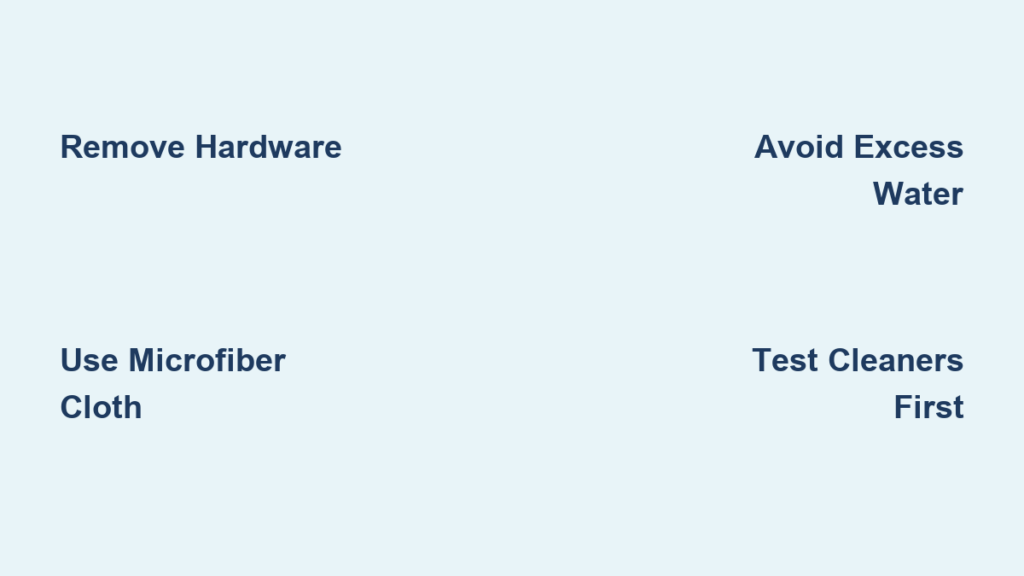
Dirty cabinet doors can make an entire kitchen or bathroom feel unclean, even when the rest of the space is spotless. Grease, fingerprints, dust, and cooking residue build up over time, especially around handles and edges. Knowing how to clean cabinet doors properly not only restores their appearance but also extends their lifespan. Whether you have wood, laminate, painted, or glossy finishes, the right cleaning method matters. Using the wrong products or techniques can lead to streaks, warping, or permanent damage.
This guide walks you through safe, effective ways to clean any type of cabinet door, with step-by-step instructions, material-specific tips, and common mistakes to avoid. You will learn how to deep clean without damaging finishes, remove stubborn grime, and maintain a like-new look with minimal effort. Each section covers a different cabinet material and the exact cleaning approach it requires.
Essential Cleaning Supplies for Cabinet Door Care
Before starting, gather the right tools to ensure a thorough and safe clean. Using inappropriate cleaners can damage finishes or leave residue behind.
Basic Tools You Will Need
- Microfiber cloths, which are lint-free and non-abrasive
- A soft-bristle brush or toothbrush for crevices and corners
- A bucket or spray bottle for mixing solutions
- Warm water
- Mild dish soap that is pH-neutral and dye-free
Optional Supplies for Tough Buildup
- White vinegar, which works as a natural degreaser
- Baking soda for gentle abrasion
- Isopropyl alcohol diluted to 10 to 30 percent for disinfecting
- A commercial cabinet cleaner only if it is labeled for your specific finish type
Avoid steel wool, ammonia, bleach, and abrasive scrubbers. These can scratch or discolor surfaces. Stick to soft materials and gentle solutions.
Remove Cabinet Hardware Before Cleaning
Taking off handles, knobs, and hinges makes cleaning faster and more effective. Hardware removal also prevents water from pooling around screw heads.
Why Removing Hardware Helps
- It exposes hidden grime that collects under knobs
- It prevents moisture from seeping into screw holes
- It allows full access to edges and corners
Steps to Safely Remove Hardware
- Use the correct screwdriver or Allen wrench for your hardware type.
- Place screws on a labeled tray or magnetic mat so nothing gets lost.
- Soak removable hardware in warm, soapy water for 10 minutes.
- Scrub the hardware with a soft brush, then dry it completely.
Pro tip: Take a photo before removing anything. This helps you remember exactly where each piece goes.
How to Clean Wood Cabinet Doors Safely
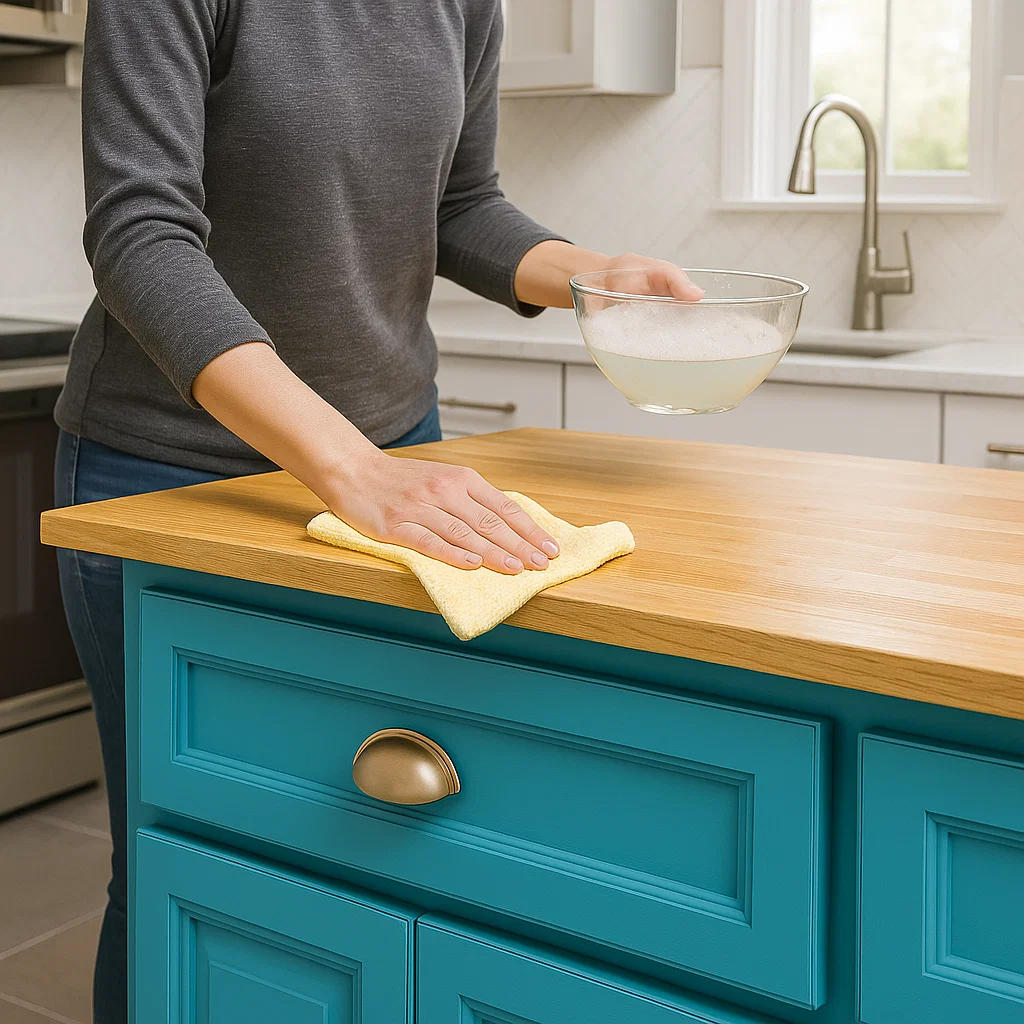
Wood requires gentle care to prevent drying, warping, or finish damage. Excess water is the biggest enemy of wood cabinetry.
What to Avoid on Wood Surfaces
- Excess water, which can cause swelling or cracking
- Harsh chemicals that strip natural oils
- Vinegar-heavy solutions that can dull the finish over time
Safe Cleaning Steps for Wood
- Mix a few drops of mild dish soap in warm water.
- Dampen a microfiber cloth, but never soak it.
- Wipe in the direction of the wood grain.
- Dry immediately with a second clean cloth.
For built-up residue, use a 50/50 mix of water and rubbing alcohol. Test this on a hidden area first to ensure it does not damage the finish.
Deep Cleaning Painted Wood
Painted wood traps grime in textured surfaces more easily than bare wood.
- Use a soft toothbrush to gently agitate around panel edges.
- For sticky spots, make a paste of baking soda and water.
- Apply the paste lightly, wait 30 seconds, then wipe it away.
- Rinse minimally with a damp cloth, then dry thoroughly.
Never use steam cleaners on painted wood. Steam can blister the paint and ruin the surface.
Cleaning Laminate and Thermofoil Cabinet Doors
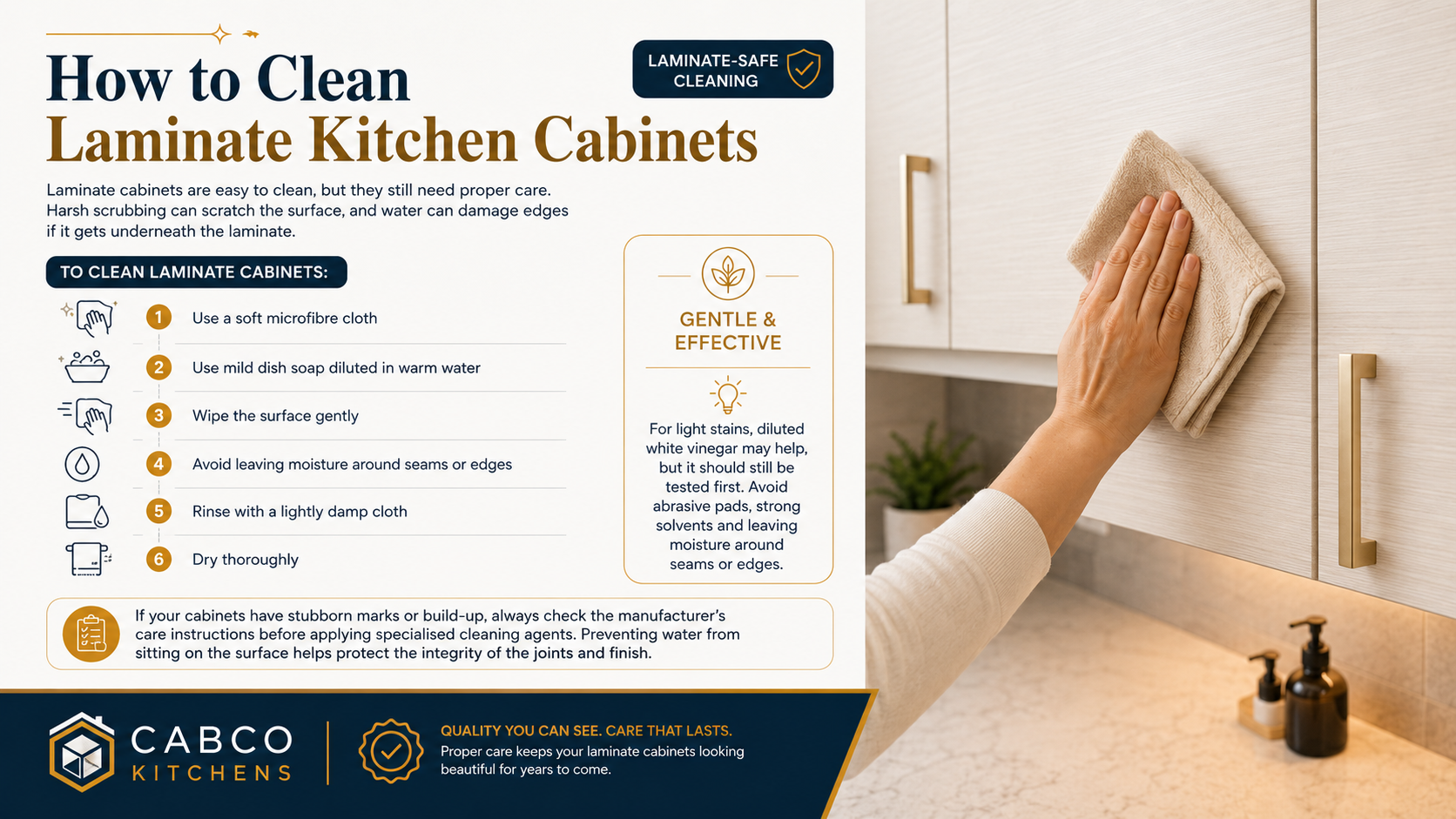
Laminate and thermofoil doors are non-porous, so they resist moisture well. However, they can scratch or peel if cleaned improperly.
Best Method for Laminate Doors
- Spray a mix of warm water and dish soap directly onto the cloth, not the door.
- Wipe the surface, focusing on greasy areas near the stove.
- Dry immediately to prevent water from seeping into the edges.
Avoid abrasive pads entirely. Microfiber cloths provide enough friction for a thorough clean.
Removing Sticky Residue Safely
Grease and adhesive buildup can be stubborn on laminate surfaces. Here is the safest approach:
- Apply a small amount of rubbing alcohol to a cloth.
- Gently rub the sticky area in circular motions.
- Wipe clean with a damp cloth, then dry.
Do not use acetone on laminate. It can dissolve the bond that holds the laminate to the door core.
Tackle Grease on Glossy Cabinet Doors
Glossy finishes show every fingerprint and oil smear, especially in busy kitchens. Grease buildup happens quickly because cooking oils become sticky when exposed to air and heat.
Degrease Without Leaving Streaks
- Mix 1 cup of water, 1 tablespoon of white vinegar, and 1 teaspoon of dish soap in a spray bottle.
- Mist the solution onto a microfiber cloth.
- Wipe the door from top to bottom.
- Buff dry with a second cloth to prevent streaks.
For heavy grease, repeat the process with a cloth dampened with diluted vinegar. Use a 1:1 ratio of vinegar to water, then dry thoroughly.
Preventing Future Grease Buildup
- Wipe doors weekly with a dry microfiber cloth.
- Install a range hood with proper ventilation.
- Avoid cooking sprays near cabinets, as they leave a filmy residue.
Fix Common Cabinet Cleaning Mistakes
Even careful cleaners make errors that harm cabinet doors over time. Knowing what to avoid is just as important as knowing what to do.
Using Too Much Water
Excess moisture warps wood and peels laminate. Always wring out cloths well before touching any surface.
Skipping the Patch Test
New cleaners should always be tested first. Apply the product to a hidden edge and wait 10 minutes to check for discoloration.
Letting Soapy Residue Dry
Leaving soap on cabinet doors invites dust and creates a film. Always follow with a rinse cloth and a final dry pass.
Cleaning in the Wrong Order
Always start at the top of the cabinet and work downward. This prevents drips from falling onto already-cleaned areas.
Maintain Clean Cabinet Doors Year-Round
Prevention is easier than deep cleaning. A few simple habits keep doors looking fresh between major cleanings.
Weekly Maintenance Routine
- Wipe surfaces with a dry microfiber cloth.
- Spot-clean smudges immediately when they appear.
- Check hinges for dust buildup.
Monthly Deep Check
- Inspect for loose hardware or swelling.
- Clean inside edges and frames.
- Re-tighten screws if needed.
Seasonal Refresh
Every 3 to 4 months, do a full clean using the appropriate method for your cabinet material. This prevents grime from becoming baked on.
When to Call a Professional for Cabinet Doors
Some issues go beyond what DIY cleaning can fix. Professional help may be necessary in certain situations.
Signs You Need Expert Help
- Blistered or peeling finish on wood or laminate
- Water damage or visible warping
- Persistent mold growing in joints or seams
Professionals can refinish surfaces, replace damaged panels, or restore doors safely. Attempting these repairs yourself often makes the problem worse.
Frequently Asked Questions About Cleaning Cabinet Doors
What is the best homemade cleaner for cabinet doors?
A mix of warm water, mild dish soap, and a splash of white vinegar works well for most surfaces. For wood, skip the vinegar and use only soap and water.
Can I use vinegar to clean wood cabinet doors?
Vinegar can dull wood finishes over time. Use it sparingly and only on sealed wood. Always test on a hidden area first.
How do I remove grease from kitchen cabinets?
Mix water, vinegar, and dish soap in a spray bottle. Apply to a microfiber cloth, wipe the greasy area, then buff dry with a clean cloth.
How often should I clean cabinet doors?
Wipe down doors weekly with a dry cloth. Do a full deep clean every 3 to 4 months, or more often if you cook frequently.
What should I never use on cabinet doors?
Avoid steel wool, bleach, ammonia, and abrasive scrubbers. These damage finishes and can leave permanent scratches.
Can I clean cabinet doors without removing hardware?
Yes, but removing hardware gives better results. It exposes hidden grime and prevents moisture from pooling around screws.
Key Takeaways for Cleaning Cabinet Doors Safely
Cleaning cabinet doors does not require harsh chemicals or hours of effort. The right approach depends entirely on your cabinet material. Wood needs gentle, minimal moisture. Laminate and thermofoil need quick drying to prevent edge damage. Glossy finishes need regular degreasing to stay streak-free.
Always remove hardware before deep cleaning to access hidden dirt. Test any new cleaner on an unseen area first. Dry every surface thoroughly to prevent warping, peeling, and water damage. Weekly maintenance with a dry microfiber cloth prevents most buildup before it starts.
Make cabinet door cleaning part of your regular routine. A few minutes each week saves you from tough scrubbing sessions later. Your cabinets will look better, last longer, and keep your kitchen feeling fresh. Start with the method that matches your material, and you will see results immediately.


