
Choosing the right countertop to pair with your kitchen cabinets can make or break your entire kitchen design. Since cabinets and countertops dominate visual space, their harmony is essential for a balanced, stylish look. When mismatched, even high-end materials can feel chaotic or dull. But when done right, through smart color coordination, thoughtful contrast, and proper material pairing, your kitchen gains depth, elegance, and timeless appeal.
This guide walks you through proven strategies to match countertops with kitchen cabinets like a pro. You will learn how to balance color temperatures, create focal points, avoid common mistakes, and test your choices in real lighting. Whether you are renovating on a budget or planning a full kitchen transformation, these actionable tips will help you achieve a cohesive, magazine-worthy result.
Balance Warm and Cool Tones
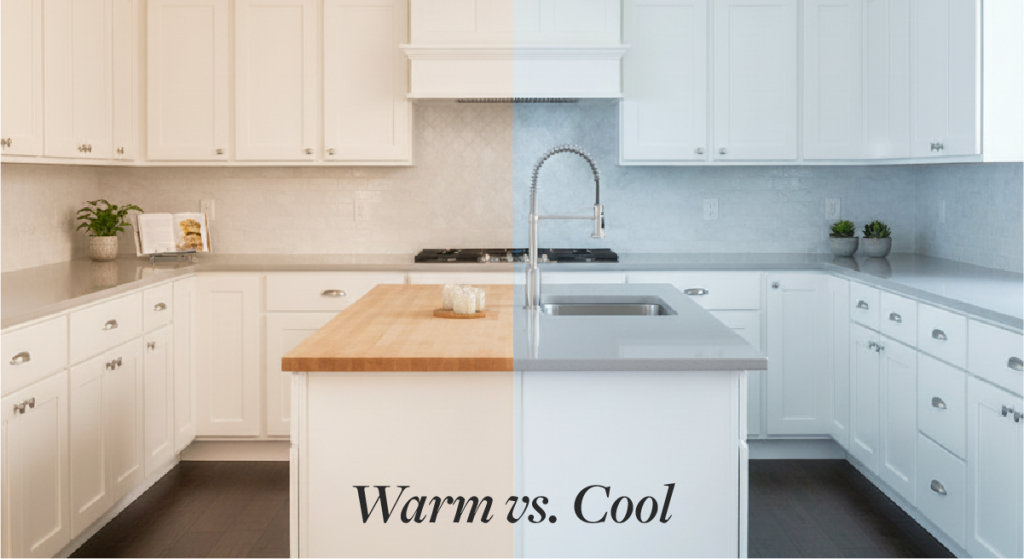
Match by Color Temperature
Successful pairings start with aligning color temperatures. Warm tones include beige, honey oak, and cream. Cool tones feature grays, blues, and silvers. Mixing warm cabinets with cool countertops, or vice versa, can create visual tension unless intentionally balanced.
Stick to one dominant temperature for a unified look. For example:
- Warm plus Warm: Honey oak cabinets with beige granite
- Cool plus Cool: Gray shaker cabinets with quartz in a smoky blue tone
When blending temperatures, use neutral elements like backsplash or flooring to bridge the gap.
Avoid Temperature Clashes
A common mistake is pairing warm wood cabinets with icy white quartz without transitional elements. The result often feels jarring. Instead, introduce a neutral backsplash or warm-toned hardware to soften the contrast.
Pro tip: Use a gray undertone in paint or flooring to mediate between warm and cool finishes.
Choose a Focal Point First

Let Countertops Shine
If your countertop has bold veining, like Calacatta marble or deep-veined quartz, pair it with simple, neutral cabinets. White or soft gray cabinetry keeps attention on the stone’s natural drama.
Best cabinet choices:
- Crisp white
- Light gray
- Off-white with warm undertones
This approach works especially well in small kitchens where too much visual noise overwhelms the space.
Highlight Statement Cabinets
When cabinets are the star, such as navy blue, forest green, or two-tone designs, opt for a subtle countertop. A solid-color quartz or honed black granite provides contrast without competing.
Example: Sage green cabinets look stunning with a matte-finish white quartz countertop that echoes the green’s earthy tone.
Pick Cabinet Colors by Countertop Shade
White Countertops: Maximize Brightness
White countertops, including quartz, marble, and laminate, are versatile but need careful cabinet pairing to avoid a sterile look.
Best cabinet colors:
- Warm white or cream – adds coziness
- Soft gray – modern and balanced
- Light wood tones – brings warmth and texture
- Black accents – for contrast in an all-white scheme
Avoid cool gray cabinets with stark white countertops unless balanced with warm lighting or flooring.
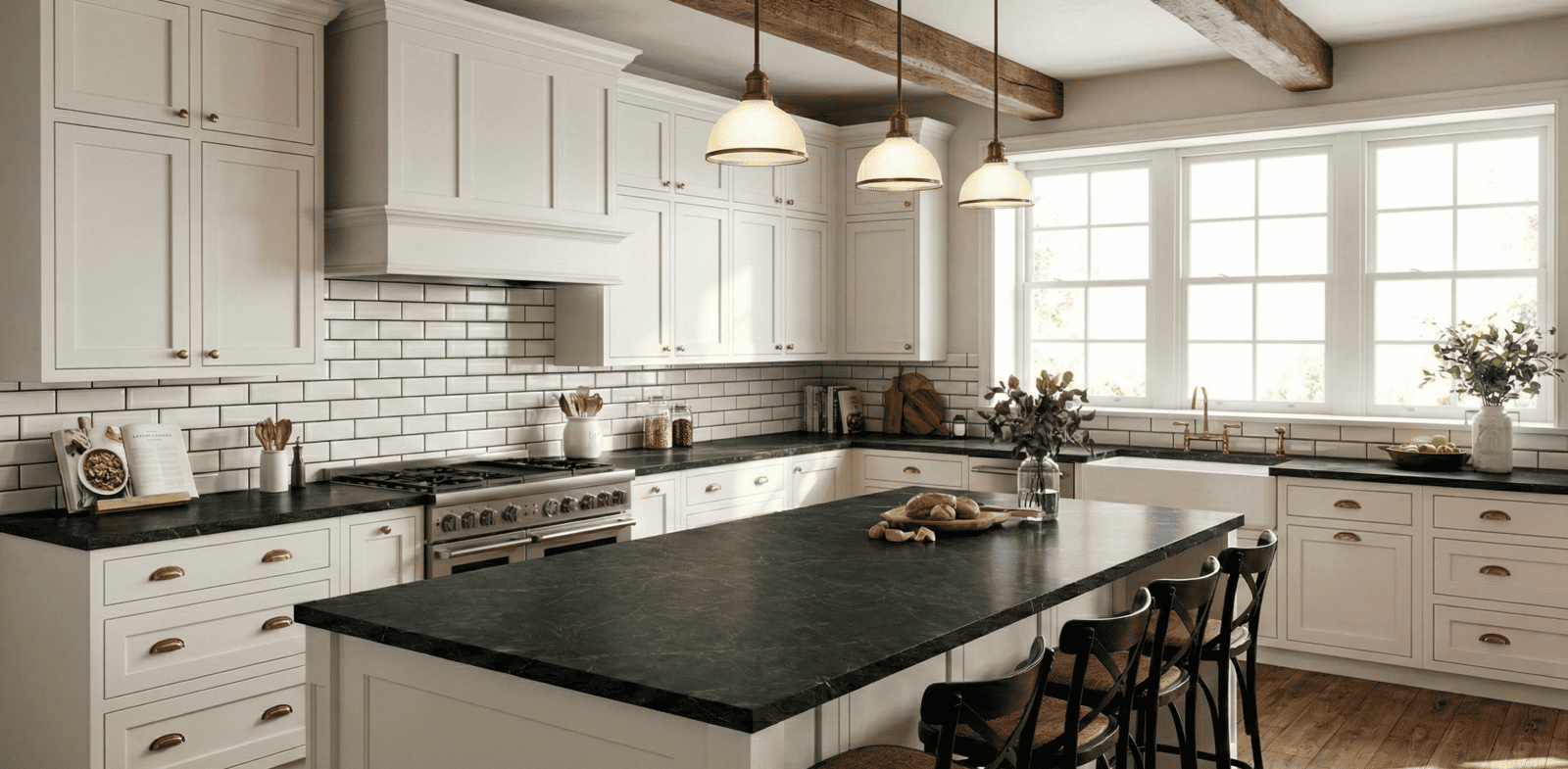
Black or Dark Countertops: Create Drama
Dark countertops like black granite or charcoal quartz deliver sophistication, but only when paired correctly.
Best cabinet colors:
- White or off-white – classic high-contrast look
- Light gray – modern and balanced
- Warm wood tones – adds organic contrast
- Soft blue or sage green – modern, bold accent
Never pair dark countertops with dark cabinets. They make the kitchen feel closed-in and heavy.
Patterned or Colored Countertops: Neutralize the Noise
Green, blue, or multicolored stone countertops, like exotic granite, demand restraint in cabinetry.
Best cabinet colors:
- Crisp white – lets the countertop dominate
- Soft gray – grounds bold patterns
- Natural wood – complements earthy tones
- Sage green for green countertops – creates tonal harmony
Pro tip: Choose a cabinet color one shade lighter than the dominant tone in the countertop to prevent visual overload.
Coordinate Materials and Light
Understand How Materials Reflect Light
Different countertop materials interact uniquely with light, affecting how they appear next to cabinets.
- Polished granite or quartz: Reflects light, making colors appear brighter
- Matte finishes: Absorb light, appearing deeper and richer
- Butcher block: Warm and porous, changes tone over time
- Laminate: Can look flat under bright lighting
Pair glossy countertops with matte cabinets, or vice versa, to add visual interest without clashing.
Test in Natural and Artificial Light
A countertop sample that looks warm in the showroom may appear cool under your kitchen’s recessed lighting. Always test samples in your actual kitchen.
How to test properly:
- Place a full-size countertop sample flat on your existing counter
- Position a cabinet door or paint swatch vertically beside it
- View at three times of day: morning, noon, evening
- Turn on all kitchen lights to check artificial lighting effects
This reveals how colors shift and interact in your real environment.
Use the One-Shade Variation Rule
Create a Layered, Seamless Look
Instead of matching colors exactly, use a single shade variation. For example:
- Light gray cabinets with warm gray quartz
- Cream cabinets with beige marble
- Light oak with medium oak butcher block
This subtle progression adds depth while maintaining cohesion.
Avoid Matching Too Closely
Painting cabinets the exact color as the countertop creates a flat, monotonous look. Instead, choose a cabinet shade that is one level lighter than the countertop to add dimension.
Exception: High-end minimalist designs may intentionally blend tones, but they require precise lighting and high-quality materials to succeed.
Prevent Common Matching Mistakes
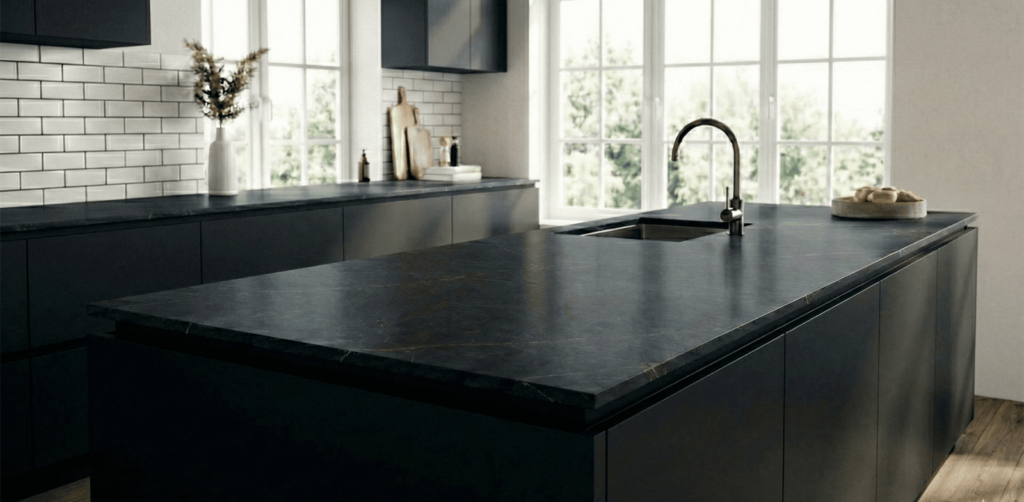
Don’t Pair Dark Cabinets with Dark Countertops
This combo absorbs light and shrinks the perceived size of the kitchen. If you love dark finishes, break them up:
- Use open shelving in lighter wood
- Add under-cabinet lighting
- Install a bright backsplash like white subway tile
Don’t Let Both Surfaces Compete
Never pair bold cabinets with a dramatic countertop. One must lead; the other supports.
Good balance:
- Bold cabinets plus neutral countertop
- Patterned countertop plus simple cabinets
Bad balance:
- Navy cabinets plus Calacatta marble, both too strong
- Red granite plus cherry wood, clashing warm tones
Don’t Ignore Undertones
A white countertop may have blue, gray, or yellow undertones. Match these with cabinet paint:
- Blue undertone? Use cool gray cabinets
- Yellow undertone? Pair with warm white or cream cabinets
Use a piece of white printer paper beside the sample to reveal hidden undertones.
Upgrade Cabinets on a Budget
Paint Instead of Replace
Repainting cabinets is the most cost-effective way to change your kitchen’s look. A full repaint costs 70 to 80 percent less than replacement.
Best paint finishes:
- Matte: Modern, hides imperfections
- Semi-gloss: Durable, easy to clean
Always prime first and use a bonding agent for laminate surfaces.
Swap Hardware for Instant Refresh
New knobs or handles can transform cabinetry without paint. Choose finishes that echo your countertop:
- Brushed gold for warm stone
- Matte black for modern quartz
- Stainless steel for granite
Pro tip: Measure existing holes before buying new hardware to avoid drilling.
When to Hire a Professional Designer
Get Expert Help for Major Renovations
If you are unsure about color balance, material pairing, or lighting effects, a professional designer can prevent costly mistakes.
Benefits of professional consultation:
- Access to full material libraries
- 3D renderings of your kitchen
- Guidance on focal point strategy
- Help with installation coordination
Ideal for:
- First-time renovators
- Bold design choices like black and gold themes
- Whole-kitchen transformations
Use Free Design Services
Many suppliers offer free in-store design help. Bring your cabinet and countertop samples, and let experts show you how they work together.
Locations include Casper, Cheyenne, Cody, Sheridan in Wyoming, and Rapid City in South Dakota.
Frequently Asked Questions About Matching Countertops with Kitchen Cabinets
What color cabinets go best with white countertops?
Warm white, soft gray, light wood tones, and black accents all pair beautifully with white countertops. For a seamless look, choose a cabinet shade one level lighter or darker than the countertop to add depth.
Can I pair dark cabinets with dark countertops?
Avoid this combination. Dark cabinets with dark countertops make the kitchen feel closed-in and cramped. If you prefer dark finishes, use open shelving, under-cabinet lighting, or a bright backsplash to break up the darkness.
How do I know if my cabinets and countertops match?
Check the color temperature first. Warm tones like beige and honey oak pair with warm stones. Cool tones like gray and blue pair with cool stones. Then test samples in your kitchen lighting to see how they interact.
Should cabinets be lighter or darker than countertops?
Use a cabinet color one shade lighter than the countertop to create a layered but seamless look. Matching colors too closely produces a flat, monotonous appearance.
What is the safest countertop color for kitchen cabinets?
Neutral tones like white, gray, beige, and brown are the safest options. They match many warm and cool colors and adapt to any design scheme without clashing.
Can I mix warm and cool tones in my kitchen?
Yes, but intentionally. Use neutral elements like backsplash, flooring, or hardware to bridge the gap between warm and cool finishes. Without a transitional element, the result can feel jarring.
Key Takeaways for Matching Countertops with Kitchen Cabinets
Matching countertops with kitchen cabinets is not about finding a perfect match. It is about creating balance through contrast, temperature, and intention. Start by choosing a focal point, align color temperatures, and always test samples in your kitchen’s real lighting.
Remember these core principles:
- Use one shade variation to create depth without monotony
- Never let both surfaces compete for attention
- Test samples at different times of day before committing
Whether you are painting cabinets or selecting quartz, these strategies ensure a cohesive, stunning result that stands the test of time. Start with a single change, like swapping hardware or testing a paint sample, and build your design from there. Your dream kitchen is closer than you think.


