

Choosing the right flooring for your kitchen can make or break the entire design, especially when it flows into adjacent living spaces. If you’re like Becky, who recently asked whether her walnut cabinets should match her flooring, you’re not alone. Many homeowners face this dilemma during a remodel. The good news? There’s no one-size-fits-all rule, but there are proven design principles that can guide your decision. Whether you’re considering laminate planks or luxury vinyl plank (LVP), and whether your cabinets are dark walnut or soft white, this guide will help you choose flooring that harmonizes with your kitchen cabinets without sacrificing style or function. You’ll learn how to create visual balance, avoid common mistakes, and pick materials that suit both your aesthetic and lifestyle.
Contrast vs. Match: Key Design Principles
When deciding how to match flooring to kitchen cabinets, the central question isn’t just about color. It’s about contrast, flow, and cohesion. A floor that matches the cabinets exactly can create a flat, monotonous look, especially in open-concept spaces. On the other hand, too much contrast can make a room feel disjointed. The goal is balance.
Designers often recommend a medium to high contrast between cabinets and flooring to define the kitchen space and add visual interest. For example, dark walnut cabinets typically pair well with lighter or cooler-toned flooring, creating a grounded yet airy feel. However, matching tones can work if done intentionally and with texture or undertone variation.
Why Contrast Matters
Contrast helps define zones in open layouts. Since Becky’s flooring will extend into the living room, a clear distinction between cabinetry and floor color prevents the space from appearing washed out or overly heavy. Dark cabinets on dark floors, especially with a dark paneled ceiling, may make the room feel smaller or cave-like.
However, contrast doesn’t mean opposites. You can achieve it through temperature differences (warm wood vs. cool gray tones) or shade variation (deep brown cabinets with medium taupe flooring). The key is ensuring the eye can distinguish between elements without jarring transitions.
When Matching Can Work
Matching cabinets and flooring isn’t inherently wrong, but it requires design finesse. If your walnut cabinets and flooring are nearly identical, use texture, grain variation, or lighting to add depth. For instance, a matte-finish laminate floor with a slightly cooler undertone than the cabinets can prevent a boxy look.
Also, consider ceiling height and natural light. Becky’s mid-century home has a vaulted ceiling with beams, which helps offset dark elements. In such spaces, a monochromatic palette can feel intentional and modern, especially if walls or countertops introduce contrast.
Choose the Right Material: Laminate vs LVP

Since Becky is set on laminate planks but concerned about spills, comparing laminate and luxury vinyl plank (LVP) is crucial. Both mimic wood and work in open layouts, but they differ in durability, water resistance, and feel underfoot.
Laminate Plank Pros and Cons
Laminate is budget-friendly and scratch-resistant, making it a popular choice for living areas. It handles sunlight well and won’t fade over time.
- Pros: Affordable, durable against scratches, wide range of wood-look designs
- Cons: Not waterproof (only water-resistant), can swell if exposed to moisture, less realistic texture than LVP
For a self-described spiller, standard laminate poses a risk, especially near sinks or stovetops. However, newer waterproof laminate options are available and worth exploring if you’re committed to this material.
LVP Advantages for Kitchens
LVP is the top choice for kitchens due to its 100% waterproof core. Spills, splashes, and even flooding won’t damage the planks, making it ideal for high-moisture areas.
- Pros: Waterproof, comfortable underfoot, realistic wood texture, great for radiant heat
- Cons: Can be dented by heavy furniture, may show wear in high-traffic areas over time
Given Becky’s layout and lifestyle, LVP is the safer bet, especially if the kitchen and living room share the same floor.
Visual Impact: Texture and Finish
Both materials come in matte, satin, and textured finishes. For walnut cabinets, a hand-scraped or wire-brushed LVP adds character without competing. Avoid glossy finishes, which can highlight imperfections and create glare under overhead lighting.
Selecting Complementary Colors
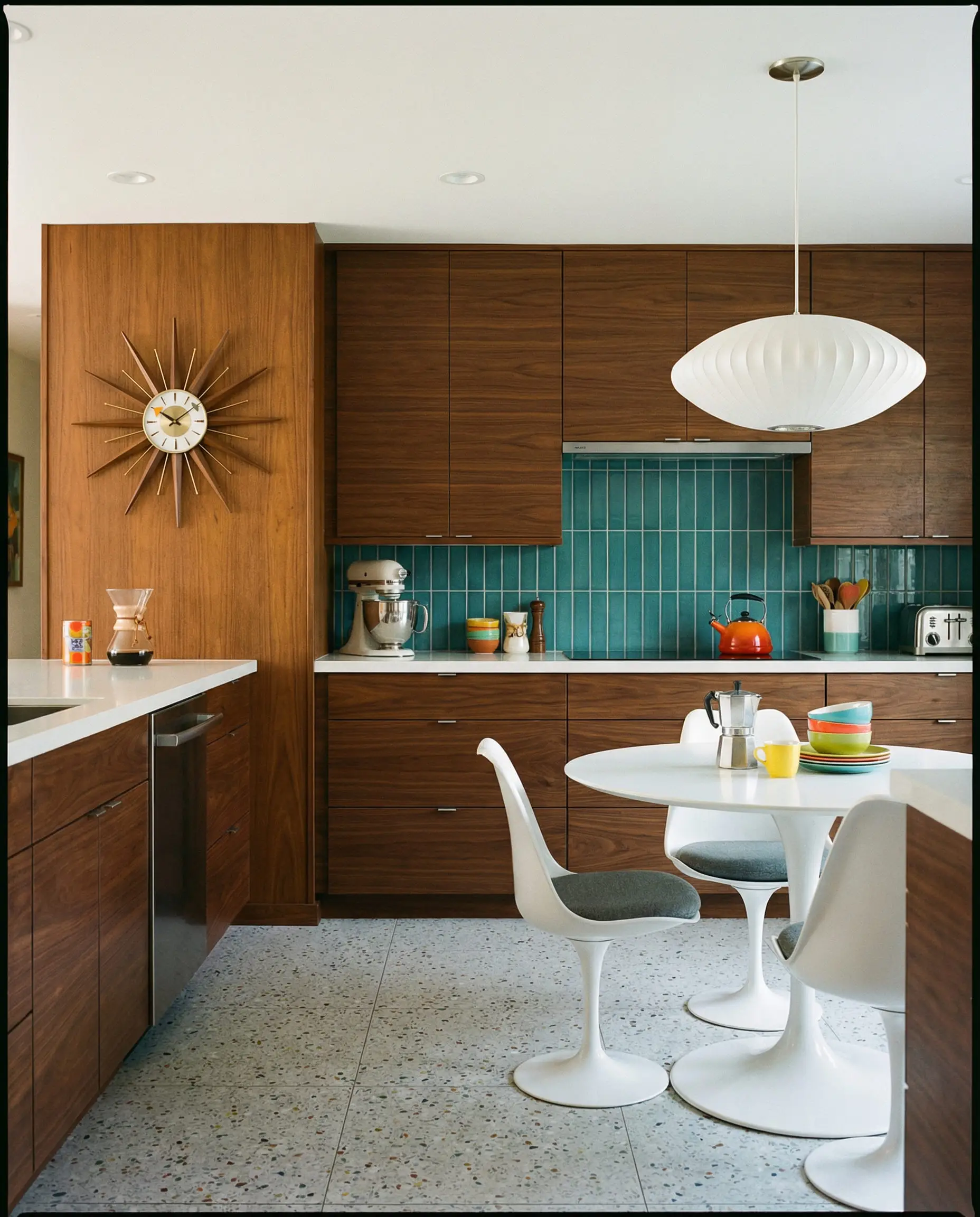
Since Becky loves her walnut cabinets but struggles to find a complementary floor, it’s time to shift focus from matching to harmonizing. The right floor color enhances the cabinets rather than competing with them.
Best Floor Colors for Walnut Cabinets
Walnut is a rich, warm brown with red and purple undertones. Pairing it with the wrong tone can make the space feel muddy. Here are the best options:
- Light Gray or Gray-Brown Planks: Cool tones contrast beautifully with warm walnut, creating a modern, balanced look
- Medium Oak (Cool or Neutral Undertone): Provides warmth without overwhelming the space
- White-Washed or Bleached Wood: Adds brightness and prevents the room from feeling too heavy
Avoid floors that are too close in tone to walnut unless they offer a clear textural or sheen difference.
Use the 60-30-10 Rule
Apply the designer’s rule of thumb:
- 60% dominant color (walls or flooring)
- 30% secondary (cabinets or large furniture)
- 10% accent (backsplash, decor)
In Becky’s case, if the cabinets are the 30% (rich walnut), the flooring should be the 60%, likely a lighter or cooler neutral to anchor the space.
Avoid Common Matching Mistakes
Even with the right materials and colors, mistakes happen. Here are the most frequent pitfalls when matching flooring to cabinets, and how to avoid them.
Mistake: Ignoring Undertones
Two brown floors can look drastically different under light. One may have yellow undertones, another gray. Walnut cabinets often have red undertones, so pairing them with a yellowish floor can create a dated, orange-heavy palette. Always test samples together in your actual lighting.
Mistake: Overlooking Transition Zones
Since the floor runs into the living room, ensure the color works in both spaces. A floor that looks great in the kitchen might feel too cold or too busy in a lounge area. Lay samples in both rooms and view them at different times of day.
Mistake: Skipping Real-Life Samples
Online images lie. Always order physical samples of flooring and hold them next to cabinet doors or paint swatches. View them under natural and artificial light to see how they interact.
Lighting and Ceiling Impact
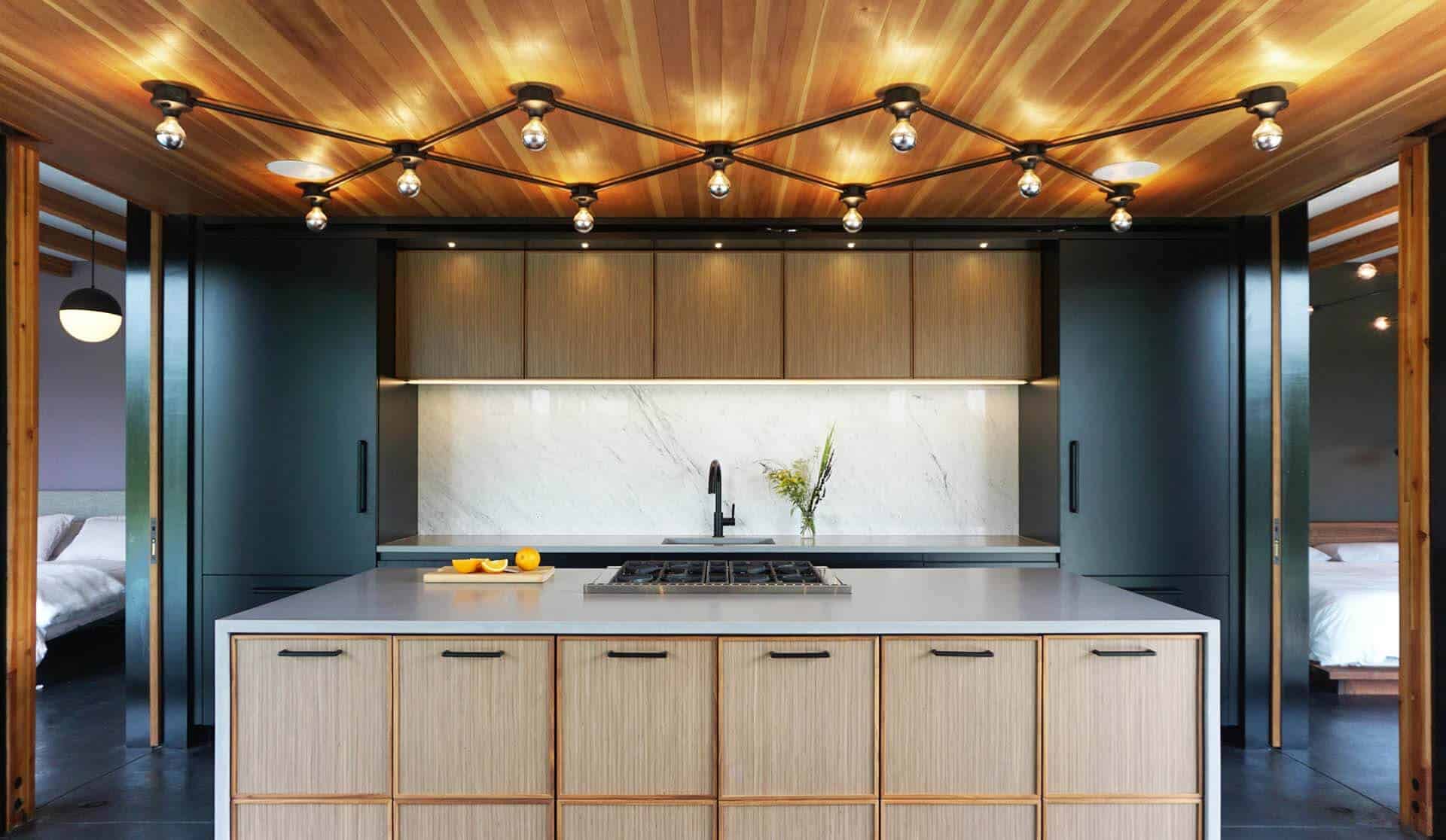
Becky mentioned her mid-century home has dark paneled ceilings and beams. This adds another layer to the design equation because flooring doesn’t exist in a vacuum.
How Dark Ceilings Affect Floor Choice
Dark ceilings pull the eye upward but can make a room feel lower. To compensate, many designers recommend lighter walls or flooring to maintain balance. With walnut cabinets and a dark ceiling, a light-to-medium floor becomes even more critical to prevent a sandwich effect.
Maximize Natural Light
If the kitchen has large windows, you can get away with darker floors. But in lower-light spaces, stick to medium or light flooring to keep the room feeling open. Reflective finishes (not glossy) can help bounce light around without glare.
Pro Tips for a Cohesive Look
Even with contrast, the goal is harmony. Use these expert strategies to tie everything together.
Use Countertops as a Bridge
Choose countertops that connect cabinets and floor. For walnut cabinets and a light gray floor, a quartz with warm veining or a honed granite with brown and gray tones can unify the palette.
Repeat Colors in Decor
Introduce the floor color in area rugs, bar stools, or even appliances. For example, if you choose a cool gray LVP, add stainless steel or matte black fixtures to reinforce the modern tone.
Define Zones with Rugs
In open layouts, a textured area rug in the living room can soften the transition and add warmth, especially if the floor is on the cooler side.
Frequently Asked Questions About Matching Flooring to Kitchen Cabinets
Should flooring match kitchen cabinets exactly?
No, matching flooring and cabinets exactly can create a flat, monotonous look. Designers generally recommend a noticeable contrast to define the kitchen space and add visual interest.
What color flooring goes best with walnut cabinets?
Light gray, gray-brown, medium oak with cool undertones, and white-washed wood all pair well with walnut cabinets. These options provide contrast while complementing the warm red undertones in walnut.
Is laminate or LVP better for kitchens?
LVP is better for kitchens because it’s 100% waterproof, while standard laminate is only water-resistant. If you’re prone to spills, LVP offers superior protection against moisture damage.
Can dark floors work with dark cabinets?
Dark floors with dark cabinets can make a room feel smaller and cave-like, especially with dark ceilings. If you prefer this look, ensure adequate lighting and introduce lighter elements through walls, countertops, or decor.
How do I test flooring colors before committing?
Order physical samples and place them next to cabinet doors in your actual space. View them under natural and artificial light at different times of day to see how the colors interact.
Do I need to match the floor color between kitchen and living room?
Since the floor flows between both rooms, choose a color that works in both spaces. Lay samples in each room and evaluate them together to ensure a seamless transition.
Key Takeaways for Matching Flooring to Your Kitchen Cabinets
Matching flooring to kitchen cabinets isn’t about finding an exact color match. It’s about creating contrast, balancing undertones, and choosing materials that fit your lifestyle. For walnut cabinets, a light to medium cool-toned floor provides the visual separation that makes a kitchen feel intentional and well-designed.
Remember these three essentials:
- Prioritize contrast: A noticeable difference between cabinets and flooring defines the space and prevents a flat look
- Choose waterproof materials: LVP offers superior protection for kitchens, especially if you’re prone to spills
- Test before you commit: Always sample flooring in your actual space and lighting conditions
If you’re remodeling with walnut cabinets and a dark ceiling, aim for a lighter, cooler floor to balance the room. This approach honors the warmth of your cabinets while keeping the space open and inviting. Start by ordering samples of gray-brown or weathered oak LVP, and hold them against your cabinet doors. Your perfect floor is out there, and now you know exactly how to find it.


