
You love your kitchen layout, but those outdated laminate cabinets are dragging down the whole space. Replacing them can cost thousands, while painting them costs a fraction and delivers a stunning transformation. With the right prep and technique, you can paint laminate kitchen cabinets to look like custom, high-end cabinetry. This guide walks you through every step, from choosing the best paint to avoiding common mistakes that lead to peeling or bubbling.
Painting laminate is more challenging than bare wood because of its slick, non-porous surface. Without proper adhesion, paint will flake off in months. But with thorough cleaning, light sanding, and the right primer and paint, your cabinets will endure daily use and still look great years later. You will need about 3 to 5 days depending on cabinet size and drying times, and the tools are mostly basic. No professional skills are required, just patience and attention to detail.
Essential Prep Work for Laminate Cabinets
Before any paint touches your cabinets, proper preparation ensures durability and a smooth finish. Skipping steps here is the number one reason paint fails on laminate. This phase includes removing hardware, cleaning, and surface prep.
Remove Doors and Hardware
Take off cabinet doors, drawers, and all hardware. Label each door and hinge location with painter’s tape and a marker to save time when reassembling. Work on a flat surface like sawhorses or a clean table to paint evenly and avoid drips.
Deep Clean Grease and Grime
Laminate collects grease and grime, especially near stoves. Mix warm water with TSP (trisodium phosphate) or a degreasing cleaner. Wipe every surface thoroughly, including frames and drawer fronts. Rinse with clean water and let dry completely, since any residue blocks primer adhesion.
Lightly Sand the Glossy Surface
Use 120 to 150 grit sandpaper to scuff the glossy surface. You are not removing laminate, just creating tooth for the primer to grip. Sand in the direction of the grain if visible. Wipe away dust with a tack cloth or microfiber towel afterward.
Choose a Primer That Bonds to Laminate

Primer is non-negotiable for laminate. It bonds to the slick surface and provides a stable base for paint. Not all primers work, so use one specifically designed for glossy or non-porous materials.
Use Bonding or Gripper Primer
Opt for a high-adhesion primer like Zinsser Bulls Eye 1-2-3, BIN Shellac-Based Primer, or Kilz Adhesion. These are formulated for slick surfaces. Apply with a mini foam roller for smooth coverage and a 1 to 2 inch angled brush for edges. Let dry per manufacturer instructions, usually 1 to 2 hours.
Avoid Standard Latex Primers
Regular latex primers often fail on laminate. They do not grip well and can peel. Stick with solvent-based or shellac primers for best results. If you are sensitive to fumes, ensure strong ventilation or consider water-based bonding primers labeled for laminate.
Select Paint That Withstands Daily Use
The right paint ensures durability and resists chipping from daily use. Cabinet paint must withstand frequent touching, moisture, and cleaning.
Use Cabinet-Grade or Trim Paint
Choose 100% acrylic, urethane-modified, or alkyd paints. Top picks include Benjamin Moore Advance, Sherwin-Williams ProClassic, or Behr Alkyd Semi-Gloss. These self-level for a smooth finish and harden to a tough shell.
Choose Semi-Gloss or Satin Finish
Semi-gloss or satin finishes are ideal. They are washable and resist moisture, but not so shiny that they highlight imperfections. Avoid flat finishes since they are harder to clean.
Apply Paint Like a Professional
With prep done, it is time to paint. The key is thin, even coats. Rushing leads to drips and uneven coverage.
Use a Foam Roller and Quality Brush
A 4-inch mini foam roller applies paint smoothly without brush marks. Use a synthetic 2-inch angled brush for detail work. Dip lightly, since overloading causes runs.
Apply Two Thin Coats
Let the first coat dry completely, about 6 to 8 hours for water-based paints and longer for oil-based. Lightly sand with 220 grit paper between coats to remove dust nibs. Wipe clean, then apply the second coat. Most projects need only two coats for full coverage.
Let Paint Cure Before Reassembly
Paint dries to the touch in hours but takes days to fully cure. Wait at least 72 hours before reinstalling doors. Avoid heavy use for 7 to 10 days to prevent sticking or scratches.
Prevent Common Painting Mistakes
Even small errors can ruin a cabinet paint job. Knowing what to avoid saves time and frustration.
Do Not Skip Sanding
Some claim no-sand primers work, but real adhesion comes from light abrasion. Skipping sanding leads to peeling within months.
Avoid Regular Wall Paint
House paint is not durable enough for cabinets. It chips, stains, and yellows. Use only paint labeled for trim, cabinets, or high-wear surfaces.
Do Not Rush Drying Times
Impatience causes smudges, dust embedding, and poor bonding. Follow label dry times exactly, especially in humid conditions.
Maintain Your Newly Painted Cabinets
Once installed, care extends the life of your paint job.
Clean Gently
Use a soft cloth and mild soap. Avoid abrasive scrubbers or harsh cleaners. Wipe spills quickly to prevent moisture damage.
Inspect for Wear Regularly
Check hinges and edges every few months. Touch up minor chips with a small brush to prevent peeling.
Consider a Clear Topcoat
For extra protection, some use a water-based polyurethane topcoat. Test in an inconspicuous area first, since some paints do not bond well to additional layers.
When to Consider Alternatives to Painting
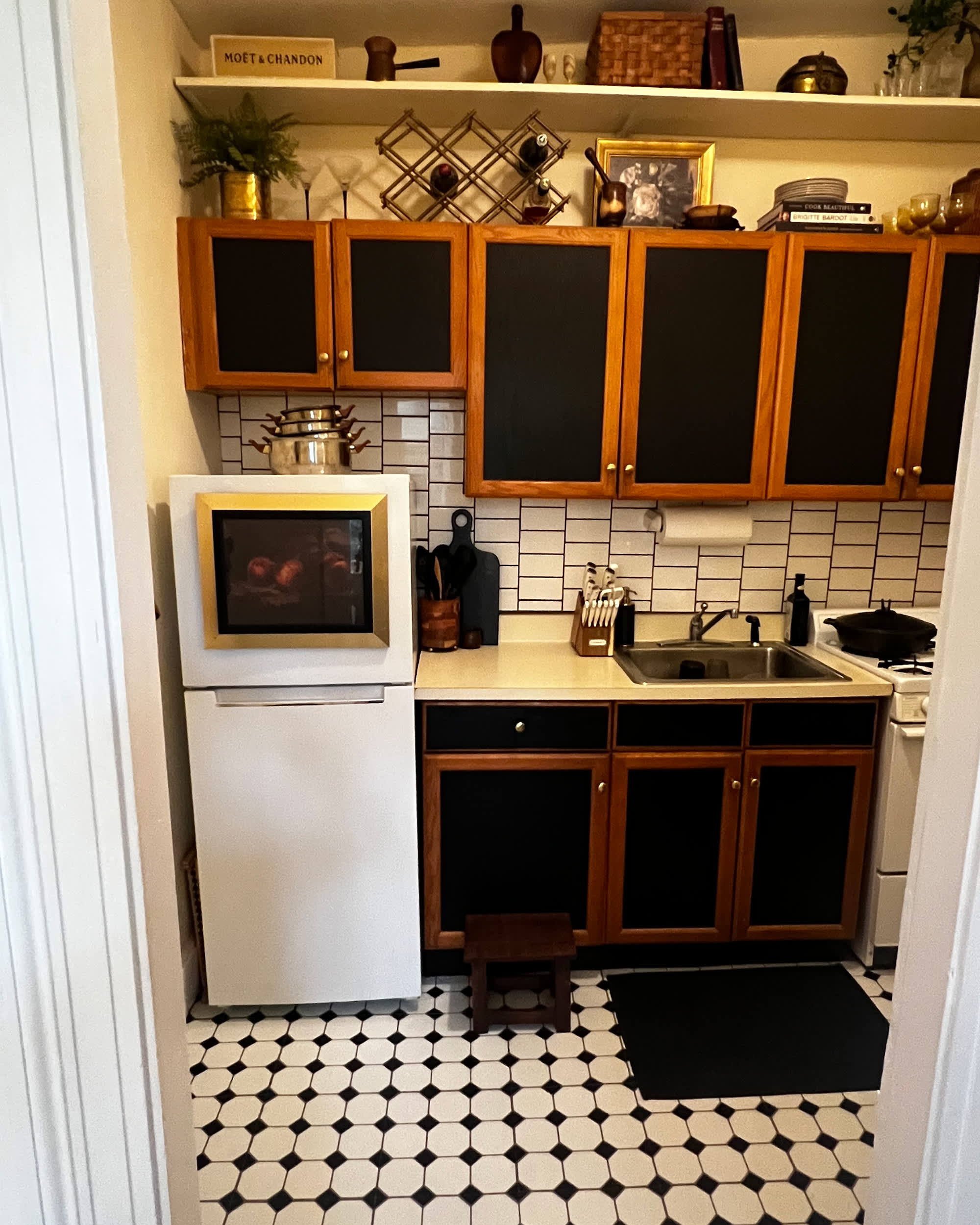
Painting works well, but it is not the only option.
Try Peel-and-Stick Veneer
If you are unsure about painting, adhesive laminate sheets offer a removable upgrade. They mimic wood or modern finishes and install in hours.
Reface Instead of Paint
For a higher-end look, consider replacing just the doors and drawer fronts. You keep the cabinet boxes but get new materials like solid wood or thermofoil.
Frequently Asked Questions About Painting Laminate Kitchen Cabinets
Can you paint laminate kitchen cabinets without sanding?
Technically yes, but sanding is strongly recommended. The slick surface needs abrasion for primer to grip. Skipping this step significantly increases the risk of peeling and chipping within months.
What kind of paint do you use on laminate cabinets?
Use 100% acrylic, urethane-modified, or alkyd paints designed for cabinets or trim. Brands like Benjamin Moore Advance and Sherwin-Williams ProClassic work well. Avoid standard wall paint since it lacks durability.
Do you need special primer for laminate?
Yes, use a bonding primer like Zinsser Bulls Eye 1-2-3 or BIN Shellac-Based Primer. These adhere to glossy surfaces where standard latex primers fail.
How long does painted laminate last on cabinets?
With proper prep and quality products, painted laminate can last 5 to 10 years or more. Durability depends on surface preparation, paint quality, and how gently you clean the cabinets.
Can you paint over laminate without primer?
Not recommended. Primer creates the bond between the slick laminate and the paint. Without it, paint will likely peel or bubble within a few months of regular use.
How many coats of paint do laminate cabinets need?
Two thin coats are typically sufficient. Allow each coat to dry fully, lightly sand between coats, and let the final coat cure for at least 72 hours before reinstalling hardware.
Key Takeaways for Painting Laminate Kitchen Cabinets
Painting laminate kitchen cabinets is a budget-friendly, high-impact upgrade. Success hinges on prep: clean, sand, prime, then paint with durable products. Done right, your cabinets will look custom and last 5 to 10 years or more.
The most important steps are thorough cleaning to remove grease, light sanding to create adhesion, and using a bonding primer. Selecting cabinet-grade paint in a semi-gloss finish ensures the surface withstands daily wear.
Your next step is to gather your supplies and start with one cabinet door as a test. This lets you perfect your technique before tackling the full kitchen. With this guide, you are ready to transform your kitchen without tearing it apart.


