

Is your kitchen cabinet door wobbling or hanging crooked? Loose cabinet doors are a common household issue that can make even the nicest kitchen look worn out. Over time, daily use, humidity changes, and repeated opening and closing cause hinges to loosen, especially on older cabinets. The good news is, you don’t need to replace the entire door or call a professional—how to tighten cabinet doors is a quick DIY fix that takes minutes and requires just a few basic tools.
Most cabinet doors are attached with adjustable hinges, especially modern ones with concealed (European-style) hardware. Even older surface-mounted hinges can be tightened easily. Whether your door is sagging, scraping the frame, or won’t close properly, this guide will walk you through simple steps to restore a snug, flush fit. You’ll learn how to identify hinge types, use the right tools, make precise adjustments, and prevent future loosening.
Identify Your Hinge Type
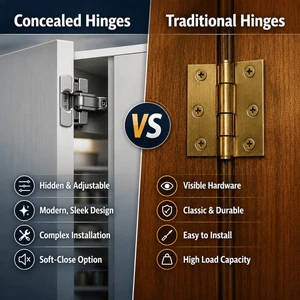
Before grabbing a screwdriver, determine what kind of hinge your cabinet uses. The adjustment method depends on the hinge style.
Check for Concealed Hinges
Concealed hinges are the most common in modern cabinets. They’re hidden when the door is closed and typically have three adjustment points:
– Side-to-side (left/right alignment)
– Up-and-down (vertical height)
– Depth (how far the door sits from the cabinet)
Look inside the cabinet—if you see a round or D-shaped mounting plate with multiple screws, you likely have concealed hinges.
Inspect Surface-Mounted Hinges
Older cabinets often use surface-mounted (butt) hinges. These are visible when the door is open and have two flat plates screwed into the cabinet frame and door edge.
These hinges only allow limited adjustment. Tightening loose screws is usually the only fix, but shimming may be needed if the door still sags.
Gather Essential Tools
Having the right tools makes the job faster and prevents damage.
Basic Repair Kit
You’ll need:
– Screwdriver (Phillips or flathead, depending on hinge screws)
– Hex key (Allen wrench) – often required for European hinges
– Drill with screwdriver bit (optional, for stubborn screws)
– Wood filler (if screw holes are stripped)
– Toothpicks or wooden matchsticks (for quick hole repair)
– Pencil or tape (to mark door position before adjustments)
Keep a small towel nearby to protect cabinet surfaces from scratches during adjustments.
Tighten Loose Hinge Screws
This is the fastest fix for most wobbly doors.
Door-Mounted Hinge Screws
Start with the screws that attach the hinge to the door. Open the door and locate the screws on the hinge arm connected to the door edge.
Use a screwdriver or hex key to gently tighten each screw. Don’t over-tighten—this can strip the hole or crack the door edge.
If the screw spins without tightening, the hole is stripped. Remove the screw, insert 2–3 toothpicks or wooden matchsticks dipped in wood glue, then reinsert the screw. Let dry for 2 hours before testing.
Frame-Mounted Hinge Screws
Close the door and check the screws that attach the hinge to the cabinet frame. These are often hidden behind the hinge cup inside the cabinet.
Tighten each screw carefully. If one won’t hold, use the toothpick-and-glue method described above.
After tightening both sets, open and close the door to test stability.
Adjust Door Alignment
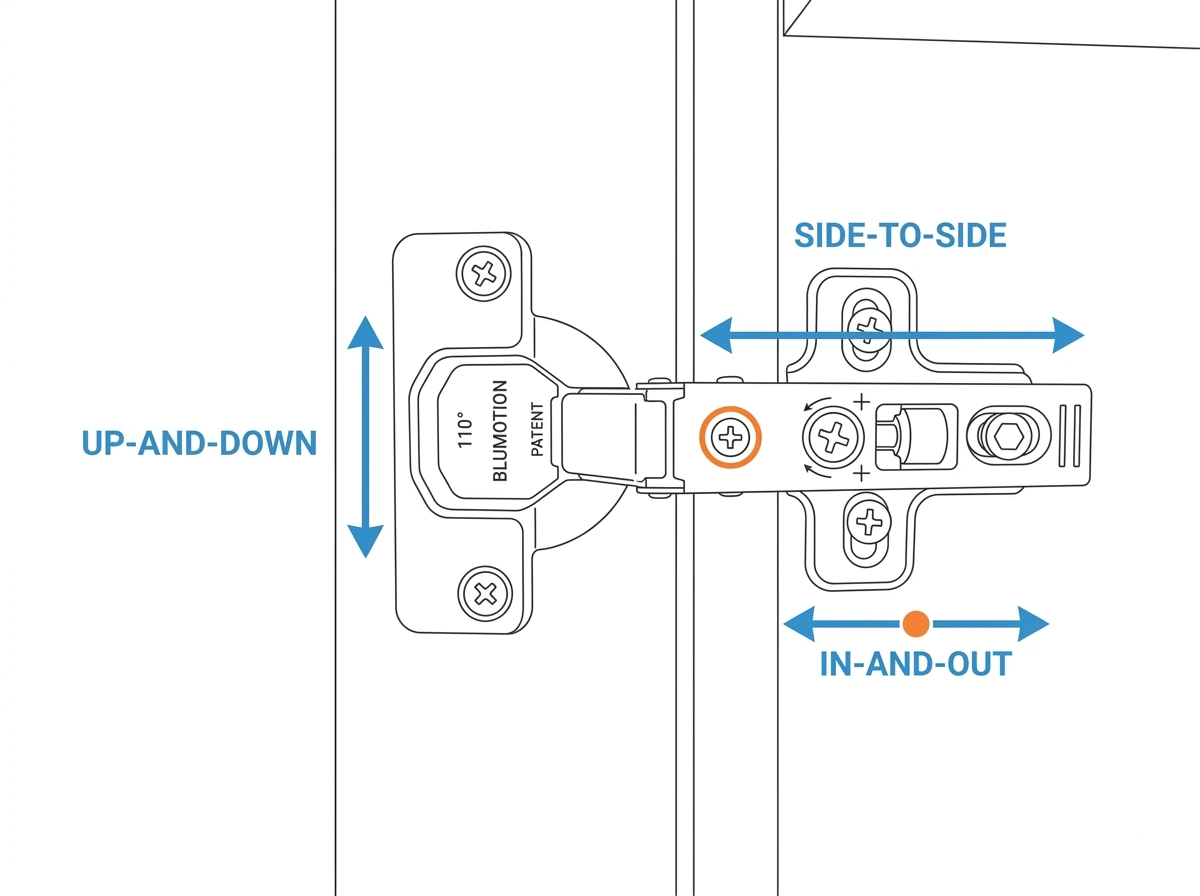
Even tight screws may leave the door misaligned. Use fine adjustments to perfect the fit.
Fix Sagging Doors
If the door sags downward, adjust the vertical (up/down) screw on the hinge mounting plate.
- Turn the bottom screw clockwise to raise the door
- Turn it counterclockwise to lower
Make small 1/4-turn adjustments, then test the door. Repeat until the door aligns with adjacent doors or the frame.
Correct Gaps on the Side
If there’s a gap between doors or the frame, adjust the side-to-side screw.
- Turn clockwise to move the door toward the cabinet interior
- Turn counterclockwise to shift it outward
This is especially useful for double doors that don’t meet in the center.
Fix Flush Fit Issues
If the door sticks out too far or sits too deep, adjust the depth screw.
- Turn clockwise to pull the door closer to the cabinet
- Turn counterclockwise to push it out
This ensures the door seals properly and doesn’t interfere with drawers or adjacent doors.
Repair Stripped Screw Holes
Stripped holes are common in particleboard or MDF cabinets.
Use Wood Filler and Toothpicks
Remove the screw and inject wood glue into the hole. Insert 2–3 toothpicks or wooden matchsticks, breaking them off flush.
Let dry for at least 2 hours, then reinsert the screw. The wood pieces provide fresh material for the screw to grip.
Reinforce with Dowels
For larger or severely damaged holes:
1. Drill out the hole to a uniform 1/4″ diameter
2. Apply wood glue inside
3. Insert a wooden dowel
4. Let dry overnight
5. Trim flush and redrill pilot hole
This creates a long-lasting repair suitable for high-use cabinets.
Prevent Future Loosening
Keep your cabinet doors tight longer with a few smart habits.
Apply Threadlocker to Screws
Use a low-strength threadlocker (like Loctite 222) on hinge screws. This prevents vibration from loosening them over time.
Avoid high-strength formulas—they can make future adjustments impossible without heat.
Check Doors Twice a Year
Schedule a quick inspection every 6 months. Tighten any loose screws before misalignment becomes noticeable.
This is especially important in homes with high humidity or temperature swings.
Avoid Overloading Doors
Don’t hang heavy items (like pots or mugs) from cabinet doors. The constant weight pulls hinges loose faster.
Store heavy items inside the cabinet, not on the door.
Special Cases and Fixes

Some door issues need extra attention.
Fix Soft-Close Hinge Issues
Soft-close hinges can lose tension over time. If the door won’t close smoothly:
– Check that all screws are tight
– Adjust the depth screw to ensure proper alignment
– Don’t force the door—this can damage the damping mechanism
If adjustment fails, the hinge may need replacement.
Align Double Cabinet Doors
For double doors that meet in the center:
1. Tighten all screws
2. Adjust vertical alignment so both doors are level
3. Use side-to-side screws to center the gap
4. Ensure the edges are flush when closed
A business card placed between the doors helps maintain an even gap during adjustment.
Fix Doors That Hit the Countertop
If a door scrapes the countertop:
– Raise the door using the vertical adjustment screw
– Check for warped doors—if the door itself is bent, tightening won’t help
– Consider adding felt bumpers to protect both door and counter
When to Replace Hinges
Tightening won’t fix everything. Replace hinges if:
– Screws won’t hold even after hole repair
– Hinge is cracked, bent, or rusted
– Door still wobbles after all adjustments
– You’re upgrading to soft-close functionality
Most hinges are standardized and cost $5–$15 each. Replacement takes 10 minutes per door.
Frequently Asked Questions About Tightening Cabinet Doors
How often should I tighten cabinet door hinges?
Check your cabinet doors twice a year, especially in homes with high humidity or temperature swings. Regular inspections catch loose screws before misalignment becomes noticeable.
Can I tighten cabinet doors without removing them?
Yes, you can tighten most hinge screws and make alignment adjustments while the door is attached. Only remove the door if you need to repair stripped holes or replace the hinge entirely.
What if my cabinet door screws won’t stay tight?
Stripped screw holes cause this issue. Remove the screw, insert toothpicks or wooden matchsticks dipped in wood glue, then reinsert the screw. Let it dry for 2 hours before testing.
Do I need special tools to tighten European hinges?
Most concealed European hinges require a Phillips screwdriver and a hex key (Allen wrench). Some models use a Torx bit, so check your hinge hardware before starting.
Why does my cabinet door keep sagging after I tighten it?
If the door sags repeatedly, the hinge may be worn out or the screw holes may be stripped. Repair the holes with dowels or replace the hinge if it’s cracked or bent.
Can I adjust soft-close hinges the same way as regular hinges?
Soft-close hinges have the same adjustment screws as standard concealed hinges. However, don’t force the door closed, as this can damage the damping mechanism. If adjustments don’t restore smooth closing, the hinge may need replacement.
Key Takeaways for Tightening Cabinet Doors
Learning how to tighten cabinet doors saves time, money, and frustration. With basic tools and a few minutes, you can eliminate wobbles, restore smooth operation, and keep your kitchen looking sharp.
Start by identifying your hinge type, then tighten all screws before making fine alignment adjustments. For stripped holes, use toothpicks and glue or reinforce with dowels for a permanent fix.
Regular maintenance prevents most issues, so check your cabinet doors twice a year. Apply threadlocker to hinge screws and avoid hanging heavy items from doors. If screws won’t hold after repairs, replace the hinge—it’s a quick, affordable fix that restores your cabinet’s function completely. Now that your doors are tight and aligned, enjoy a quieter, more functional kitchen.


