Is your kitchen feeling cold or dated despite recent updates? Many homeowners struggle to find the perfect balance between modern durability and timeless warmth, often overlooking walnut cabinets kitchen ideas that could instantly solve this dilemma.
This guide reveals how to pair dark walnut with light countertops, select the right metallic hardware, and layer lighting to prevent your space from feeling heavy. You will learn specific design strategies to create a cohesive, high-end look that increases your home’s value.
Select the Perfect Finish for Durability
The finish you choose dictates both the visual texture and the lifespan of your walnut cabinetry. A high-quality seal protects the wood from kitchen humidity while enhancing its natural grain patterns.
Choose Matte or Satin Sheens
Matte and satin finishes minimize glare and emphasize the organic depth of walnut wood. These options create a sophisticated atmosphere ideal for modern or minimalist designs where subtlety is key.
* Glossy finishes often highlight surface imperfections.
* Matte options provide a softer, more inviting touch.
* Satin offers a middle ground with slight reflectivity.
Pro Tip: Test finish samples under your specific kitchen lighting. Natural light reveals red undertones, while cool artificial bulbs may shift the tone toward gray-brown.
Apply Protective Sealing
Walnut is a durable hardwood, yet it requires proper sealing to withstand daily kitchen hazards. Use a water-resistant polyurethane or oil-based finish to guard against steam, spills, and grease near cooking areas.
* Unsealed walnut absorbs stains and oils quickly.
* Proper sealing ensures the wood lasts for decades.
* Reapply sealant periodically in high-traffic zones.
Pair Dark Cabinets with Light Countertops

Contrasting dark cabinetry with light surfaces is one of the most effective walnut cabinets kitchen ideas for maintaining visual balance. This combination prevents the room from feeling oppressive or too dark.
Install White Quartz or Marble
White quartz remains a top choice due to its non-porous nature and resistance to scratches. Calacatta or Carrara marble introduces elegant veining that complements the organic patterns found in walnut wood.
* Select countertops with subtle gray or beige veins.
* White surfaces reflect light to brighten the room.
* Non-porous materials resist staining better than natural stone.
Explore Concrete-Look Surfaces
For an industrial aesthetic, pair walnut lowers with honed concrete or porcelain that mimics concrete. The cool gray tones create a striking contrast against the warmth of the wood.
* Avoid dark countertops on both uppers and lowers.
* Cool tones balance the inherent warmth of walnut.
* Porcelain offers durability similar to natural concrete.
Implement Two-Tone Cabinet Designs
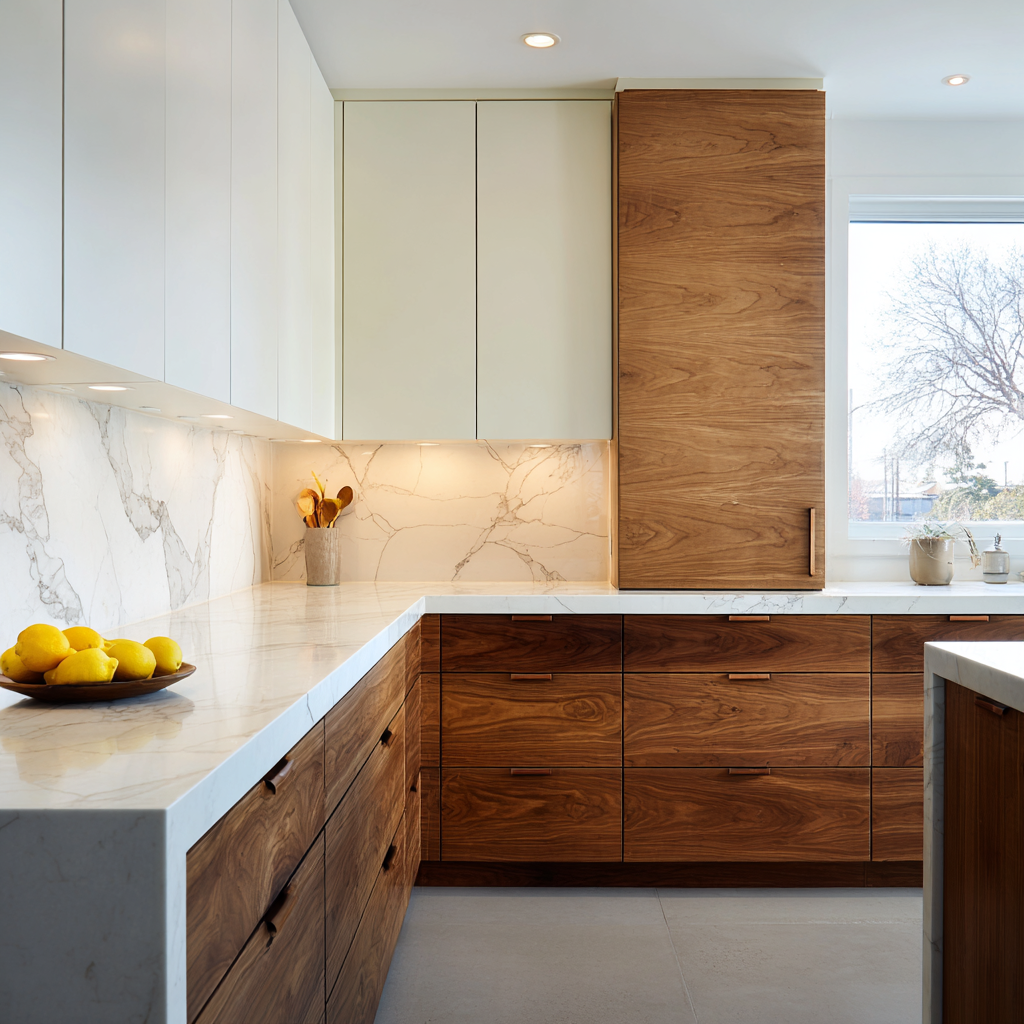
Two-tone configurations allow you to enjoy the richness of walnut without overwhelming the space. This approach creates visual interest and defines different functional zones within the kitchen.
Combine Walnut Bottoms with White Uppers
Using walnut for base cabinets and white for wall cabinets draws the eye upward, making ceilings appear higher. This classic pairing feels fresh while maintaining a timeless appeal.
* White uppers reflect light effectively.
* Dark lowers ground the space visually.
* The transition creates a custom, built-in look.
Feature a Walnut Island
If you prefer a lighter overall palette, install a standalone walnut island as a focal point. This anchors the room and adds warmth without dominating the entire space.
* Pair with black metal or brass pendant lights.
* Use a different countertop material for contrast.
* Define the island as a distinct gathering zone.
Select Complementary Backsplash Materials

Your backsplash serves as the bridge between cabinetry and walls. With walnut, aim for materials that either enhance warmth or provide a clean, contrasting backdrop.
Use Neutral Tile Tones
Cream, beige, warm gray, or soft white subway tiles create a seamless flow throughout the kitchen. Handmade zellige tiles add texture and subtle shimmer that reflects light beautifully.
* Avoid overly busy patterns that compete with wood grain.
* Neutral tones keep the focus on the cabinetry.
* Textured tiles add depth to flat wall spaces.
Incorporate Textured Stone or Brick
A reclaimed brick backsplash or stacked stone accent adds rustic charm, particularly in farmhouse styles. Pair these with open walnut shelving for a cohesive, earthy aesthetic.
* Large-format porcelain slabs offer low maintenance.
* Natural stone adds unique character to each tile.
* Brick introduces historical texture to modern spaces.
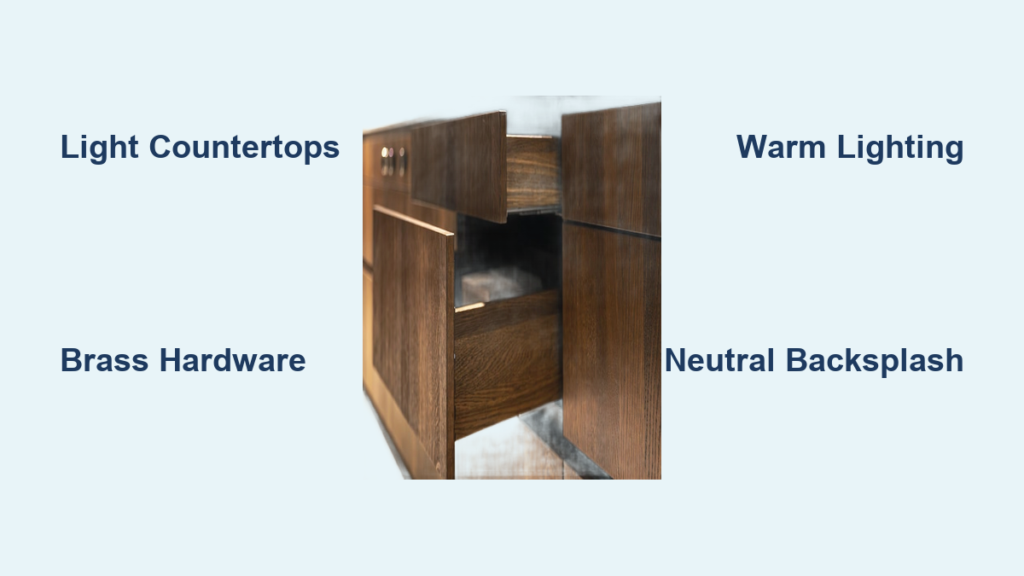
Pick Warm Metallic Hardware
:max_bytes(150000):strip_icc()/Photo5-47068cda1448497b80e4c60ae3d36f4c.jpg)
Hardware acts as jewelry for your cabinets, making a significant statement on dark wood surfaces. Choosing the right finish complements the richness of walnut rather than clashing with it.
Opt for Brass or Matte Black
Brass and aged brass finishes add luxury and warmth, enhancing the natural elegance of walnut. Matte black provides a bold, modern contrast ideal for transitional designs.
* Avoid chrome or stainless steel unless balanced with warm elements.
* Brass develops a beautiful patina over time.
* Black hardware offers a sharp, defined look.
Select Lever or Cup Pulls
Lever handles provide clean lines and are easier to grip for all ages. Cup pulls work exceptionally well with traditional or Shaker-style walnut cabinets to add vintage charm.
* Space pulls 8 to 12 inches apart on drawers.
* Ensure scale matches the cabinet door size.
* Consistent placement creates visual rhythm.
Light the Space Strategically
Dark wood absorbs light, making layered illumination essential for any kitchen featuring walnut. Proper lighting ensures the space feels inviting rather than cavernous.
Install Under-Cabinet Lighting
LED strips mounted under wall cabinets illuminate countertops and reflect off light backsplashes. This adds necessary brightness and depth to the workspace.
* Use warm white LEDs between 2700K and 3000K.
* Position lights to minimize shadows on work surfaces.
* Dimmable options allow for mood adjustments.
Hang Statement Pendants
Over a walnut island, use pendants made of woven rattan, glass, or black metal. Position them 30 to 36 inches above the surface and space them 24 to 30 inches apart.
* Include recessed ceiling lights for general illumination.
* Track lighting can highlight open shelving or art.
* Fixtures should complement the hardware finish.
Add Open Shelving for Display
Open walnut shelves blend storage with display, allowing you to showcase dishware while maintaining visual continuity with your cabinetry.
Style With Neutral Dishware
Use white, cream, or matte black ceramics to contrast effectively with the wood. Add woven baskets or linen towels to introduce additional texture.
* Keep shelves minimal to let wood grain shine.
* Avoid clutter that distracts from the design.
* Group items by color or function for order.
Mix With Floating Glass Shelves
For variety, alternate walnut shelves with floating glass options. This breaks up visual density and creates dynamic interest on the wall.
* Ensure brackets match your cabinet hardware.
* Glass shelves make small spaces feel larger.
* Combine materials for an eclectic yet curated look.
Balance With Warm Wall Colors
Walnut pairs best with warm, earthy wall tones that enhance its natural beauty rather than dulling it.
Try Sage Green or Greige
Sage green creates a calming, organic feel perfect for modern farmhouse kitchens. Greige offers neutrality with warmth, acting as a bridge between cool and warm elements.
* Pair sage with brass fixtures and white countertops.
* Greige works well with both light and dark accents.
* These colors highlight the wood’s red undertones.
Avoid Cool Grays
Cold, blue-based grays can make walnut look dull or muddy. Always test paint swatches next to a walnut sample in your kitchen’s natural light before committing.
* Warm grays are safer than cool tones.
* Test samples at different times of day.
* Consider brands like Benjamin Moore or Sherwin-Williams.
Integrate Natural Elements
Walnut is a natural material, so enhancing its organic appeal with other earth-derived textures creates a harmonious environment.
Use Stone, Linen, and Rattan
Include a stone hearth, linen curtains, or rattan bar stools to add softness. These materials create a grounded space that feels lived-in and welcoming.
* Wooden cutting boards reinforce the wood theme.
* Indoor plants like fiddle-leaf figs add life.
* Ceramic vases introduce handcrafted texture.
Add a Live-Edge Walnut Island
For a showstopping feature, install a live-edge walnut countertop or island base. The raw, asymmetrical edge highlights the wood’s unique character.
* Seal thoroughly for food-safe use.
* Regular maintenance preserves the raw look.
* This becomes an immediate conversation piece.
Consider Cabinet Door Style
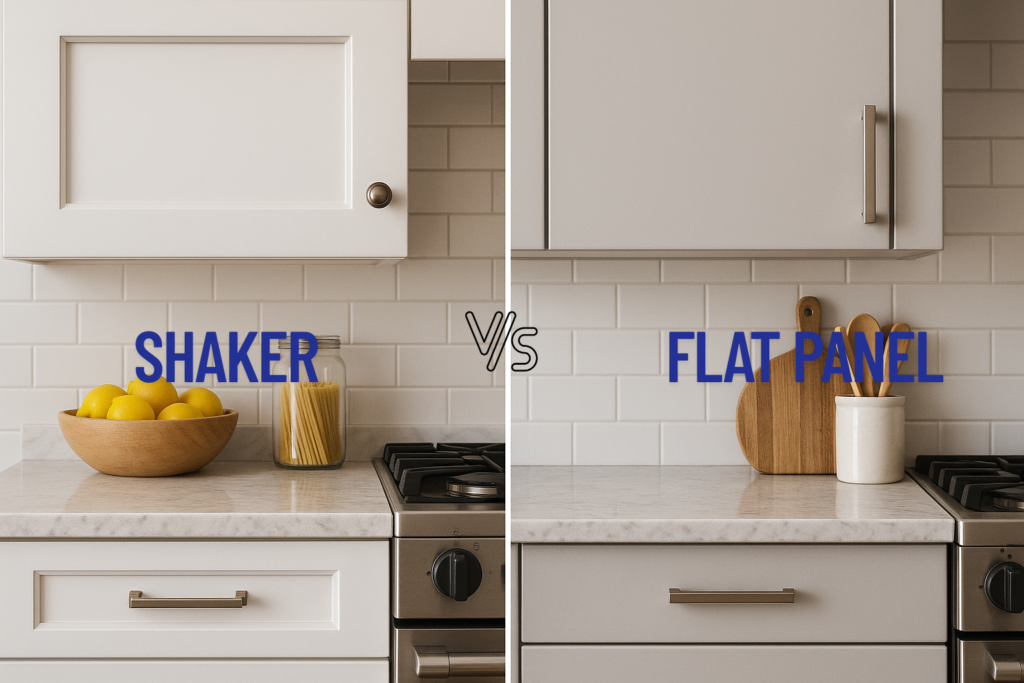
The door style significantly affects the overall aesthetic, so choose one that aligns with your specific design vision.
Shaker for Timeless Appeal
Shaker-style walnut cabinets feature a simple recessed panel with clean lines. They work seamlessly in traditional, modern, and transitional kitchens.
* Flat or beveled profiles highlight wood grain.
* Simple design suits various hardware styles.
* Versatile enough for any home era.
Slab for Modern Minimalism
Flat-panel or slab doors create a sleek, streamlined look ideal for contemporary spaces. They emphasize simplicity and sophistication without distraction.
* Pair with hidden hinges for a seamless appearance.
* Integrated handles maintain clean lines.
* Large panels showcase continuous grain patterns.
Maintain a Cohesive Floor Match
Flooring should complement your cabinets without competing for attention.
Use Light Hardwood or Oak
Light oak, white-washed wood, or pale walnut floors keep the space airy. Tonal variation between floor and cabinets adds dimension without contrast overload.
* Avoid dark-stained floors in small kitchens.
* Light floors reflect more ambient light.
* Ensure undertones match your cabinetry.
Try Large-Format Tile
Porcelain tiles in light stone or wood-look finishes offer durability and style. Large formats minimize grout lines, creating a clean, expansive feel.
* Warm tile hues pair best with walnut.
* Matte finishes reduce slip hazards.
* Tile is ideal for high-moisture areas.
Frequently Asked Questions About Walnut Cabinets Kitchen Ideas
Do walnut cabinets make a kitchen look smaller?
Walnut cabinets can make a kitchen feel smaller if not balanced with light elements. Pairing them with white countertops, light walls, and ample lighting prevents the space from feeling closed in.
What hardware looks best on walnut cabinets?
Brass, aged brass, and matte black hardware look best on walnut cabinets. These warm or bold finishes complement the wood’s richness better than cool tones like chrome.
How do you keep walnut cabinets from looking dated?
Keep walnut cabinets looking current by pairing them with modern finishes like quartz or concrete-look surfaces. Updating hardware and using two-tone designs also maintains a fresh aesthetic.
Can I paint over walnut cabinets later?
Yes, you can paint over walnut cabinets, but it requires proper priming for adhesion. However, painting covers the natural grain that makes walnut a valuable and desirable material.
What wall colors complement walnut cabinets?
Sage green, greige, cream, and warm white wall colors complement walnut cabinets best. These tones enhance the wood’s natural warmth without clashing with its undertones.
Key Takeaways for Walnut Cabinets Kitchen Ideas
Implementing walnut cabinets kitchen ideas requires balancing the wood’s deep tones with light countertops, warm metallics, and strategic lighting. By selecting the right finish and pairing walnut with complementary textures like stone and linen, you create a timeless kitchen that feels both elegant and inviting.
Start by testing samples in your own space to see how light affects the wood’s color. Whether you choose a full walnut installation or a two-tone approach, these strategies ensure your kitchen remains a stylish and functional heart of your home.