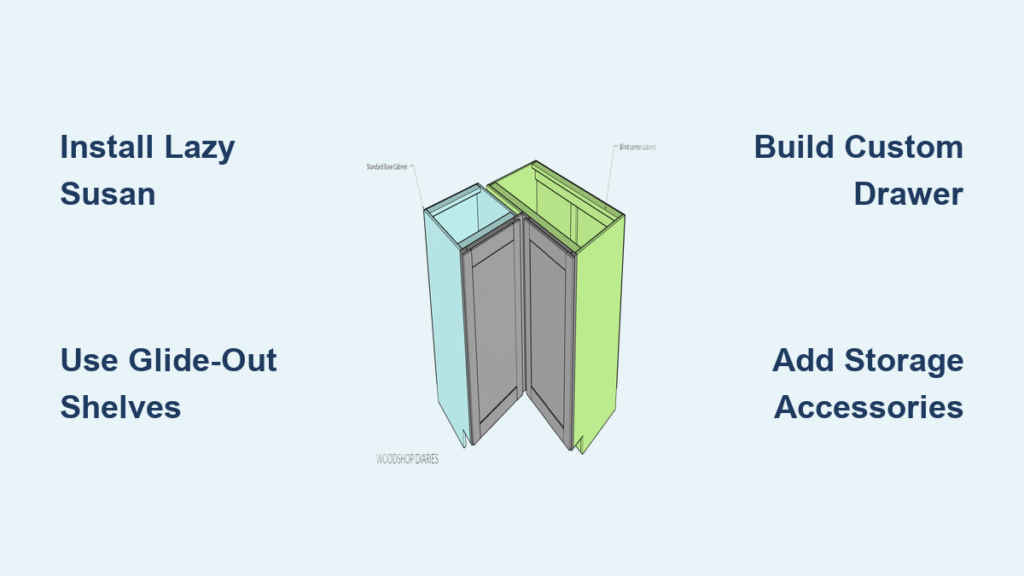
Blind corner cabinets often feel like the Bermuda Triangle of kitchens, where pots and pans vanish into a deep, unreachable void. This frustrating design flaw leaves valuable storage space completely useless for many homeowners.
You can fix this awkward gap with smart ideas for blind corner cabinets that bring everything within easy reach. This guide reveals how rotating shelves, pull-out glides, and custom drawers turn hidden死角 into your most organized storage zone.
Install Rotating Lazy Susan Systems
Rotating turntables are the most popular solution for accessing deep corners without removing adjacent items. These systems spin 360 degrees to bring rear items directly to the front opening.
Select the Correct Turntable Configuration
Different kitchen needs require specific rotating styles to maximize efficiency and space usage.
* Full-round turntables: Offer complete circular rotation ideal for jars and small appliances.
* D-shaped shelves: Feature a flat front edge that aligns flush with the cabinet door frame.
* Double-tier models: Provide two levels of storage to double your vertical capacity for bowls or lids.
Pro Tip: Choose ball-bearing mechanisms instead of plastic bearings to support heavy cast-iron cookware without wobbling.
Ensure Proper Clearance for Rotation
Incorrect installation often leads to binding or scraping against the cabinet interior walls. You must leave at least a quarter-inch of clearance around the entire circumference of the turntable. Use adjustable mounting brackets to fine-tune the position after placing the unit inside the box.
Visual Cue: The front edge of the rotating shelf should align perfectly with the cabinet opening when the door is fully open.
Deploy Full-Extension Glide-Out Shelves
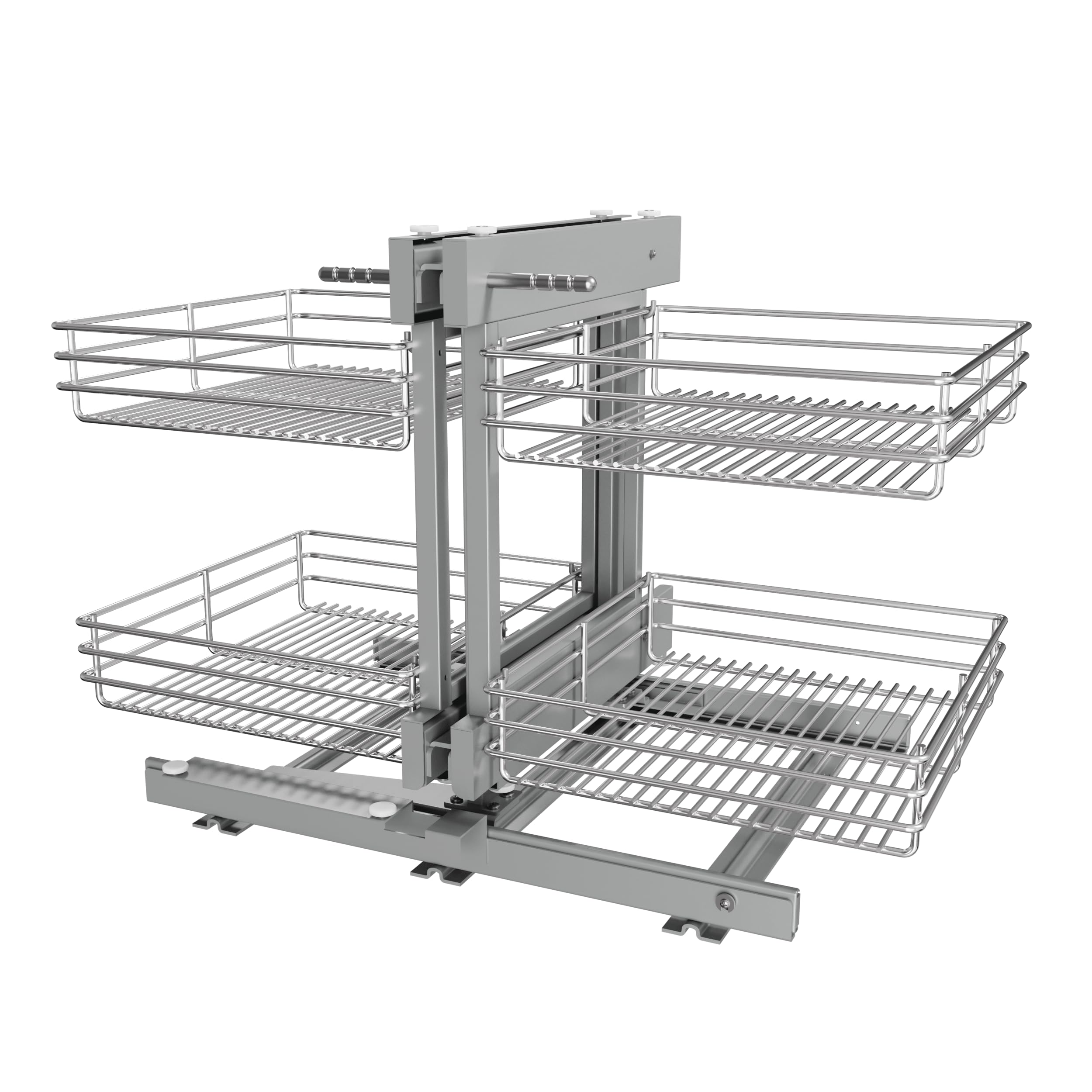
Glide-out systems eliminate the need to reach blindly into dark spaces by sliding the entire shelf forward. This linear motion exposes every inch of the cabinet depth for easy retrieval.
Choose Between Single and Double Tiers
Horizontal pull-outs come in configurations designed for specific storage volumes and item types.
* Single-tier glide-outs: Best for large baking sheets, cutting boards, or bulky appliances.
* Double-tier models: Allow separation of cooking tools from serving dishes on two sliding levels.
Installation typically takes one to two hours if you are replacing an existing fixed shelf with a pre-made kit.
Customize Slides for Perfect Alignment
Pre-fabricated kits may not fit irregular spaces, requiring custom measurement of width, depth, and height. Select soft-close slides to prevent slamming and extend the life of your hardware components. Match the shelf material to your kitchen style using wood, wire, or laminate finishes.
Common Mistake: Mounting slides too close to the edge causes the shelf to tilt when loaded. Always follow the 2.5-inch mounting rule from the reference edge.
Construct Custom Drawer Solutions
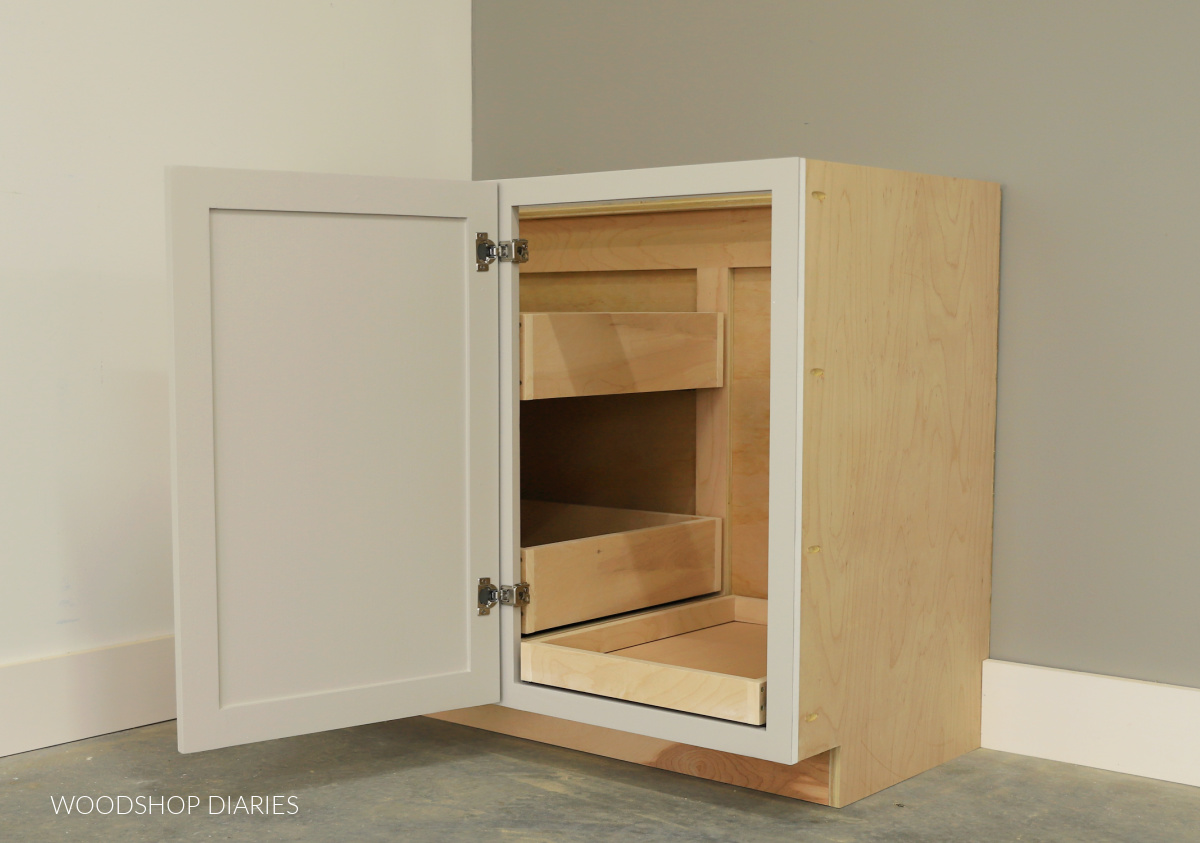
Building a custom drawer system offers a high-end look while saving money compared to expensive commercial kits. This approach uses standard hardware to create a seamless, built-in appearance.
Build a Single Deep Drawer Box
Construct the cabinet box using 3/4-inch birch plywood for maximum durability and weight capacity. Install full-extension ball-bearing drawer slides rated for at least 100 pounds to handle heavy cookware loads. Cut the toe kick only on the accessible front corner while keeping the blind side sealed.
Cost Benefit: DIY drawer builds can save you over $300 compared to premium blind corner drawer kits.
Stack Drawers for Multiple Zones
Add a second, shallower drawer above the main unit to create distinct storage zones for smaller items. This configuration works well for utensils, spice containers, or kitchen gadgets but reduces vertical clearance for tall appliances. Use pocket hole screws for assembly and hide them on the interior faces for a clean look.
Expert Note: Apply edge banding to all visible plywood edges to achieve a professional, finished appearance.
Maximize Vertical Space with Accessories
Even with advanced sliding or rotating systems, vertical space often remains underutilized without proper organization. Strategic accessories help you exploit every inch of available height.
Hang Baskets for Heavy Produce
Install wire or wooden hanging baskets inside the cabinet to store potatoes, onions, or fruit that need airflow. Mount these directly to the door or side wall to keep the floor space clear for larger items. Spring-loaded clips allow secure installation without permanent drilling into the cabinet structure.
Use Clear Containers and Dividers
Visibility prevents food waste by ensuring items in the back do not get forgotten or expired. Store dry goods like pasta and flour in labeled, airtight clear containers for instant identification. Use adjustable dividers to keep cutting boards, trays, and baking pans upright and organized.
Warning: Never store food in opaque containers in blind corners because you cannot see what is hidden in the back.
Mount Organizers on Cabinet Doors
Turn the inside of the cabinet door into functional real estate for small tools and essentials. Install slim racks for ladles, spatulas, or measuring cups to free up shelf space. Adhesive hooks work well for small tools like peelers or thermometers that tend to get lost.
Compare Rotating Versus Pull-Out Systems
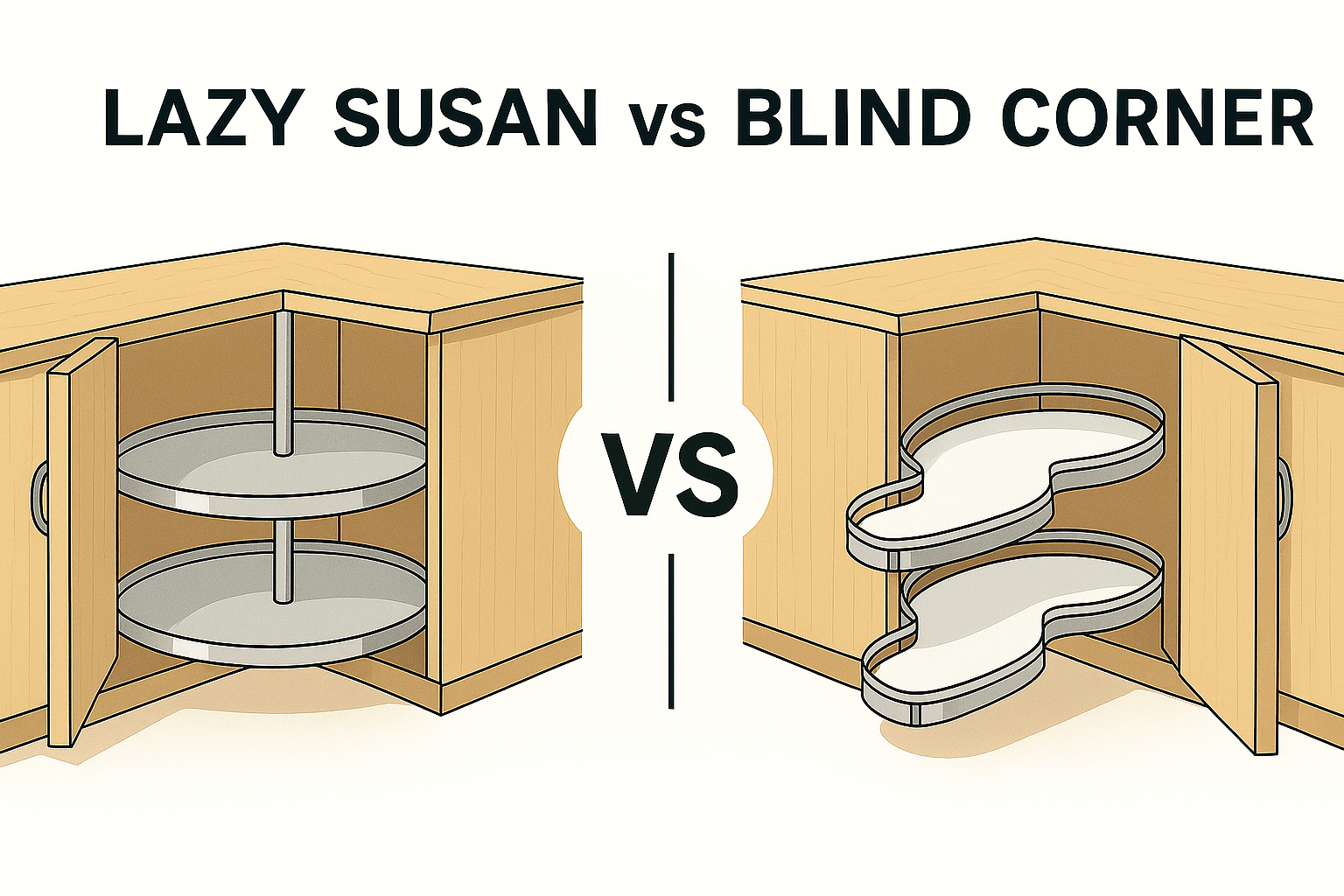
Choosing between rotation and sliding mechanisms depends on your specific storage needs, budget, and available space. Each system offers distinct advantages and limitations for different kitchen workflows.
Evaluate Lazy Susan Pros and Cons
| Pros | Cons |
|---|---|
| Provides 360-degree access to all stored items | Requires precise clearance to rotate smoothly |
| Excellent for round or irregularly shaped objects | Can wobble if overloaded on one side |
| Integrates seamlessly with standard door swings | Limited vertical stacking capability |
Best For: Pantry items, spices, and cookware used on an occasional basis.
Analyze Glide-Out Drawer Pros and Cons
| Pros | Cons |
|---|---|
| Offers full visibility and linear reach | Requires more front clearance when extended |
| Supports heavy loads evenly across the slide | Higher upfront cost for quality hardware kits |
| Easier to organize items in straight lines | Demands precise slide alignment during install |
Best For: Daily-use items, baking sheets, and flat cutting boards.
Adapt Solutions for Other Rooms
Blind corner ideas are not limited to kitchens and work effectively in laundry rooms, offices, and closets. These spaces often suffer from the same accessibility issues found in kitchen designs.
Organize Laundry Room Supplies
Store detergent, fabric softener, and cleaning sprays in a glide-out blind cabinet for easy access. Use clear bins to monitor refill levels and add a small pull-out hamper for lint traps or dryer balls. This setup keeps heavy chemicals off the floor and within safe reach.
Upgrade Home Office Storage
Install a rotating tray in a corner desk or filing cabinet to organize office supplies like staplers and tape. Use a shallow pull-out shelf for notebooks, charging cables, or printer paper. This converts a dark corner into a functional command center for your workspace.
Tame Storage Closet Clutter
Stack bins on a Lazy Susan in storage closets to easily rotate holiday decor or seasonal gear. Use a pull-out shelf for vacuum attachments or toolkits that usually get buried in the back. These systems improve accessibility significantly for users with mobility challenges.
Follow Critical Installation Best Practices
Even the best hardware fails if installed incorrectly, so following precise construction protocols is essential. Proper measurement and structural support ensure your new system lasts for decades.
Measure Twice Before Cutting
Verify that your space meets the minimum width requirement of 39 inches to accommodate filler panels and door clearance. Ensure the depth matches standard base cabinets at 24 inches for proper fitment. Use a laser level to check squareness, especially in older homes where walls may not be perfectly straight.
Seal the Blind Side Completely
Never leave the back side of the cabinet open, as items will fall into the gap between cabinets. Attach a solid plywood panel to the blind side to prevent loss and reinforce the overall cabinet structure. This step also improves insulation and prevents pests from entering through wall gaps.
Install Toe Kick Support Strips
Add a horizontal support strip between the side panels underneath the cabinet before final installation. This ensures the toe kick remains stable and does not flex when adjacent cabinets are joined together. Push on the front corner after installation to verify there is no creaking or movement.
Avoid Common Installation Mistakes
Small errors during planning or execution can ruin the functionality of your new storage solution. Steering clear of these pitfalls ensures smooth operation and long-term satisfaction.
Skimp on Hardware Quality
Cheap slides or plastic turntable bearings often fail under the heavy loads typical of kitchen storage. Invest in steel ball-bearing hardware with soft-close features and appropriate weight ratings. High-quality components glide smoothly and resist wear much better than budget alternatives.
Ignore Door Swing Interference
Test the door clearance fully before final mounting to ensure it does not hit adjacent cabinets or appliances. Adjust hinge placement or modify the filler panel size if the door obstructs access. A properly fitted door should open fully without any resistance or collision.
Overfill the Cabinet Capacity
More storage space does not mean you should overload the mechanism beyond its design limits. Overloading causes slides to bind and turntables to wobble, making retrieval difficult. Leave at least one to two inches of clearance around rotating shelves for smooth operation.
Maintain Systems for Longevity
Well-maintained storage systems can last for decades with just a little regular care and attention. Simple maintenance routines prevent jams and ensure smooth operation year after year.
Clean Tracks Monthly
Dust, grease, and crumbs accumulate on tracks and can jam sliding mechanisms over time. Wipe tracks with a damp cloth and dry them thoroughly to prevent rust and corrosion. Regular cleaning keeps the system running smoothly and protects your stored items.
Lubricate Moving Parts Annually
Apply silicone-based lubricant to drawer slides, Lazy Susan pivot points, and hinge joints once a year. Avoid oil-based lubricants because they attract dirt and gum up the mechanism over time. Proper lubrication reduces friction and extends the life of your hardware.
Check Alignment Quarterly
Tighten any loose screws on brackets and hinges to maintain structural integrity. Re-level any sagging shelves to ensure they slide or rotate without binding. Many professional systems include lifetime warranties, so register your product for peace of mind.
Frequently Asked Questions About Blind Corner Cabinets
What is the minimum width required for a blind corner cabinet?
A minimum width of 39 inches is required to accommodate the necessary filler panels and allow for proper door swing. This width ensures the internal mechanisms have enough space to operate without hitting adjacent cabinetry.
How much storage space can I gain by optimizing a blind corner?
Properly configured pull-outs and organizers can increase usable storage space by up to 50 percent. This transformation turns a dark, unreachable void into a highly functional storage zone for your kitchen.
Can I install a blind corner solution in rooms other than the kitchen?
Yes, these solutions work excellently in laundry rooms, home offices, and storage closets. They help organize detergents, office supplies, and seasonal decor by making deep corners easily accessible.
What is the difference between a blind corner and an L-corner cabinet?
An L-corner offers full access to both legs of the angle, while a blind corner has one side hidden by an adjoining cabinet. Blind corners require specific hardware like glide-outs or turntables to access the deep recess.
How do I prevent items from falling behind the cabinet?
You must seal the blind side with a solid plywood panel during construction or installation. This prevents items from disappearing into the gap between cabinets and reinforces the overall structure.
Key Takeaways for Transforming Your Blind Corner
Blind corner cabinets no longer need to be frustrating dead zones in your kitchen layout. By implementing smart ideas for blind corner cabinets like rotating Lazy Susans, full-extension glide-outs, or custom drawers, you can reclaim this lost space. Focus on quality hardware, precise measurements, and regular maintenance to ensure your new system functions perfectly for years.
Start by measuring your space and choosing the mechanism that best fits your storage needs. Whether you DIY a custom drawer or install a commercial kit, the result will be a streamlined, accessible kitchen that works harder for you.