Walking into a kitchen that feels like a warm hug is something every homeowner dreams of. Wooden beams overhead, the rich grain of reclaimed barn wood glowing in soft light, and the scent of pine lingering in the air create that lived-in feeling we all crave. Rustic kitchen cabinets ideas bring timeless charm and cozy character to any home, blending natural textures with handcrafted appeal.
Whether you are renovating a farmhouse, crafting a cabin retreat, or adding warmth to a modern space, the right cabinet design can transform your cooking area into an inviting haven. From weathered grey finishes to hand-forged iron pulls, these designs celebrate imperfection and authenticity. In this guide, you will discover how to choose materials, mix styles, and maintain that perfect rugged elegance without sacrificing function.
Natural Wood Finishes That Define Rustic Kitchen Cabinets Ideas

Wood is the heart of any rustic cabinet design, and choosing the right type and finish makes all the difference in both look and longevity.
Why Reclaimed and Barn Wood Stand Out
Reclaimed wood and aged barn wood are top choices for rustic kitchen cabinets ideas because they come with built-in history. Nail holes, saw marks, and natural weathering cannot be replicated artificially. These imperfections add depth and authenticity, making each cabinet one-of-a-kind. Reclaimed wood is also eco-friendly, reducing the need for new timber while adding vintage soul to your kitchen.
Best Wood Types for Rustic Style
- Pine: Lightweight, affordable, and easy to distress; ideal for a soft, country feel
- Cedar: Naturally resistant to moisture and insects; adds a subtle reddish tone
- Oak: Durable with prominent grain; works well when lightly sanded and sealed
- Hickory: Strong and shock-resistant; perfect for high-traffic kitchens
Choose woods with visible knots, grain variation, and color shifts to enhance the rustic vibe.
Seal Wood for Protection and Warmth
Because wood is porous and sensitive to humidity, always apply a food-safe wood sealant like polyurethane or tung oil to protect cabinet surfaces. Reapply every one to two years, especially on lower cabinets near sinks. This not only prevents warping but deepens the wood’s natural color over time.
Distressed Textures for Authentic Rustic Kitchen Cabinets Ideas
A smooth, factory-fresh finish has no place in a true rustic kitchen. Distressing creates the illusion of decades of use with gently worn edges, scraped paint, and subtle dents.
DIY Distressing Techniques
You do not need to buy pre-distressed cabinets. Create the look yourself with these methods:
– Sand edges and corners with medium-grit paper to mimic natural wear
– Use a chain or hammer to lightly dent surfaces for character
– Apply two-tone paint: Base coat in dark brown, top coat in cream, then sand through to reveal layers
– Dry brush technique: Lightly drag a nearly dry paintbrush across the surface for a faded, hand-painted look
These tricks make even new cabinets feel like they have been in your family for generations.
Avoid Overdoing the Distressing
Too much distressing can make cabinets look damaged rather than charming. Focus wear on high-touch areas like corners, drawer fronts, and edges near handles, where natural use would cause wear. Keep flat surfaces mostly intact to balance the look.
Earth-Tone Color Palettes That Warm the Space
:max_bytes(150000):strip_icc()/Screenshot2024-02-14at12-51-34SuncadiaStunnerJessicaNelsonDesign-2ac3467d9d3c4af89aee0f2943e7b882.jpeg)
Color sets the mood in a rustic kitchen. Cool grays and stark whites feel too modern, so go for hues pulled straight from nature instead.
Top Rustic Cabinet Colors
- Weathered Grey: Mimics aged barn wood and pairs well with black hardware
- Soft White Wash: Lets wood grain show through and brightens small kitchens
- Forest Green: Rich and earthy, excellent on lower cabinets with open shelving above
- Charcoal with Wood Inset: Modern-rustic blend, ideal for islands for contrast
- Warm Beige or Cream: Creates a cozy, lived-in feel perfect for farmhouse styles
Stick to matte or eggshell finishes. They hide imperfections and reduce glare, enhancing the handmade aesthetic.
Mix and Match Cabinet Colors
Try a two-tone approach for visual interest:
– Dark lowers with light uppers, such as forest green base and whitewashed uppers
– Neutral cabinets with a bold island, like a beige perimeter and a rust-red island
– Open shelves in natural wood to break up color blocks and add texture
This adds visual interest without overwhelming the space.
Wrought Iron and Vintage Hardware Details
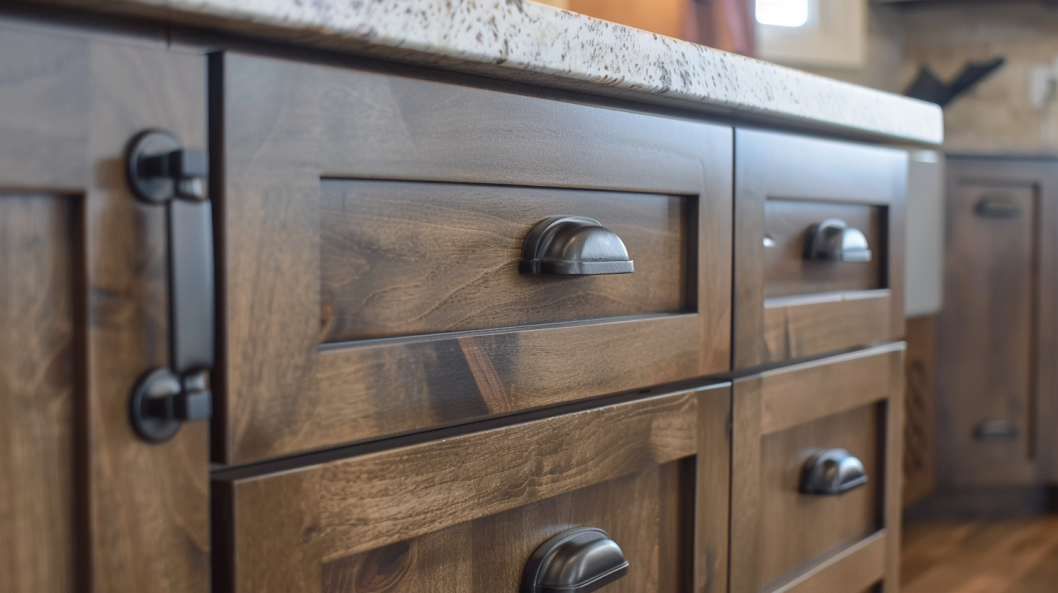
Hardware is the jewelry of your cabinets. In rustic design, it should feel handcrafted, substantial, and slightly weathered.
Choose Authentic Rustic Pulls
- Wrought iron handles: Black or oil-rubbed bronze with slightly irregular shapes for an artisan feel
- Cup pulls and bin pulls: Classic 19th-century style, perfect for Shaker cabinets
- Leather straps or rope handles: Ideal for open shelving or pantry doors
- Repurposed items: Vintage keys, drawer pulls from old furniture, or barn latch mechanisms
Avoid shiny chrome or plastic, as these clash with rustic authenticity.
Placement Tips for Visual Balance
Use larger pulls on lower cabinets and smaller knobs on uppers. Align hardware vertically on tall cabinets for elegance. Space pulls six to eight inches apart on wide drawers for comfort.
Pro Tip: Pre-drill holes when installing to prevent splitting soft woods like pine.
Open Shelving for Display and Accessibility
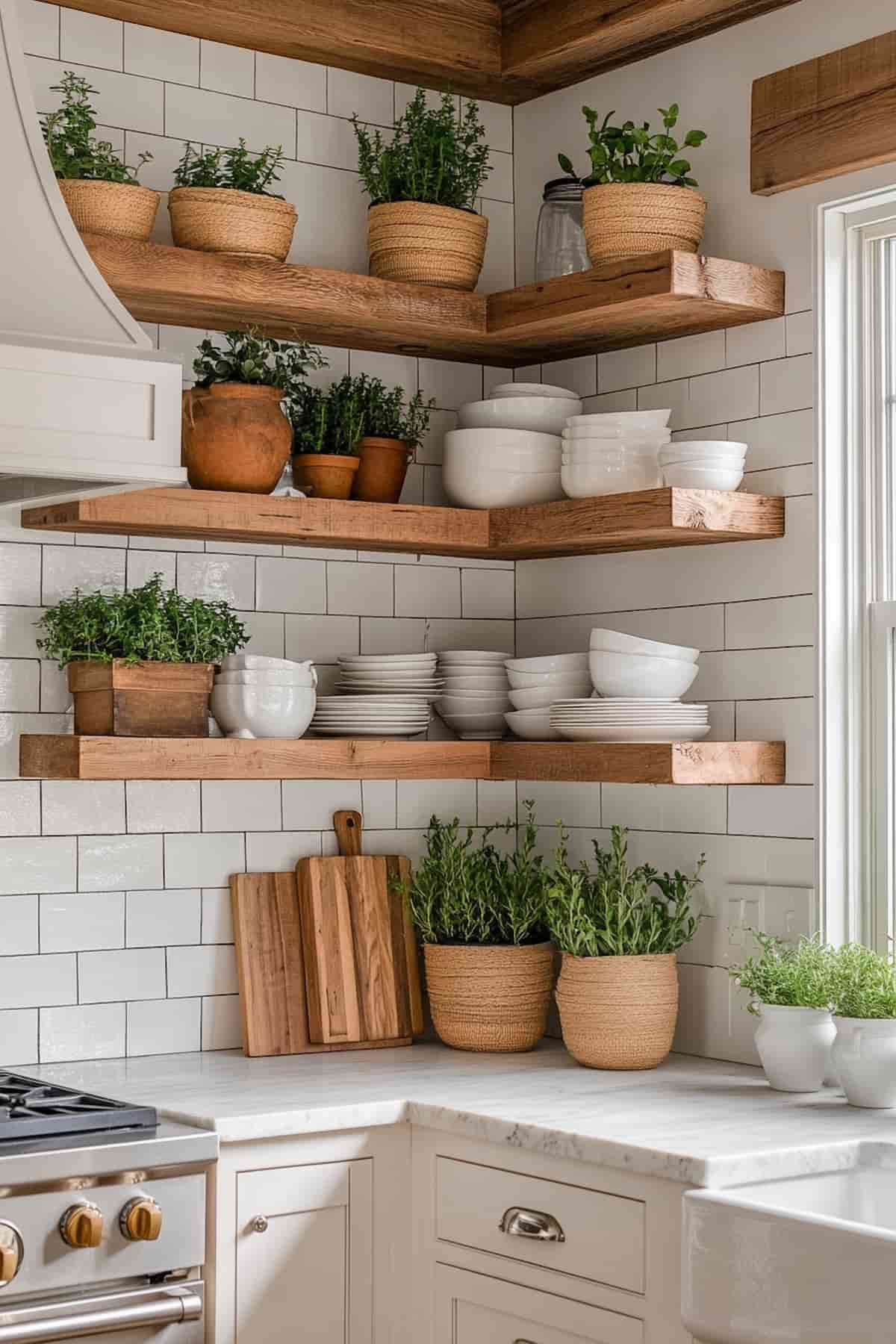
Closed cabinets can feel heavy in a rustic kitchen. Open shelves lighten the space and let you showcase your favorite dishes and decor.
Best Locations for Open Shelves
- Above countertops between cabinets
- Next to the sink for easy access to soap and towels
- Adjacent to the stove for spices and oils
- On a blank wall as a focal point with decorative plates or mason jars
Use thick, reclaimed wood planks that are 1.5 to 2 inches thick for a sturdy, rustic look.
Styling Your Shelves
Keep the display curated, not cluttered:
– Stack ceramic bowls in neutral tones
– Display vintage glassware or enamelware
– Add woven baskets for hidden storage
– Include greenery such as herbs in pots or dried bundles of lavender
Rotate items seasonally to keep the look fresh.
Keep Open Shelving Functional
Open shelves show dust and grease quickly. Wipe them down weekly with a damp microfiber cloth. Install under-shelf LED strip lights to highlight displays and improve task lighting.
Rustic-Style Inspirations to Guide Your Design
Rustic is not one single style. It is a blend of influences that can be tailored to your home and taste.
Farmhouse Kitchen Essentials
- Shaker-style cabinets with recessed panels
- An apron-front farmhouse sink in fireclay or copper
- Butcher block countertops for warmth
- Chalkboard paint on a wall or cabinet front for notes and menus
This look is timeless, practical, and perfect for family kitchens.
Country Cottage Charm
Think English countryside with painted cabinets in soft sage, cream, or duck-egg blue. Add glass-front uppers to display china, pair with floral or gingham curtains, and incorporate exposed ceiling beams or beadboard walls. A vintage rug and a wooden step-back cabinet add extra charm.
Scandinavian Rustic Fusion
Mix Nordic minimalism with rustic warmth using light wood cabinets in ash or pine with clean lines. Pair with white walls to amplify light, black metal lighting, and simple hardware. Natural textiles like wool throws and linen towels complete the look while keeping the soul of rustic design.
Complementary Features That Complete Rustic Kitchen Cabinets Ideas

Rustic cabinets do not work in isolation. Pair them with materials and fixtures that enhance their character.
Pair With Stone or Butcher Block Countertops
- Granite or soapstone: Durable, cool to the touch, with natural veining
- Butcher block: Warm, repairable, and great for prep work
- Concrete with wood inlays: Industrial-rustic edge
Avoid high-gloss quartz, as it feels too sleek and sterile for the rustic aesthetic.
Add a Brick or Stone Backsplash
Exposed brick or stacked stone backsplashes amplify the rustic feel. Use reclaimed brick for authenticity and choose mortar in grey or beige to match cabinets. Limit the backsplash to behind the stove or sink to avoid overwhelming the space. Tile alternatives include hand-painted ceramic or subway tile in matte finish.
Choose Vintage-Inspired Lighting
- Pendant lights with metal shades over the island
- Wrought iron chandeliers with candle-style bulbs
- Mason jar lights or gooseneck fixtures
Dimmable lights create ambiance for evening meals.
Smart Layouts for Rustic Kitchen Functionality
Beauty means nothing if the kitchen does not work well. Plan your layout to keep the rustic look while maximizing usability.
Maximize Storage Without Clutter
Use pull-out spice racks inside cabinet doors, deep drawers instead of lower cabinets for pots and pans, lazy Susans in corner cabinets, and built-in wine racks or towel bars inside pantry doors. Keep everyday items within easy reach.
Maintain Ample Workspace
Even with open shelves and decorative elements, ensure 36 inches of countertop on both sides of the stove and 24 inches next to the sink for prep. Keep a clear path between islands and cabinets of at least 42 inches. Use island overhangs of 12 inches for casual dining or extra prep space.
Blend Old and New Thoughtfully
It is okay to mix rustic cabinets with modern appliances; just conceal them. Use panel-ready dishwashers and fridges that match cabinet wood, hide microwaves in tall cabinets with flip-up doors, and choose induction cooktops with minimal visible elements. This keeps the aesthetic cohesive.
Maintain Your Rustic Cabinets for Years
Rustic does not mean high maintenance, but it does require care to preserve its beauty.
Clean With Gentle Products
Avoid harsh chemicals or abrasive sponges. Use mild dish soap and water for daily cleaning, dry spills immediately to prevent water rings, and try white vinegar diluted one-to-one with water for sticky residue. Never use bleach or ammonia-based cleaners on wood.
Control Humidity and Sunlight
Excessive moisture warps wood, and direct sunlight fades finishes. Install exhaust fans near sinks and stoves, use curtains or blinds to filter afternoon sun, and keep cabinets at least six inches from ovens or radiators. A dehumidifier helps in damp climates.
Re-Seal and Refresh as Needed
Every 12 to 18 months, inspect for cracks or peeling finish. Lightly sand damaged areas, reapply sealant with a lint-free cloth, and buff to a soft sheen. This keeps wood protected and looking rich.
Frequently Asked Questions About Rustic Kitchen Cabinets Ideas
What Wood Works Best for Rustic Kitchen Cabinets Ideas?
Pine, cedar, oak, and hickory are top choices for rustic cabinets. Pine is affordable and easy to distress, cedar resists moisture naturally, oak offers durability with prominent grain, and hickory handles high-traffic kitchens well. Reclaimed barn wood adds the most authentic character with built-in history.
How Do I Distress New Cabinets to Look Rustic?
Sand edges and corners with medium-grit paper, lightly dent surfaces with a chain or hammer, apply a two-tone paint and sand through the layers, or use the dry brush technique for a faded look. Focus distressing on high-touch areas like corners and drawer fronts to keep the effect believable.
Are Rustic Kitchen Cabinets Ideas Budget-Friendly?
Yes, they can be. Pine is one of the most affordable wood options, and DIY distressing techniques save money compared to buying pre-distressed cabinets. Open shelving also costs less than full upper cabinets while adding rustic charm.
What Colors Complement Rustic Kitchen Cabinets Ideas?
Weathered grey, soft white wash, forest green, charcoal with wood insets, and warm beige or cream all work beautifully. Matte or eggshell finishes enhance the handmade aesthetic and pair well with black or oil-rubbed bronze hardware.
How Do I Maintain Rustic Cabinets Long-Term?
Clean with mild dish soap and water, dry spills immediately, and avoid harsh chemicals. Control humidity with exhaust fans and keep cabinets away from direct heat sources. Re-seal wood every 12 to 18 months to maintain protection and color depth.
Can Rustic Kitchen Cabinets Ideas Work in Modern Homes?
Absolutely. Scandinavian rustic fusion blends light wood cabinets with clean lines, white walls, and black metal accents for an airy, modern feel. Panel-ready appliances and concealed storage keep the look cohesive while enjoying modern conveniences.
Key Takeaways for Designing Rustic Kitchen Cabinets
Rustic kitchen cabinets are more than a design choice. They are a lifestyle statement that combines natural materials, earthy colors, and handcrafted details to create a welcoming, enduring space. Whether you go full farmhouse or blend rustic elements into a modern kitchen, the key is authenticity.
Choose quality materials like reclaimed wood, pine, or hickory for lasting character. Prioritize function with smart storage solutions and ample workspace. Do not be afraid to let imperfections shine, as they are what give rustic cabinets their soul.
With the right care, including gentle cleaning and periodic sealing, your rustic cabinets will age gracefully and become more beautiful with every passing year. Start by selecting one or two key elements from this guide, such as a distressed finish or wrought iron hardware, and build your dream kitchen from there.