Choosing the right cabinet pulls can transform the look and functionality of your kitchen or bathroom. With so many types of cabinet pulls available, it’s easy to feel overwhelmed. Whether you’re renovating, upgrading, or building from scratch, the hardware you choose impacts both aesthetics and usability. From sleek modern bars to vintage-inspired cup pulls, each style brings its own character. This guide breaks down the most common types of cabinet pulls, helping you match the perfect hardware to your design vision and practical needs.
You’ll learn about materials, sizes, mounting styles, and how to coordinate pulls with your cabinet doors and overall decor. We’ll also cover installation basics and common design mistakes to avoid. Whether you prefer minimalist chrome bar pulls or ornate bronze knobs, understanding your options ensures a cohesive, polished finish.
Choose by Style & Design
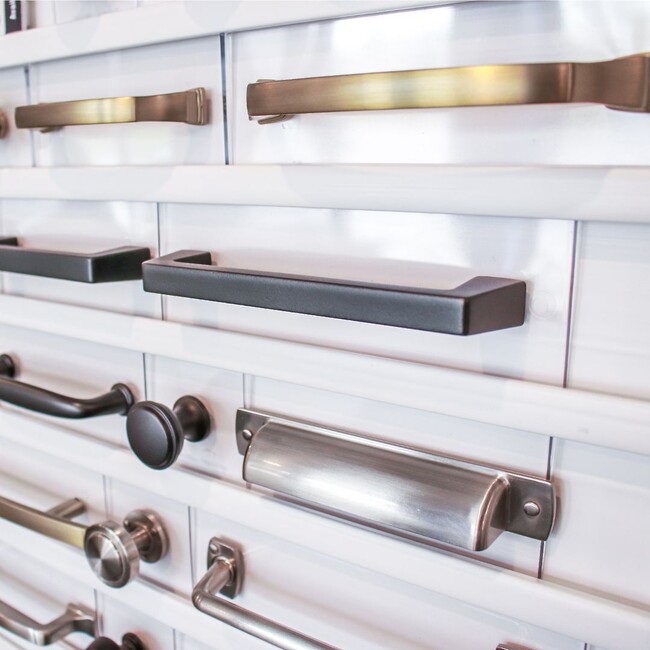
Cabinet pulls come in a wide range of designs, each suited to different interior styles. Selecting the right type enhances your cabinetry and ties the room together.
Bar Pulls (Straight or Offset)
Bar pulls are the most popular type of cabinet pull, featuring a straight or slightly curved metal bar mounted on two screws. They offer a clean, modern look and are easy to grip. Available in various lengths, typically 3″, 4″, or 5″, they work well on both drawers and cabinet doors. Offset bar pulls have a slight curve for ergonomic comfort and are often used in contemporary or transitional kitchens.
- Best for: Modern, minimalist, and Scandinavian designs
- Common materials: Stainless steel, brushed nickel, brass
- Ideal drawer size: 12″ or wider
- Pro tip: Match the pull length to the drawer width for visual balance
Cup Pulls (Traditional or Retro Style)
Cup pulls, also known as bin pulls, feature a U-shaped handle recessed into the cabinet surface. They require more clearance but deliver a vintage or retro charm, often seen in Shaker, farmhouse, or mid-century modern kitchens.
- Best for: Traditional, rustic, or retro kitchens
- Mounting note: Requires front-mount installation with sufficient depth
- Popular finishes: Antique brass, oil-rubbed bronze
- Design tip: Use on inset drawers for an authentic period look
J-Pulls (L-Shaped Handles)
J-pulls have an L-shaped design, with one end longer than the other, creating a sleek profile that blends style and function. They provide a firm grip and are often used in modern and transitional cabinetry.
- Best for: Contemporary kitchens with flat-panel doors
- Mounting: Typically installed vertically on drawer fronts
- Material options: Zinc alloy, stainless steel, matte black
- Visual effect: Adds subtle geometric interest
Edge Pulls (Integrated or Routed)
Edge pulls are built directly into the cabinet or drawer front, created by cutting a groove or notch along the edge. They offer a handle-free, ultra-minimalist appearance, common in handleless kitchen designs.
- Best for: Handleless, frameless, or high-gloss cabinetry
- Installation: Requires precise routing during cabinet fabrication
- Design benefit: Clean lines with no protruding hardware
- Limitation: Less ergonomic for users with limited hand strength
Match Pulls to Cabinet Type
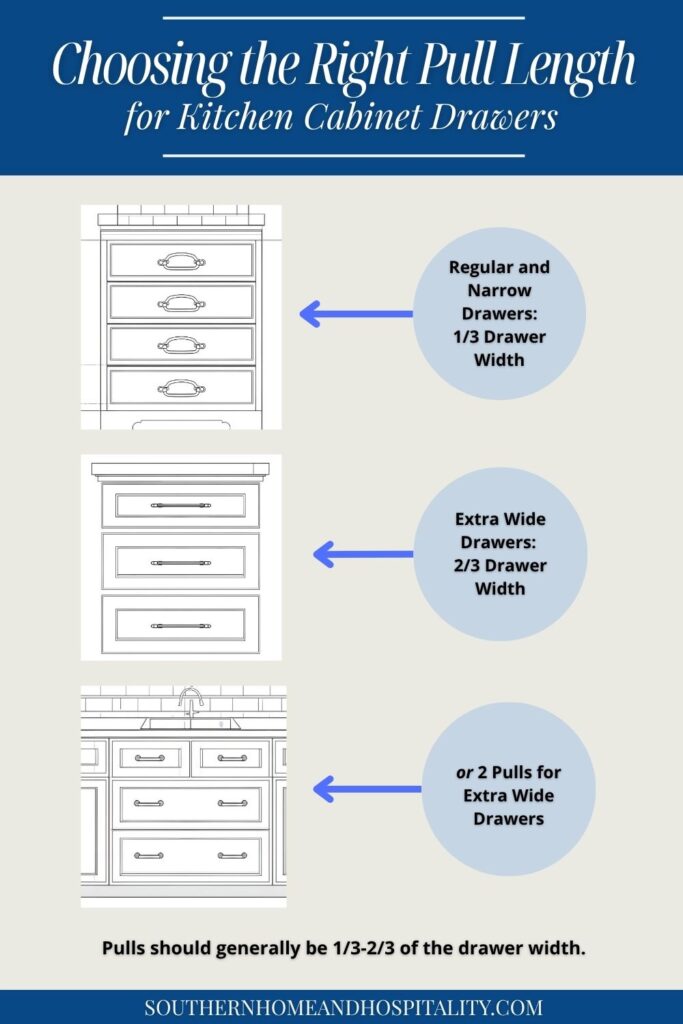
Not all pulls work with every cabinet or drawer. Consider the size, function, and layout of your cabinetry when selecting hardware.
Standard Drawers (12″–18″)
For most kitchen drawers, 3″ to 4″ bar pulls are ideal. They provide enough grip without overwhelming the drawer front.
- Recommendation: Use center-mounted bar pulls
- Spacing tip: Install screws 3″ apart for 3″ pulls
- Avoid: Oversized pulls on narrow drawers
Wide Drawers (18″+)
Wider drawers benefit from longer pulls (5″ or more) or even double pulls for balanced access.
- Option 1: Single 5″–7″ bar pull centered
- Option 2: Two smaller pulls placed at each end
- Pro move: Use continuous rail pulls for a seamless look on pantry drawers
Base Cabinets & Wall Units
Base cabinets often house larger items, so sturdy, ergonomic pulls improve usability.
- Preferred types: Bar pulls, J-pulls, cup pulls
- Size guide: 4″–5″ pulls for base cabinets
- Wall cabinets: 3″–4″ pulls or knobs for lighter doors
Tall Pantry & Pull-Out Units
These functional units need durable, easy-to-grab hardware.
- Best choices: Long bar pulls, bail pulls, or recessed finger pulls
- Clearance check: Ensure pull doesn’t interfere with adjacent cabinets
- Heavy-duty option: Steel or solid brass construction
Materials & Finishes
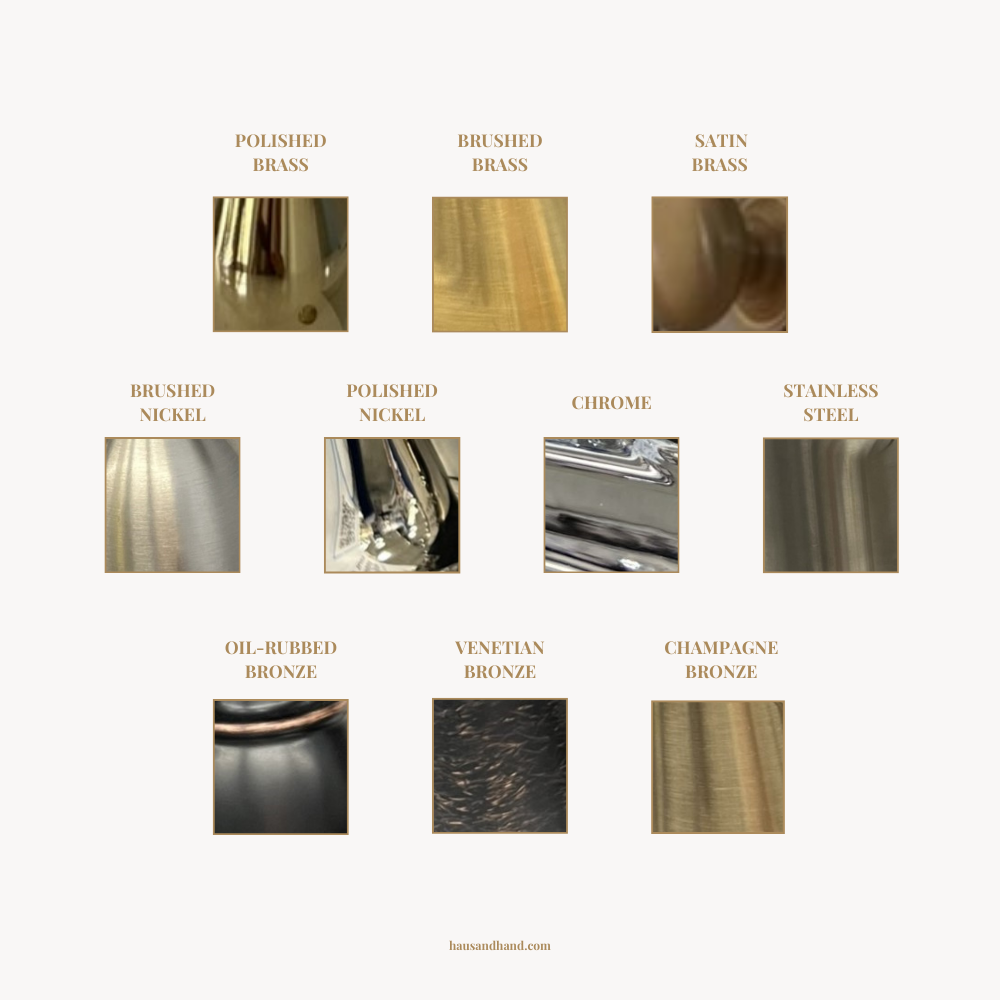
The material and finish of your cabinet pulls affect durability, maintenance, and style coordination.
Common Metal Options
Different metals offer distinct looks and performance characteristics.
- Stainless steel: Durable, rust-resistant, modern
- Brass: Warm tone, ages beautifully, premium feel
- Zinc alloy: Cost-effective, versatile, often plated
- Iron: Heavy-duty, ideal for rustic or industrial styles
Popular Finishes
Finish impacts both appearance and maintenance.
| Finish | Look | Best For | Care Tips |
|---|---|---|---|
| Brushed nickel | Soft metallic, subtle texture | Modern, transitional | Wipe with damp cloth |
| Matte black | Bold, contemporary | Farmhouse, industrial | Avoid abrasive cleaners |
| Oil-rubbed bronze | Dark, antique | Traditional, rustic | Polish occasionally |
| Chrome | Bright, reflective | Minimalist, retro | Resists fingerprints less |
- Trend alert: Mixed metals are acceptable if within the same color family
- Pro tip: Match pulls to faucet or lighting finishes for cohesion
Mounting & Installation Basics
Proper installation ensures both function and visual alignment.
Center Mount vs. Edge Mount
- Center mount: Screws placed in the middle of the pull; most common
- Edge mount: Pull installed near the drawer’s edge; used for J-pulls or asymmetrical designs
- Accuracy matters: Use a jig or template for consistent hole spacing
- Standard centers: 3″, 4″, or 5″ between screw holes
Measuring for Perfect Fit
- Step 1: Measure drawer or door width
- Step 2: Choose pull length (typically 1/3 to 1/2 of width)
- Step 3: Mark screw positions using a level
-
Step 4: Pre-drill holes to prevent wood splitting
-
Warning: Never force screws, misalignment damages cabinetry
Coordinate with Kitchen Style
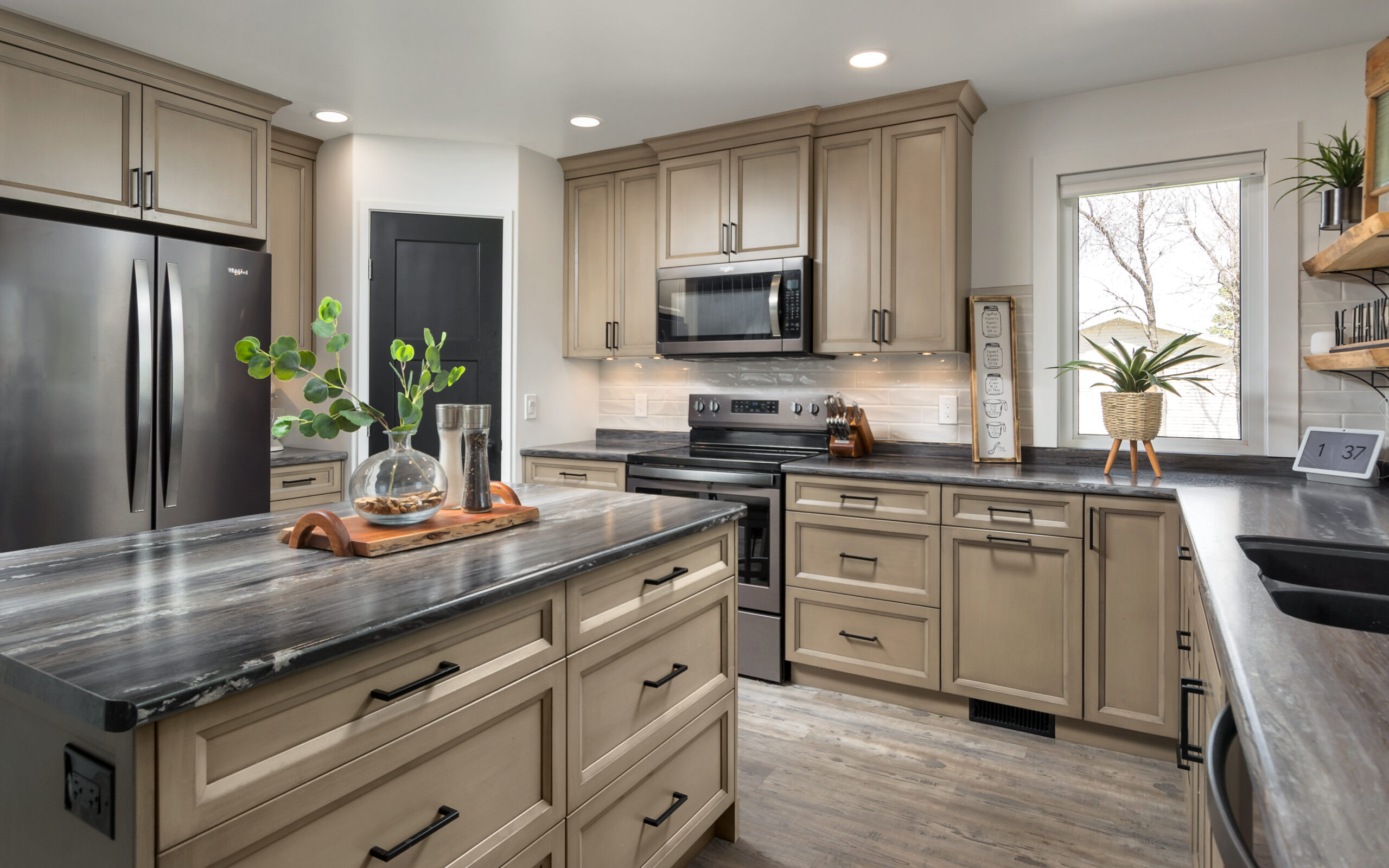
Your cabinet pulls should complement the overall design theme.
Modern & Minimalist Kitchens
- Preferred pulls: Bar pulls, edge pulls, matte finishes
- Colors: Black, gray, chrome
- Design rule: Less is more, avoid ornate details
Traditional & Farmhouse Kitchens
- Preferred pulls: Cup pulls, bail pulls, bin pulls
- Finishes: Antique brass, oil-rubbed bronze
- Detail tip: Match to vintage appliances or farmhouse sink
Transitional & Scandinavian Designs
- Hybrid approach: Simple shapes with warm tones
- Best picks: Brushed nickel bar pulls, soft gold finishes
- Balance: Combine clean lines with subtle texture
Avoid Common Design Mistakes
Even small hardware choices can disrupt a well-planned kitchen.
Mismatched Sizes & Spacing
Using different pull sizes across cabinets creates visual chaos.
- Fix: Standardize pull lengths within each cabinet section
- Exception: Graduated sizing (smaller on upper, larger on lower)
Ignoring Ergonomics
A stylish pull that’s hard to grip defeats its purpose.
- Test first: Try hardware in person before buying
- Clearance check: Ensure hands won’t hit adjacent cabinets
Overlooking Knobs vs. Pulls
Many kitchens mix knobs and pulls, know when to use each.
- Standard practice:
- Knobs for doors and small drawers
- Pulls for large drawers and base cabinets
- Consistency: Stick to one style per cabinet type
Upgrade & Replace Tips
Updating old pulls is an easy way to refresh your kitchen.
Tools You’ll Need
- Screwdriver (Phillips or flathead)
- Measuring tape
- Pencil and level
- Hardware template (optional)
- Time estimate: 1–2 hours for full kitchen update
Cover Old Holes
If changing pull sizes or styles, you may need to conceal previous screw holes.
- Option 1: Use filler and repaint
- Option 2: Install oversized backplates
- Option 3: Choose new pulls that align with old holes
Where to Buy
- Home improvement stores: Wide selection, immediate availability
- Online retailers: More styles, customer reviews
- Specialty shops: Custom or artisan hardware
Frequently Asked Questions About Types of Cabinet Pulls
What is the most popular type of cabinet pull?
Bar pulls are the most popular type of cabinet pull due to their clean lines, easy grip, and versatility across modern and transitional kitchens.
How do I choose the right pull size for my drawers?
Measure the drawer width and select a pull that is roughly one-third to one-half of that measurement. Standard pulls range from 3″ to 5″ for most kitchen drawers.
Can I mix different types of cabinet pulls in one kitchen?
Yes, mixing is common. Use knobs for doors and small drawers, and pulls for larger drawers and base cabinets. Keep finishes consistent for a cohesive look.
What is the difference between a knob and a pull?
A knob is a single-screw handle, while a pull is a longer handle attached with two screws. Pulls offer better grip for larger drawers and heavier doors.
How do I hide old screw holes when replacing pulls?
You can fill the holes with wood filler and repaint, install oversized backplates, or select new pulls that align with the existing hole spacing.
What finish is easiest to maintain?
Brushed nickel and stainless steel are low-maintenance options, as they resist fingerprints and require only a damp cloth wipe.
Key Takeaways for Selecting Cabinet Pulls
Choosing the right types of cabinet pulls balances form and function. You now know the main styles, from bar pulls to edge pulls, and how each suits different cabinetry and design themes. Match materials and finishes to your fixtures, install with precision, and avoid common pitfalls like mismatched sizes.
Start by sampling a few favorites in your space. Hold them, test the grip, and see how they look against your cabinets. Small changes make a big impact, and the right pull can make even a simple cabinet look custom and polished.