You’ve just purchased an elegant 19th-century wardrobe at an estate sale. As you reach to open it, the key resists—rusted, worn, or missing altogether. You’re not just facing a stuck lock; you’re encountering a piece of history. Understanding the types of antique cabinet locks is essential for collectors, restorers, and historians alike. These locks are more than security devices—they reflect craftsmanship, era-specific design, and regional metalworking traditions.
Without proper identification, repairing or replacing a lock can damage the original hardware or diminish the value of the piece. This guide breaks down the most common types of antique cabinet locks, how to recognize them, and what their mechanisms reveal about the furniture’s age and origin. From simple warded designs to complex mortise systems, each type tells a story of innovation and artistry.
Warded Locks: Earliest Cabinet Security

Warded locks are among the oldest and most widespread types of antique cabinet locks, commonly found in European and American furniture from the 17th through the 19th centuries.
How Warded Locks Work
These locks use internal obstructions, called wards, to block incorrect keys. Only a key with matching notches can turn fully. While simple, this design was effective for basic cabinet security.
• The key is typically flat with a bow (handle) and a bit (working end)
• Wards are fixed metal projections inside the lock body
• Turning motion retracts a bolt or latch to open the door
Despite their simplicity, warded locks were often beautifully crafted, especially in high-end furniture.
Identifying Antique Warded Locks
Look for these visual cues:
• Flat, skeleton-style keys with intricate cuts
• Round or oval keyholes with visible internal ridges
• Brass or iron construction, sometimes with decorative escutcheons
• Found on chests, wardrobes, and writing desks
Pro tip: Many reproduction keys exist. Original keys often show hand-filing marks and slight asymmetry.
Mortise Locks: Refined Cabinet Protection

Mortise locks became popular in the 1800s, offering greater security and smoother operation than warded types. They are a hallmark of mid-to-late 19th-century furniture.
What Defines a Mortise Lock
Unlike surface-mounted locks, mortise locks are set into a pocket (mortise) cut into the edge of the cabinet door. This allows for a flush fit and a stronger mechanism.
Key features:
• Rectangular lock body embedded in the door edge
• Operated by a key that turns a bolt into the frame
• Often paired with a keyhole escutcheon for protection and decoration
These were standard in fine cabinetry, especially in roll-top desks and armoires.
Variations in Mortise Design
Several subtypes exist within this category:
• Single-throw: One bolt extends horizontally
• Double-throw: Two bolts (top and bottom) engage for added strength
• Lever-mortise: Incorporates lever tumblers for improved security
Double-throw models are especially common in American Victorian-era furniture.
Rim Locks: Surface-Mounted Simplicity

Rim locks are mounted on the interior surface of the cabinet door, making them easy to install and replace. They were widely used from the 18th century onward.
Why Rim Locks Were Popular
Their surface-mounted design made them ideal for retrofitting or mass-produced furniture. Unlike mortise locks, no deep cavity was needed.
Common traits:
• Mounted with screws on the door’s inside face
• Often paired with a strike plate on the cabinet frame
• Keys vary, from simple barrel types to more complex bit keys
They appear frequently in kitchen cabinets, pantries, and bedroom furniture from the 1800s.
Spotting Authentic Rim Locks
Check for:
• Cast iron or brass housing
• Hand-forged screws (uneven heads, square drives)
• Wear patterns around the keyhole from repeated use
Reproductions often have modern Phillips screws and uniform casting. These are red flags for collectors.
Barrel Bolt Locks: Hidden Security
Barrel bolt locks are discreet mechanisms often used in conjunction with other locks or as secondary fasteners.
Function and Placement
These consist of a cylindrical bolt that slides into a catch when turned by a key or knob. They’re typically:
• Installed at the top or bottom of a door
• Concealed when the door is closed
• Used in secret compartments or bookcases
Found in Gothic revival and Renaissance-style cabinets, they added an extra layer of privacy.
Recognizing Antique Barrel Bolts
Look for:
• A small keyhole or knob near the door edge
• Smooth brass cylinder with minimal external hardware
• Often integrated into decorative moldings
Their subtlety makes them easy to miss. Check closely during inspections.
Cam Locks: Transitional Modern Design

Cam locks bridge the gap between traditional and modern locking systems. While more common in the 20th century, early versions appeared in late 1800s furniture.
How Cam Locks Operate
A cam is a rotating piece attached to the lock cylinder. When the key turns, the cam rotates 90 degrees, pulling or pushing the bolt.
Features:
• Compact design ideal for drawers and small cabinets
• Cylindrical keyhole with a flat or tubular key
• Often made of nickel-plated brass
Though simpler than mortise locks, they offered reliable, space-saving security.
Antique vs. Modern Cam Locks
True antique cam locks are rare but identifiable by:
• Hand-finished machining marks
• Softer metal alloys prone to wear
• Keys with unique cuts, not mass-produced
Many seen today are replacements. Verify authenticity through key matching and patina consistency.
Keyhole Escutcheons: More Than Decoration
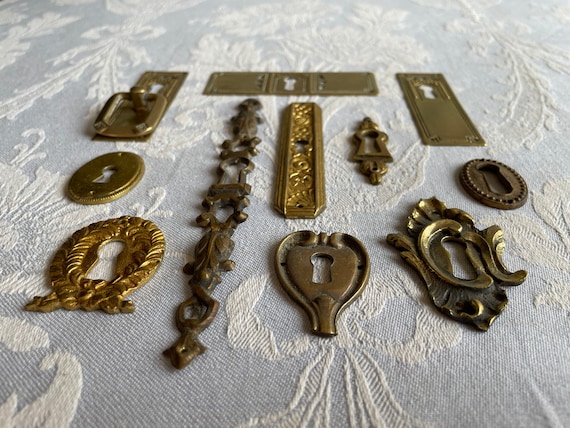
Escutcheons protect the wood around the keyhole and often signal the lock type beneath.
Styles by Era and Region
These metal plates evolved with fashion:
• Rococo (1730–1770): Scrollwork, floral motifs
• Victorian (1840–1900): Heavy brass, Gothic arches
• Federal (1780–1820): Symmetrical, neoclassical shapes
The escutcheon can help date the piece even if the lock is missing.
Using Escutcheons to Identify Lock Type
Match the plate to likely mechanisms:
• Oval with center keyhole: Likely warded lock
• Tall, narrow plate with vertical keyhole: Mortise lock
• Small round plate: Rim or cam lock
Damaged or replaced escutcheons may mislead. Always inspect internal workings.
Lever Locks: Advanced Antique Mechanism
Lever locks represent a significant advancement in security, using a series of flat levers that must be lifted to the correct height by the key.
Anatomy of a Lever Lock
Found in high-security antique cabinets, such as:
• Solicitor’s offices
• Bank vaults
• Private libraries
Components include:
• Multiple levers (usually 2–5)
• A gating system that aligns only when levers are lifted correctly
• Stronger resistance to picking than warded locks
These were premium options due to cost and complexity.
Identifying Lever Lock Cabinets
Signs include:
• Thicker lock body requiring deeper mortise
• Complex key with high ridges
• Markings like “Chubb” or “Bramah” (British makers)
If your cabinet has a lever lock, it likely held valuable documents or heirlooms.
Common Keys and Their Meanings
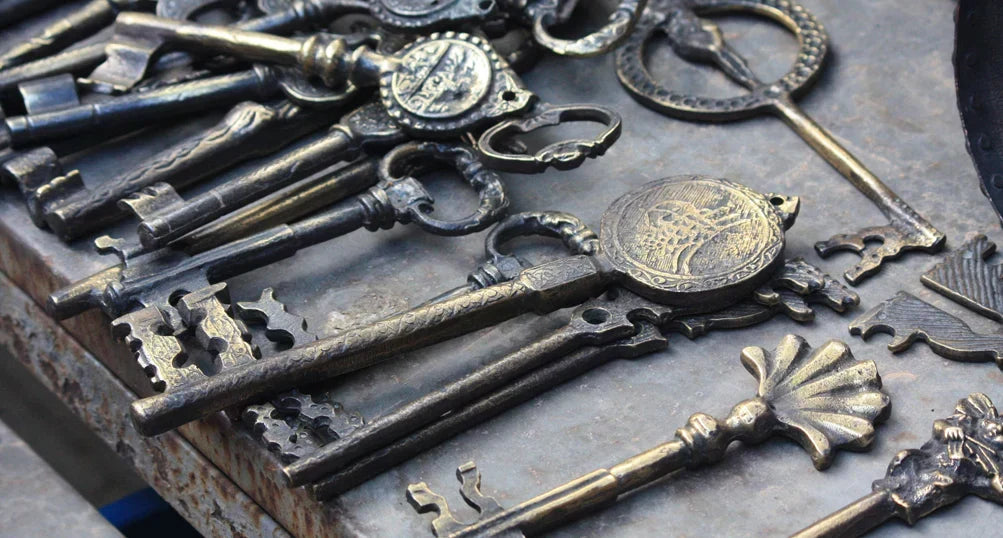
The key often reveals more than the lock itself. Each type of antique cabinet lock uses a distinct key style.
Matching Keys to Lock Types
| Lock Type | Key Characteristics |
|---|---|
| Warded | Flat, skeleton-like, notched edges |
| Mortise | Bit key or lever-style with thick shaft |
| Rim | Barrel or oval bit, sometimes decorative |
| Barrel Bolt | Small, round, minimal shaft |
| Cam | Tubular or flat, modern appearance |
| Lever | Thick, with deep cuts and ridges |
Losing the original key can complicate restoration. Consider duplication if found.
Reproduction vs. Original Keys
Original keys show:
• Hand-filed teeth
• Slight warping from use
• Patina matching the lock
Reproductions are often symmetrical, shiny, and machine-cut. Avoid using them as dating tools.
Restoring Antique Cabinet Locks Safely
Restoration should preserve historical integrity while ensuring functionality.
Cleaning Without Damage
Never soak antique locks in solvent. Instead:
• Use a soft brush and light oil (e.g., 3-in-1)
• Wipe away grime gently
• Avoid abrasive pads that remove patina
For seized parts, apply penetrating oil and let sit for hours.
When to Replace vs. Repair
• Repair: If internal parts are intact and original
• Replace: Only if broken beyond function and no spare exists
• Always keep original parts, even if non-working
Use period-correct replacements when possible.
Preventing Damage During Use
Even functional locks can fail if misused.
Best Practices for Operation
• Always insert the key fully before turning
• Turn slowly, as force causes broken springs or bent levers
• Lubricate annually with graphite powder, not WD-40 (attracts dust)
Store spare keys in a dry place to prevent rust.
Storing Furniture with Locks
• Leave locks slightly open during long storage
• Prevents spring tension fatigue and corrosion
• Place silica gel packs nearby to reduce moisture
This extends the life of both lock and key.
Final Note: Knowing the types of antique cabinet locks empowers you to preserve, restore, and appreciate vintage furniture with confidence. From warded to lever mechanisms, each type reflects the technological and artistic currents of its time. Whether you’re a collector, dealer, or hobbyist, accurate identification ensures authenticity and value. Always handle these delicate systems with care, as each turn of the key connects you to centuries of craftsmanship.