
Wood kitchen cabinets bring warmth, character, and timeless appeal to any home. With so many wood species, stains, and color pairings available, choosing the right cabinet color can transform your kitchen from ordinary to extraordinary. Whether you’re drawn to rich dark tones, natural finishes, or warm rustic hues, understanding the types of wood kitchen cabinet colors helps you make a design choice that balances style and longevity. This guide explores popular wood cabinet colors, ideal combinations, and how to match them with walls, countertops, and hardware. You’ll learn how to create a cohesive look that suits modern, traditional, or transitional kitchens without overwhelming your space.
Dark Wood Cabinet Shades

Dark wood kitchen cabinets add depth, elegance, and a touch of luxury. These rich tones work well in both large and well-lit kitchens, creating a bold focal point.
Deep Espresso Finish
Deep espresso cabinets offer a sleek, sophisticated look with near-black undertones. This ultra-rich stain works especially well with maple or birch wood, enhancing grain without overpowering it. Pair with quartz countertops and stainless steel fixtures for a clean, modern contrast. Avoid using in dimly lit kitchens unless balanced with light walls or reflective backsplashes.
Charcoal Walnut Tone
Charcoal walnut blends the natural warmth of walnut with a cool, deep gray base. It’s less stark than black but still dramatic. This shade enhances natural light, making spaces feel cozier. Ideal for open-concept homes, it pairs well with brushed nickel hardware and light oak flooring.
Blackened Oak Style
Blackened oak delivers a modern farmhouse or industrial aesthetic. The wood retains subtle grain texture, often with a slightly weathered or wire-brushed finish. Perfect for contemporary kitchens, it contrasts beautifully with white subway tiles or marble countertops. Use under-cabinet lighting to highlight the grain and prevent the space from feeling too heavy.
Popular Cabinet Color Pairings
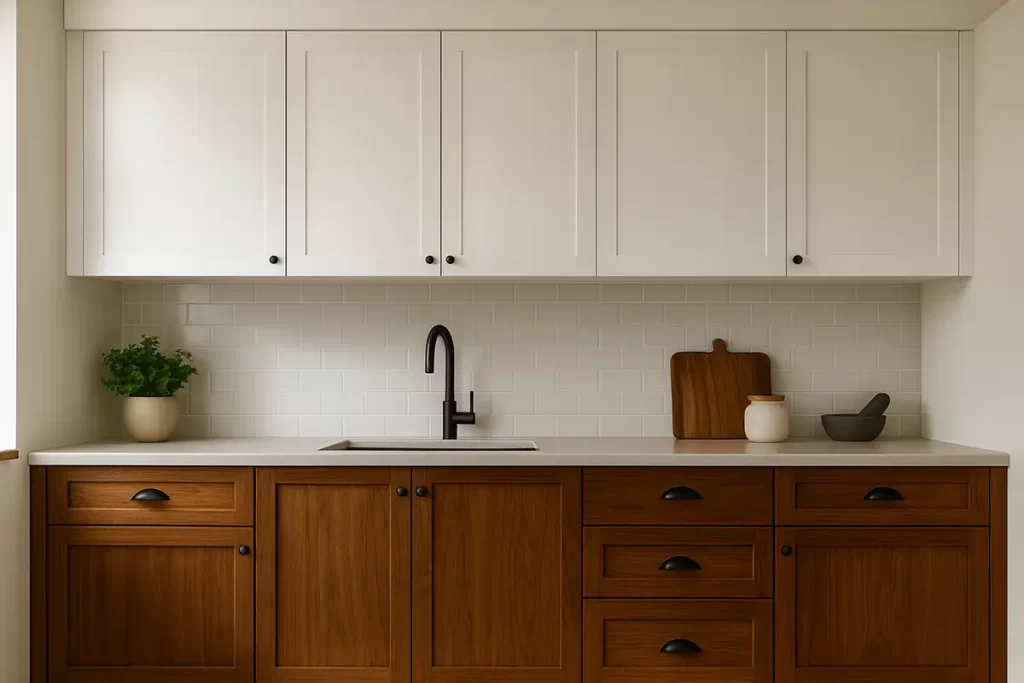
Choosing the right wall, countertop, and accent colors is key to balancing wood cabinet tones. These pairings enhance visual harmony and elevate your kitchen’s style.
Warm Gray Walls with Dark Wood
Soft warm gray walls neutralize the intensity of dark wood cabinets while adding modern flair. Choose grays with beige or greige undertones to maintain warmth. This combo works well with pendant lighting in bronze or matte black for a polished finish.
White Shaker Cabinets Contrast
Pairing white shaker cabinets with dark wood lowers creates a classic two-tone effect. Use dark wood on lower cabinets and white on uppers to ground the space while keeping it airy. This look thrives in traditional and transitional kitchens and suits chrome or brass hardware.
Crisp Navy Surroundings
Navy walls make dark wood cabinets pop. This high-contrast scheme adds drama and depth, ideal for chef-inspired or eclectic kitchens. Balance with white or light stone countertops and gold or copper accents. Limit navy to one or two walls if the room is small to avoid a cave-like feel.
Natural and Light Wood Finishes
:strip_icc()/BHG-Harper-Kitchen-7vPN9Cis4nv9y6u95KiKej-f0d7995f3c7e4c82b96118b68a22de10.jpg)
Lighter wood tones keep kitchens bright and inviting. These finishes highlight wood grain and work in both minimalist and rustic designs.
Honey Oak with Beige Walls
Honey oak cabinets feature warm golden undertones that brighten the space. When paired with soft beige walls, they create a seamless, cozy atmosphere. Best for traditional or country-style kitchens, this combo ages gracefully and hides dust better than lighter finishes.
Teak Paired with Earth Tones
Teak’s natural oil content gives it a lustrous, durable finish. In its natural state, teak pairs perfectly with terracotta floors, olive green textiles, or sand-colored countertops. Use matte finishes to reduce glare and enhance its organic appeal. Ideal for Mediterranean or Southwestern-inspired kitchens.
Weathered Wood and Slate Countertops
Weathered wood mimics aged timber with soft graining and muted tones. Combine with slate gray or basalt countertops for an earthy, organic feel. This pairing works in farmhouse or cottage-style kitchens. Add wrought iron hardware for authenticity.
Rich Warm Tones and Accents
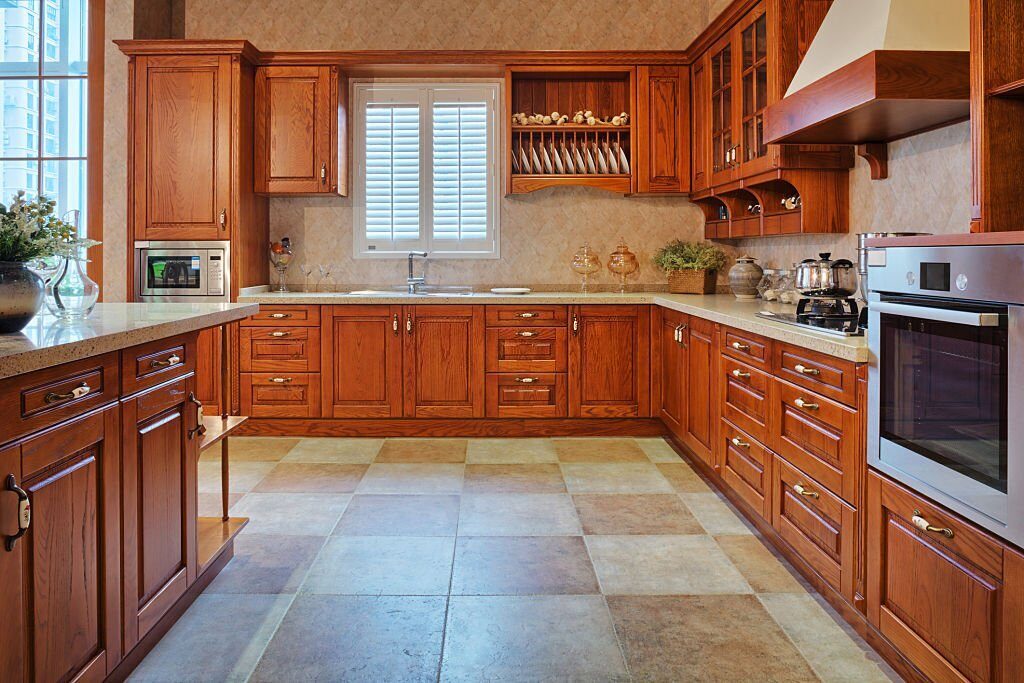
Warm-toned wood cabinets bring comfort and elegance. These colors often feature red, amber, or reddish-brown undertones that deepen over time.
Aged Cherry with Cream Details
Aged cherry cabinets develop a lustrous patina, making them a favorite for traditional kitchens. Pair with cream-colored countertops or backsplashes to soften the richness. White or off-white walls keep the space from feeling too enclosed. This combo suits crown molding and glass-front cabinets for a classic look.
Chestnut Brown and Gold Fixtures
Chestnut brown cabinets offer deep reddish-brown tones that exude luxury. When paired with gold or brass hardware, they elevate the kitchen’s elegance. Use under-cabinet lighting to highlight the metallic accents. Works best in kitchens with natural wood flooring or stone elements.
Smokey Maple with Green Walls
Smokey maple has a subtle gray-brown tone with soft grain. When paired with soft sage or olive green walls, it creates a nature-inspired, serene kitchen. This palette suits botanical decor, wooden cutting boards, and linen textiles. Ideal for eco-conscious or wellness-focused homes.
High-Contrast Modern Looks
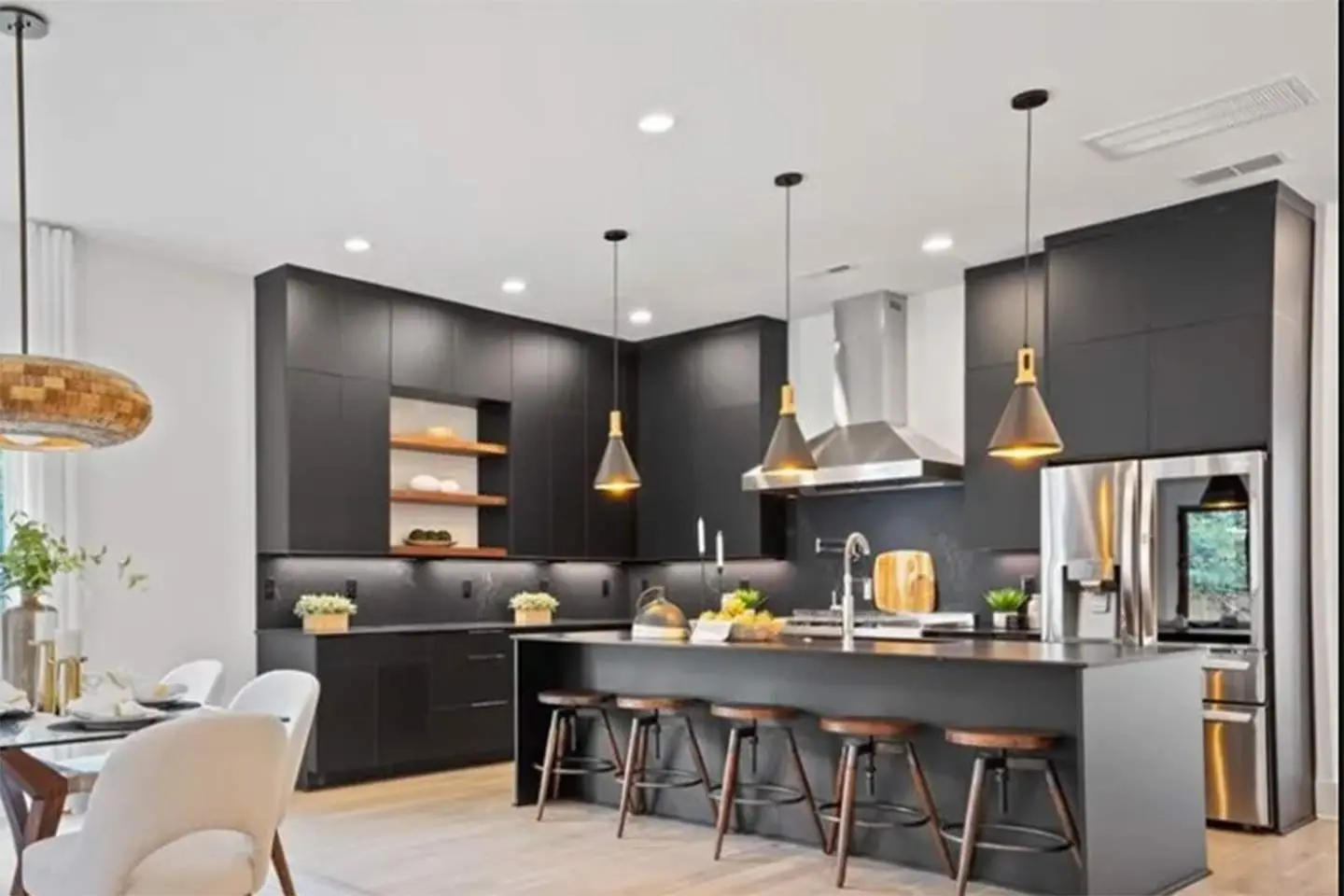
For a sleek, contemporary kitchen, high-contrast combinations with dark wood deliver sophistication and visual impact.
Ebony Cabinets with Matte Black Appliances
Ebony-stained cabinets create a bold, unified look when matched with matte black ovens, refrigerators, and hoods. This monochromatic scheme feels luxurious and modern. Balance with light flooring such as white oak or light gray tile to prevent visual heaviness.
Natural Wood with White Backsplash
Let natural wood grain shine by pairing it with a crisp white subway tile backsplash. This classic combo highlights texture while keeping the space clean and fresh. Ideal for small kitchens or open-plan living areas where brightness matters.
Choosing the Right Wood Tone
Selecting the best wood cabinet color depends on your kitchen’s lighting, size, and overall design style.
Consider Natural Light Levels
North-facing kitchens with limited sunlight benefit from lighter wood tones like honey oak or teak. South- or west-facing rooms can handle darker stains like espresso or ebony without feeling closed in. Use sample swatches at different times of day to test how colors shift in your space.
Match Flooring and Ceiling Beams
Ensure your cabinet color complements existing wood elements. If you have dark hardwood floors, balance with medium-toned cabinets. For light bamboo or white oak floors, go bold with charcoal walnut or blackened oak. Avoid clashing undertones by pairing warm woods with warm floors and cool with cool.
Test Hardware Compatibility
Hardware finishes affect the final look. Gold and brass enhance warm-toned woods like cherry or chestnut. Chrome and stainless steel suit cooler dark woods like charcoal walnut. Matte black pulls work across styles but pair best with high-contrast schemes.
Frequently Asked Questions About Wood Kitchen Cabinet Colors
What is the most popular wood cabinet color?
Dark espresso and honey oak remain top choices among homeowners. Espresso offers a rich, luxurious look while honey oak provides warmth and brightness. Both work across traditional and modern kitchen styles.
Can I mix different wood tones in one kitchen?
Yes, mixing wood tones creates visual interest when done carefully. Pair dark lower cabinets with lighter uppers or combine a wood island with painted perimeter cabinets. Keep undertones consistent, whether warm or cool, to maintain harmony.
Which wood color makes a small kitchen look bigger?
Light wood finishes like honey oak, natural teak, or whitewashed maple reflect more light and make small kitchens feel more spacious. Pair with white or light gray walls and minimal upper cabinets to maximize openness.
How do I choose cabinet colors that won’t go out of style?
Neutral wood tones like honey oak, natural maple, and warm gray-stained woods have lasting appeal. Avoid overly trendy finishes if you plan to sell soon. Classic stains and finishes adapt well to changing decor styles.
What hardware works best with dark wood cabinets?
Brushed nickel, chrome, and matte black hardware complement dark woods like espresso and ebony. For warmer dark tones like chestnut or cherry, gold or brass fixtures add elegance. Choose hardware that matches your kitchen’s overall style.
Do wood cabinets require special maintenance?
Wood cabinets need gentle cleaning with mild soap and a damp cloth. Avoid harsh chemicals that strip finish. Oiled woods like teak benefit from annual conditioning. Protect against sun fading with window treatments or UV-blocking film.
Key Takeaways for Choosing Wood Cabinet Colors
Wood kitchen cabinet colors shape the heart of your home. From deep espresso to honey oak and ebony finishes, each tone sets a unique mood. Pair them wisely with warm gray walls, cream accents, or matte black appliances to create a space that’s both beautiful and functional. Whether you prefer the rustic charm of weathered wood or the sleekness of high-contrast modern design, the types of wood kitchen cabinet colors offer endless possibilities.
Test samples in your actual lighting before committing. Consider your floor color, hardware finishes, and how much natural light your kitchen receives. Start with a neutral base and add bold accents through decor or textiles. With the right color scheme, your kitchen becomes a timeless retreat that reflects your personal style for years to come.