Under cabinet lighting transforms your kitchen from a purely functional space into a bright, welcoming hub for cooking and gathering. The right types of under cabinet lighting can dramatically improve visibility, safety, and the overall ambiance of your workspace. With choices ranging from flexible LED tape to classic puck fixtures, your selection depends on your kitchen layout, electrical setup, and design goals.
This guide walks you through every major lighting category, including LED, fluorescent, halogen, and xenon options. You will learn which fixtures offer dimming capabilities, which are easiest to install yourself, and which deliver the most energy-efficient performance for your home.
LED Tape Light Benefits
LED tape lighting, also called strip lighting, stands out as one of the most flexible and discreet under cabinet lighting for kitchens. Operating on 12V or 24V low voltage, these ultra-thin strips can be cut to custom lengths and installed in tight spaces where traditional fixtures simply will not fit.
Flexible and Low Profile Design
LED tape lights adhere directly to the underside of your cabinets using a strong backing adhesive. Their slim profile, often less than 0.2 inches thick, keeps them completely hidden from view while delivering continuous, even illumination across your countertops. This makes them ideal for modern kitchens with minimal cabinet overhangs.
Easy Customization Options
You can customize LED tape lights in several ways:
– Cut them at designated points to fit any cabinet run length
– Connect multiple strips using connectors or soldering
– Select color temperatures from warm white (2700K) to daylight (5000K)
– Add controllers for dimming or color changing in RGB versions
Requires Transformer for Power
Since LED tape operates on low voltage, you will need a compatible transformer or driver. Hardwired setups connect to your household 120V power through a concealed transformer, while plug-in kits include a power adapter. Always verify that the transformer matches the total wattage of your strip to prevent flickering or premature burnout.
LED Light Bars Overview
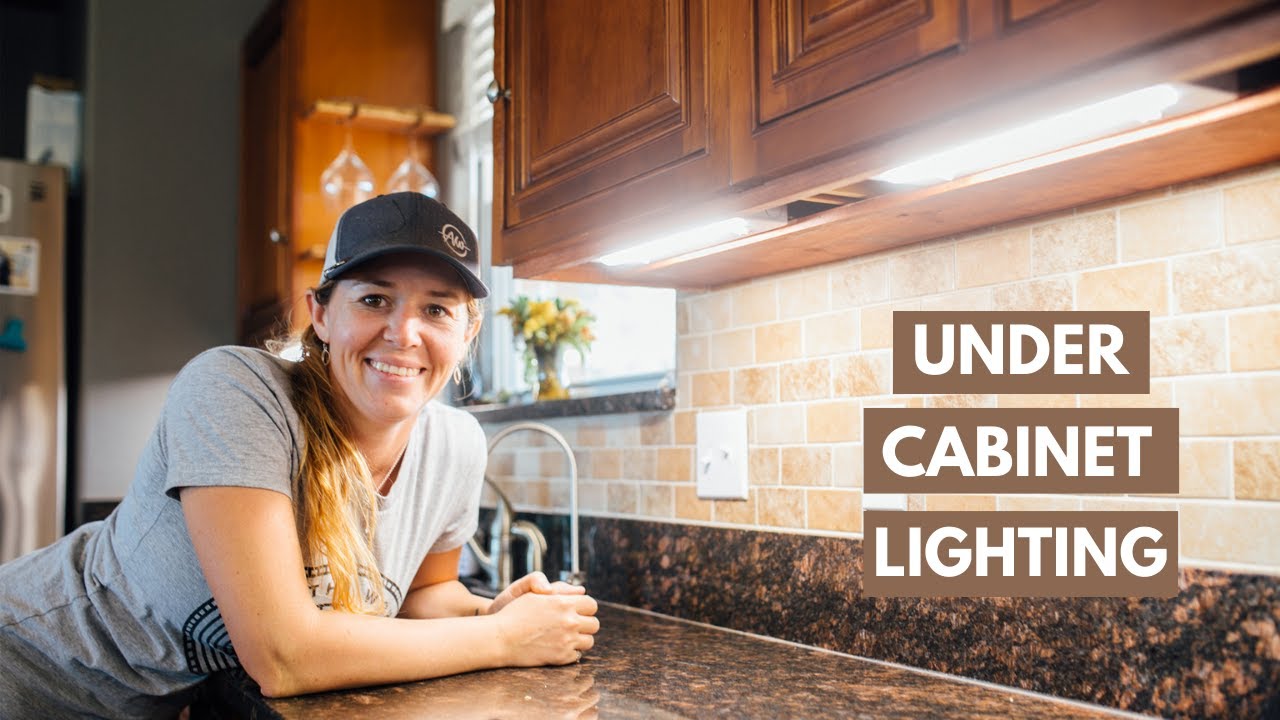
LED light bars are rigid, linear fixtures designed to run on standard 120V household current. This makes them a popular choice for DIYers looking to upgrade their existing kitchen without major electrical work.
Plug and Play Installation
Most LED light bars come with a built-in power cord and mounting hardware. You can plug them directly into a nearby outlet, eliminating the need for an electrician. Some models include swivel mounts for angle adjustment, ensuring the light lands exactly where you need it on your workspace.
Even Light Distribution
These bars feature a built-in diffuser lens that spreads light uniformly, eliminating bright spots and shadows. This is especially useful over long countertops or kitchen islands. The result is a smooth, professional-grade glow without harsh glare or dark patches.
Ideal for Retrofit Projects
Because they use standard voltage, LED light bars are perfect for under counter lights in older homes. No rewiring, no transformers, no complex installation. Simply drill a few holes, mount the bars, and plug them in. Many models are also dimmable when paired with compatible wall dimmers.
LED Puck Lights Guide
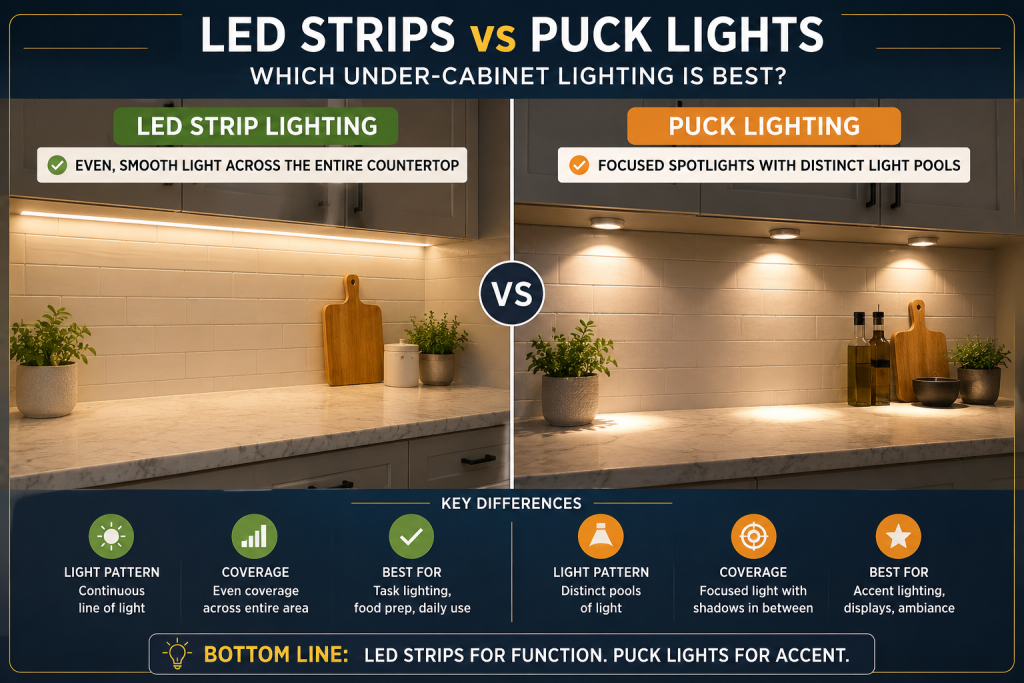
LED puck lights are compact, circular fixtures typically measuring 1.5 to 2.5 inches in diameter. Installed individually or in groups, they deliver focused, downward illumination that works exceptionally well for task lighting.
Best Placement for Puck Lights
Space puck lights 12 to 18 inches apart along the front edge of your cabinets. This spacing ensures overlapping beams without dark gaps between fixtures. For deeper cabinets, consider adding a second row toward the back to eliminate rear shadows on your countertop.
Hardwired vs Plug In Models
- Hardwired pucks: Require electrical wiring but offer a cleaner look with no visible cords. Best for new builds or full kitchen renovations.
- Plug-in pucks: Connect via low-voltage wiring to a transformer and wall plug. Easier to install and reposition if needed.
Dimmable and Stylish Options
Many LED puck lights are dimmable and available in various finishes, including brushed nickel, black, and white, to match your cabinet hardware. Pair them with a remote or wall switch for full ambiance control, ideal for evening meals or late-night snacking.
Fluorescent Under Cabinet Lights
Fluorescent lighting was once the standard choice for under cabinet fixtures. While less common today, it still appears in older kitchens and some commercial settings.
Smooth Even Illumination
Fluorescent tubes produce a diffuse, shadow-free glow that covers large areas evenly. This makes them effective for long countertop runs or workbenches where consistent brightness matters for food preparation.
Energy Efficient but Not Dimmable
Fluorescent lights use less energy than halogen or incandescent bulbs and generate minimal heat. However, most fluorescent under cabinet fixtures are not dimmable, which limits your ambiance control. If you want lighting flexibility, LED is the better option.
Requires Ballast and Starter
Fluorescent lights need a ballast to regulate electrical current. Over time, ballasts can hum or fail, leading to flickering or startup delays. Replacing them often means replacing the entire fixture, which adds cost and hassle.
Halogen and Xenon Lighting Options
Though fading from popularity due to heat and energy concerns, halogen and xenon lights were once top choices for bright, high-output under cabinet lighting.
Halogen Light Characteristics
Halogen bulbs use a tungsten filament and inert halogen gas to produce intense, crisp white light. They excel at task lighting but generate significant heat, enough to damage heat-sensitive countertops like laminate or quartz if fixtures sit too close.
Xenon Cooler and Longer Lasting
Xenon lights operate similarly but produce remarkably little heat and last longer. They emit a soft, warm light that reduces glare on glossy surfaces like granite or stainless steel. This makes xenon a better fit for kitchens where comfort and aesthetics matter most.
Puck and Bar Fixtures Available
Both halogen and xenon come in puck and linear bar formats. However, due to higher energy use and shorter lifespan compared to LEDs, they are now mostly used in niche or legacy installations.
Recessed Cabinet and Interior Lights

Recessed lighting is not just for ceilings. It also works beautifully inside cabinets to illuminate contents without glare or shadow.
Low Profile for Glass Cabinets
Recessed fixtures sit flush within the cabinet ceiling, maintaining a clean and unobtrusive look. They are ideal for display cabinets with glass or transparent doors, where visibility of stored dishes or glassware is key.
Adjustable Gimbal for Directional Light
Many recessed models feature an adjustable gimbal ring, allowing you to aim the light precisely where needed. This is useful for highlighting decorative items or illuminating specific shelves.
LED Only for Heat Safety
Due to heat risks, only LED recessed lights should be used inside cabinets. Halogen or incandescent bulbs can overheat enclosed spaces and create fire hazards. Always check manufacturer ratings before installation.
Compare Lighting Types Side by Side
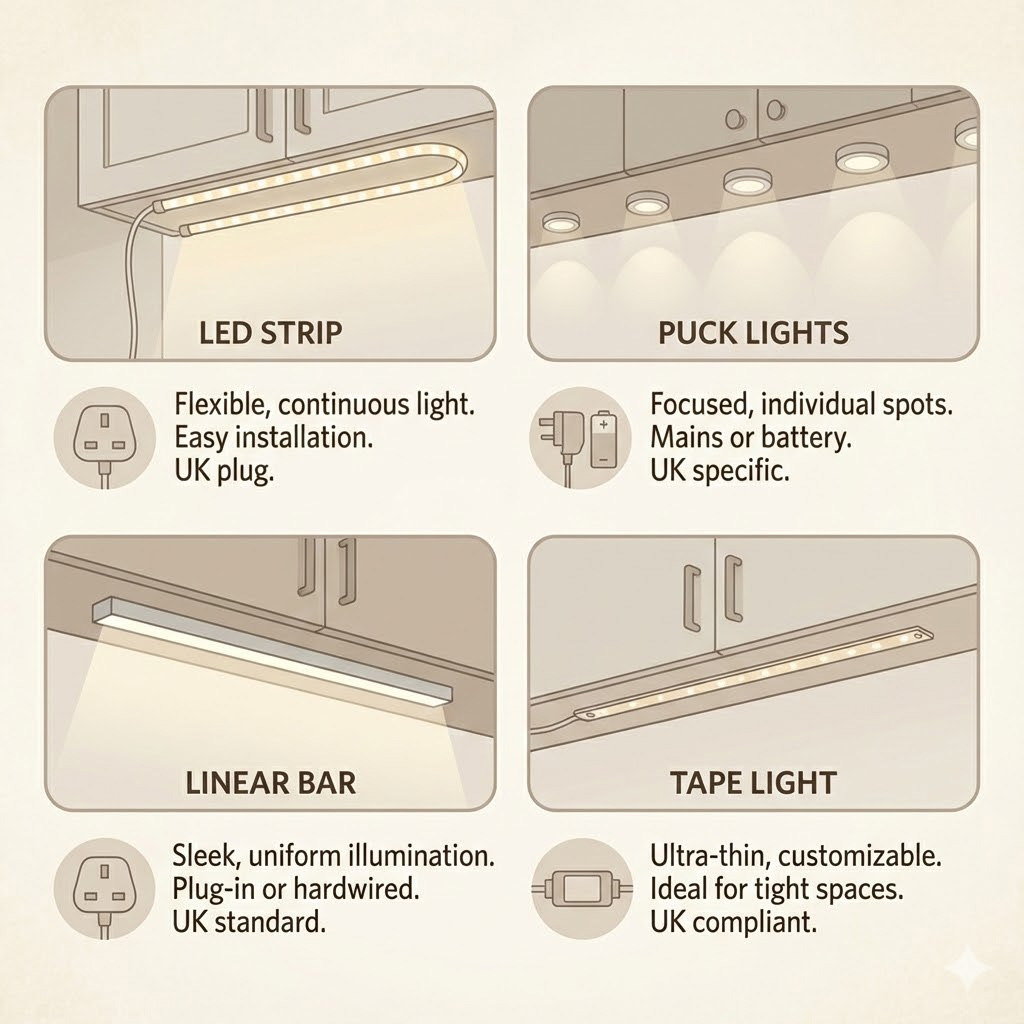
Choosing the right types of under cabinet lighting means weighing the pros and cons across key factors like brightness, energy use, and installation difficulty.
Brightness and Light Quality
| Type | Brightness | Light Spread | Glare Risk |
|---|---|---|---|
| LED Tape | High | Uniform, seamless | Low |
| LED Bar | High | Even with diffuser | Low |
| LED Puck | Medium | Focused spots | Medium |
| Fluorescent | Medium | Smooth, wide | Low |
| Halogen/Xenon | High | Focused or linear | High |
Energy Use and Lifespan
| Type | Watts per Foot | Avg. Lifespan | Energy Star Rated? |
|---|---|---|---|
| LED Tape | 2 to 4W | 30,000 to 50,000 hrs | Yes |
| LED Bar | 3 to 5W | 25,000 to 40,000 hrs | Yes |
| LED Puck | 1 to 2W each | 25,000 hrs | Yes |
| Fluorescent | 6 to 8W | 10,000 to 15,000 hrs | Sometimes |
| Halogen | 10 to 20W | 2,000 to 4,000 hrs | No |
Installation Difficulty
- Easiest: Plug-in LED bars and pucks, no wiring required
- Moderate: Hardwired LED tape with hidden transformer
- Most Complex: Fluorescent or halogen systems requiring ballasts or voltage changes
How to Choose the Right Type
Picking the best under cabinet lighting depends on your kitchen layout, electrical access, and design goals.
Match Lighting to Your Kitchen Layout
- Small kitchens: LED puck lights or short tape runs provide sufficient task lighting
- Large islands or long runs: LED tape or bars offer uninterrupted light coverage
- Display cabinets: Use recessed LED or puck lights for interior illumination
Consider Dimming and Controls
If you want mood lighting, choose dimmable LEDs. Look for compatibility with:
– Wall dimmer switches
– Remote controls
– Smart home systems like Alexa or Google Home
Avoid fluorescent and most halogen lights if dimming is a priority for your space.
Think About Heat and Safety
LEDs produce minimal heat, making them safe for all countertop materials. Halogen and xenon generate more heat, so keep fixtures at least 3 inches from surfaces and avoid placing them above heat-sensitive materials.
Installation Tips and Mistakes to Avoid
Proper installation ensures safety, performance, and longevity for your lighting investment.
Always Turn Off Power First
Whether hardwiring or plugging in, shut off the circuit at the breaker before starting. Use a voltage tester to confirm wires are dead before handling any connections.
Avoid Gaps in Light Coverage
With tape lights, ensure strips are butted end-to-end or slightly overlapped. For pucks, maintain consistent spacing, since placing them too far apart creates dark zones on your countertop.
Hide Wires for a Clean Look
Use wire channels, raceways, or in-wall routing to conceal cords and transformers. This is especially important for plug-in systems where visible wires can detract from your kitchen aesthetics.
Do Not Overlook Ventilation
Even LEDs need some airflow. Avoid sealing fixtures in enclosed spaces unless they are rated for that use. Poor ventilation can shorten the lifespan of your lighting.
Where Else to Use Under Cabinet Lights
While kitchens are the most common location, under cabinet lighting works well in other areas of your home too.
Bathroom Vanity Lighting
Install LED tape or bars under wall-mounted vanities to eliminate shadows on your face while grooming. Choose warm white (3000K) for a flattering, natural glow.
Closet and Pantry Accent Lights
Use puck lights or mini LED bars to brighten dark corners. Motion-sensor models turn on automatically when doors open, adding convenience to daily routines.
Display Shelves and Bookcases
Highlight collectibles or books with recessed or tape lighting. Use dimmable LEDs to create a gallery-like ambiance that showcases your favorite items.
Frequently Asked Questions About Under Cabinet Lighting
What is considered under cabinet lighting?
Under cabinet lighting refers to fixtures installed underneath kitchen cabinets or shelves to provide additional illumination to work surfaces below. Common types include LED tape lights, light bars, and puck lights.
What are the advantages of using under cabinet lighting?
Under cabinet lighting improves visibility and safety when preparing food or using kitchen appliances. It also adds aesthetic appeal by creating a warm, inviting atmosphere and can increase energy efficiency by reducing the need for overhead lighting.
What types of bulbs are compatible with under cabinet lighting?
Under cabinet lighting can use LED, fluorescent, and incandescent bulbs. LED bulbs are the most popular choice due to their energy efficiency, long lifespan, and low heat output.
How do you install under cabinet lighting?
Installation methods vary by fixture type. Some fixtures require hardwiring to your electrical system, while others plug directly into an outlet. Always follow the manufacturer’s instructions for proper installation and safety.
What are the different types of under cabinet lighting?
The main types include puck lights, light bars, and tape lights. Puck lights are small circular fixtures installed individually or in groups. Light bars are longer rectangular fixtures providing uniform lighting. Tape lights are flexible LED strips that can be cut to size and attached to surfaces.
Can under cabinet lighting be used in other settings besides the kitchen?
Yes, under cabinet lighting works well in bathrooms and closets. It provides additional lighting to work surfaces or can serve as accent lighting to highlight decorative elements.
Key Takeaways for Choosing Under Cabinet Lighting
The best types of under cabinet lighting balance brightness, energy efficiency, and ease of use. LED solutions, including tape lights, bars, and pucks, dominate today’s market for good reason. They run cool, last for decades, and offer full customization through dimming and color temperature options.
While fluorescent, halogen, and xenon options still exist, they are increasingly replaced by smarter, more efficient LED alternatives. When planning your upgrade, focus on dimmable, low-heat LEDs for the most versatile and future-proof lighting setup. Always match your choice to your kitchen layout and electrical system for seamless, beautiful results.
Start by measuring your cabinet runs and identifying your power source. Then select the fixture type that fits your space and style. Your kitchen will feel brighter, safer, and more inviting in no time.